Middle East Crisis: Abbosey Okai Spare Parts Dealers Association Says They Will Not Increase Prices
By Tina Moses Sam
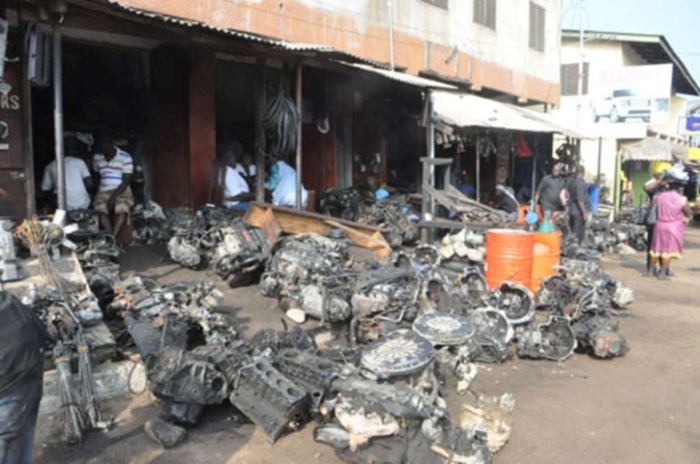
The Abossey Okai Spare Parts Dealers Association says it will not be compelled to increase spare parts prices, despite the recent surge in petroleum costs linked to escalating tensions in the Middle East.
According to the Association, although higher fuel prices typically drive up transportation and operational expenses, dealers remain committed to shielding customers from immediate price hikes.
The Association cites the relative stability of the exchange rate and the recent cut in the monetary policy rate as key buffers that could help prevent upward adjustments.
Head of Communications for the Association, Takyi Addo, in an interview with The New Finder, stated that while the impact of rising fuel prices may be felt, the industry is better positioned to manage potential shocks.
When asked whether dealers would increase spare parts prices if fuel costs continue to rise, he responded that the association will monitor events as they unfold to decide on the next line of action to take. “So our projection is that from now to five to six months then we will know what to do.” Mr Takyi stated.
According to him if the tension escalates for more than six months that is what will allow the association increase prices especially with the parts that come from Dubai.
“Some of our spare parts for the Vitz vehicles come from Dubai and about eighty percent from Europe, Southern Ameria and Asia” he said.
Despite rising global crude prices and heightened geopolitical uncertainty, the Association insists it will prioritise consumer protection while closely monitoring market conditions before taking any decision on price adjustments.
His remarks also follow assurances from the National Petroleum Authority that the country has adequate fuel reserves to sustain domestic supply.
The assurance comes amid heightened geopolitical tensions involving the United States, Israel and Iran, whose recent military actions and the broader regional conflict, involving Qatar, United Arab Emirates (UAE) and Saudi Arabia, have raised fears of supply disruptions and rising crude prices worldwide.
NPA’s Director of Economic Regulation and Planning, Abass Ibrahim Tasunti, acknowledged that Ghana’s dependence on imported petroleum products means the country cannot be entirely insulated from global shocks.
However, he stressed that safeguards are firmly in place to maintain stable supplies and prevent immediate shortages.
He clarified that these reserves were not built in response to the current conflict but are part of the authority’s routine stock management strategy.
According to Mr. Addo when the dollar shoots up definitely the spare parts will automatically increase. When dollar shoots up it affects every industry” he noted.
The association noted that they have no control over international crisis but they are cushioned themselves until situations get out of hand.
With the conflict abroad continuing to unsettle global energy prices, the association maintains that Ghana’s spare parts remain secure for now and that contingency plans are ready to cushion the country against external shocks.