

Government to Rollout New Sanitation Enforcement Regime
The government has approved a new national sanitation enforcement regime set to take effect in the first quarter of 2026, signalling a major shift from public advocacy to strict enforcement in addressing Ghana’s long-standing sanitation challenges.
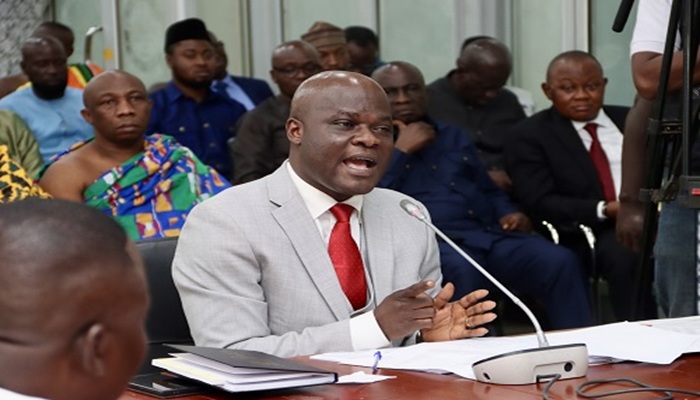
Announcing the measures, the Minister for Local Government, Chieftaincy and Religious Affairs, Ahmed Ibrahim, said sanitation would no longer be treated as a secondary concern. “Sanitation can no longer be handled as a matter of education alone; it is a core governance responsibility with consequences,” he stated.
Under the new directives, Metropolitan, Municipal and District Chief Executives (MMDCEs) will be held directly accountable for sanitation outcomes within their jurisdictions. Hon. Ibrahim warned that poor performance could attract administrative sanctions, stressing that sanitation standards would now be monitored at the highest level of government. “Cleanliness in our districts will be a key measure of leadership effectiveness,” he said.
A key feature of the regime is the recruitment of dedicated sanitation guards by all assemblies to enforce sanitation by-laws and monitor public spaces. According to the minister, their visible presence will deter violations and improve cleanliness in markets, transport terminals and residential areas. “Enforcement must be seen and felt if behaviour is to change,” he noted.
The government also plans to establish specialised sanitation courts to fast-track prosecution of offenders, addressing delays that have historically weakened enforcement. In addition, assemblies will be required to ensure that markets, ceremonial streets and major bus terminals are cleared of visible filth by 8:00 a.m. daily.
The long-dormant National Sanitation Day is also set to return as a legally backed monthly exercise, to be observed on the first Saturday of every month. “This will no longer be voluntary; it will carry statutory force,” Ibrahim said.
Citizens and shop owners will also be legally responsible for cleaning the gutters and immediate surroundings in front of their properties, with penalties for non-compliance. The minister emphasised that “sanitation is a shared obligation that demands personal responsibility.”
To strengthen implementation, Environmental Health and Sanitation Units within assemblies will be upgraded into full departments, while sanitation budgets will be decentralised to give districts greater control. A sanitation league table will also be introduced to rank districts, with top performers rewarded and underperformers publicly scrutinised.
The reforms build on President John Dramani Mahama’s 2025 sanitation sector reset, including the discontinuation of the long-running Zoomlion contract and a move toward competitive, district-based sanitation contracts.
The minister said the measures are aimed at protecting public health and restoring discipline. “We are determined to see cleaner communities across Ghana,” he declared, as the countdown to the 2026 rollout begins.



