

Ghana partners with South Korea to map out drone industry future

By Praisebell Rosemond Larbi
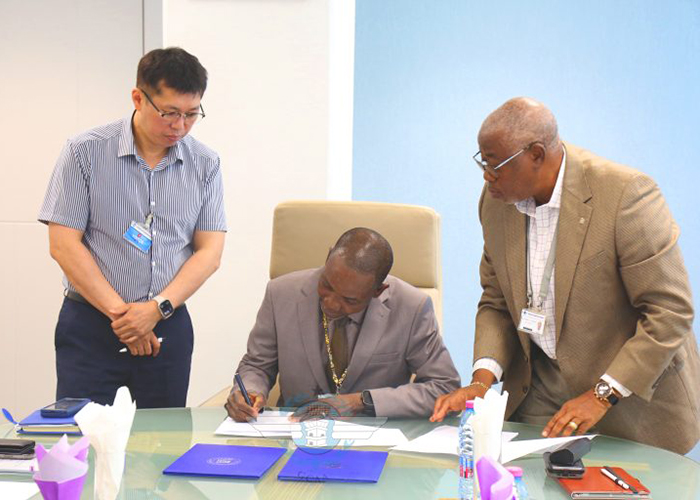
The Ghana Civil Aviation Authority (GCAA) has signed a Letter of Intent (LoI) with South Korea’s Korea Transportation Safety Authority (KOTSA) to develop a strategic roadmap for Ghana’s drone sector.
The signing ceremony took place at the GCAA headquarters within the Kotoka International Airport, marking the start of a long-term collaboration to position Ghana as a hub for drone innovation, training, and commercial applications.
Korean participants included Principal Researchers Cho Joo‑Yong and Jung Gi‑Hun, and Professor Lee Byung‑Seok, Director of the Drone Security Strategy Institute at Soonchunhyang University.
Roadmap to Be Developed in 2025
The initial project, Drone Sector Roadmap and Candidate Projects Formulation, is set to begin in 2025 and run for eight months. It will lay the groundwork for structured interventions in regulation, training, and industry development.
Rev. Stephen Wilfred Arthur, Acting Director-General of the GCAA, welcomed the initiative at the ceremony, calling it “timely and visionary.”
“Drone operations are fast becoming integral to Ghana’s airspace and national development. This partnership will ensure our regulatory environment is fit‑for‑purpose and that Ghana can fully leverage the opportunities in this rapidly growing sector,” Rev. Arthur said.
He stressed the importance of strong regulations for both airspace coordination and security regarding unmanned aerial vehicles.
Future Projects Under ODA Support
The roadmap will guide three major long-term projects under South Korea’s Official Development Assistance (ODA) program:
- Regulatory Framework and Drone Safety Management Project
- Start: 2028
- Duration: 5 years
- Focus: Strengthen regulations and enhance safety systems.
- Drone Pilot Training Program
- Start: 2030
- Duration: 4 years
- Focus: Train certified drone pilots for diverse applications.
- Drone Industry Ecosystem Development Project
- Start: 2032
- Duration: 4 years
- Focus: Build a full industrial ecosystem for drone tech and services in Ghana.
These initiatives form part of the broader Ghana-Korea Drone Sector Advancement Project and include pilot training and ecosystem integration to drive commercial drone use.
Supporting Ghana’s National Goals
Korean officials emphasized that Ghana’s drone strategy ought to align with national goals in digital innovation, smart agriculture, public health, and transport efficiency.
“Identifying the right candidate projects is crucial for sustainable impact. A robust roadmap ensures investment and expertise go to where Ghana needs it most,” said Professor Lee Byung-Seok.
GCAA Already Implementing Drone Measures
Rev. Arthur noted that GCAA directives for drone importation, registration, and operation are already in place. The authority is working to integrate drone activities into national air traffic management systems using advanced software.
He praised the partnership as a key opportunity for technology transfer, regulatory enhancement, and human capital development, strengthening Ghana’s position as a drone-friendly destination in Africa.
KOTSA, operating under South Korea’s Ministry of Land, Infrastructure and Transport, is globally recognized for drone safety systems and transport safety tech. The partnership aims to establish frameworks that ensure international standard compliance, public safety, and regulatory efficiency.
Looking Ahead
Beyond the roadmap, the South Korean delegation also held preliminary consultations with Ghana’s drone stakeholders, including private operators, public agencies, and academic institutions.
The completed roadmap will serve as a blueprint for investment, innovation, and governance in Ghana’s drone sector over the next decade. With applications in agriculture, healthcare delivery, emergency services, construction, and security, this bilateral effort is poised to profoundly shape Ghana’s technological and aviation future.



