Ghana, Burkina Faso deepen trade ties at investment forum
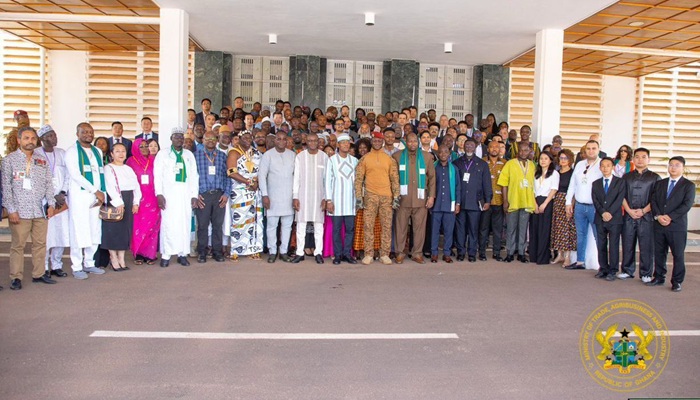
Ghana and Burkina Faso are taking decisive steps to deepen bilateral trade and investment relations as part of efforts to strengthen regional economic integration and accelerate industrial growth across West Africa.
Deputy Minister for Trade, Agribusiness and Industry, Sampson Ahi, made this call during a high-level bilateral meeting with Burkina Faso’s Minister for Industry, Trade and Craft, Donatien Nagalo, in Ouagadougou.
The engagement formed part of the Invest in Burkina Faso Forum, themed “Structural Investments for a Sovereign Burkina Faso.”
The event brought together government officials, private investors and business leaders to explore new avenues for regional cooperation, investment promotion and industrial transformation.
Mr Ahi stressed that Ghana and Burkina Faso share more than just a geographical border; they share a long-standing relationship rooted in friendship, cultural exchange and a shared vision for a unified and prosperous sub-region.
“Ghana and Burkina Faso not only share a border but also a deep history of friendship, cultural exchange and a common vision for a prosperous and united West Africa,” he stated.
Mr Ahi explained that as both nations face economic challenges such as job creation, competitiveness and industrial resilience, they must pursue responsible investment policies and enhance the free movement of goods and services.
Platforms like the Invest in Burkina Faso Forum, he said, are vital for linking ideas with finance, technology and expertise, turning discussions into tangible projects that deliver mutual benefits.
Growing Trade Between the Two Nations
Trade between Ghana and Burkina Faso has witnessed consistent growth, reaching an estimated USD300 million in 2024.
Ghana’s key exports include processed foods, pharmaceuticals, construction materials and cocoa derivatives, while its major imports from Burkina Faso comprise cotton, textiles, livestock, shea butter and sesame seeds.
Mr Ahi pointed out that these trade flows highlight the complementary strengths of both economies and provide opportunities for deeper collaboration in agro-processing, textiles and value-added manufacturing.
Strengthening Ghana’s Industrial Competitiveness
The Deputy Minister also outlined Ghana’s ongoing efforts to improve its industrial competitiveness through flagship initiatives such as the Feed the Industry Programme, which ensures a steady supply of raw materials for agro-processors, and the Agribusiness Development and Value Extension Programme, designed to strengthen agricultural value chains and enhance export capacity.
He also mentioned initiatives like MAKE24 and BUILD24, which focus on modernising infrastructure and improving industrial productivity to make Ghana a leading investment destination within the sub-region.
Furthermore, Ghana’s targeted industrial policies, including the Textiles and Garments Policy, Pharmaceutical Manufacturing Policy and Automotive Component Manufacturing Policy, offer numerous investment incentives.
Mr Ahi encouraged Burkinabé investors to explore joint ventures, especially in sectors where both countries’ strengths complement each other.
“For instance, Burkina Faso’s strong cotton production base can support Ghana’s textile industry, while its tomato and vegetable cultivation can serve as inputs for Ghana’s food processing companies,” he explained.
Infrastructure and Energy Integration
Touching on logistics and infrastructure, Mr Ahi underscored the need to improve the Tema–Ouagadougou trade corridor, which serves as a major route for imports and exports between both nations.
Upgrading road networks, dry ports and warehousing facilities, he said, will significantly reduce transportation costs and enhance trade efficiency.
He also identified energy integration as a key area for partnership, noting that both governments are exploring investments in renewable energy, power generation and grid interconnections to boost industrial development and competitiveness.
Turning Dialogue into Action
To translate dialogue into tangible outcomes, the Deputy Minister proposed a series of concrete actions: identifying joint pilot projects in cotton processing, tomato value chains, logistics and energy within six months; and establishing a Joint Investment Facilitation Desk to streamline investor approvals and strengthen cross-border collaboration.
He also highlighted the importance of harmonising quality standards and certification systems, ensuring that products from both nations meet international benchmarks, particularly under the African Continental Free Trade Area (AfCFTA) framework.
Call to Strengthen A Regional Prosperity
In conclusion, Mr Ahi reaffirmed Ghana’s commitment to a future anchored on shared prosperity, trade and industrialisation.
He urged policymakers and investors to move beyond promises and pursue measurable outcomes that will create jobs, empower youth and expand regional industries.
“Our countries must move from dialogue to action, by creating jobs, building industries and strengthening the foundations of a resilient West African market,” Mr Ahi added.