Gold Holds Above $4,600 as Weaker Dollar Offsets Rate Pressure
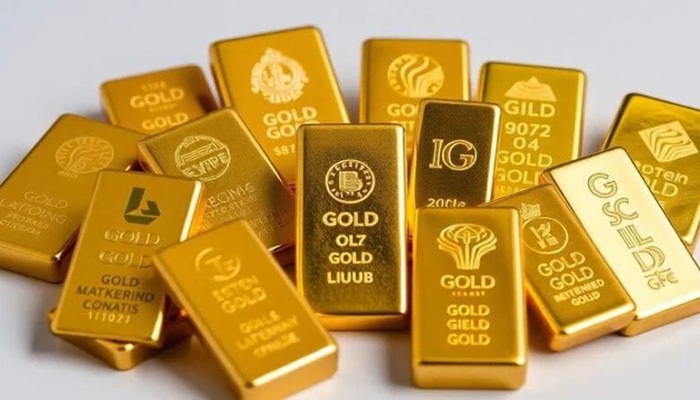
Gold prices steadied above the $4,600 per ounce mark on Friday, supported by a softer U.S. dollar, although the metal remained on track for a second consecutive weekly decline as investors reassessed interest rate expectations and lingering inflation risks.
Spot gold traded within the $4,590 to $4,620 range on May 1, 2026, reflecting a modest recovery from earlier losses. The rebound followed weakness in the dollar, which market participants linked in part to currency market developments involving Japan. A weaker dollar typically makes gold more attractive to investors holding other currencies, providing short-term support for prices.
Despite this stabilisation, the broader trend for the week has been negative, highlighting the competing forces shaping the gold market. On one hand, geopolitical tensions and inflation concerns continue to underpin demand for safe-haven assets. On the other, expectations that central banks will maintain higher interest rates for longer are limiting gold’s upside potential.
Because gold does not yield interest, it tends to become less attractive in a high-rate environment where investors can earn returns from fixed-income assets. Signals from major central banks, including the Federal Reserve, suggest policymakers remain cautious, with inflation risks still present despite signs of moderating growth.
A key driver of those inflation concerns is the ongoing volatility in global energy markets. Elevated oil prices, linked to tensions surrounding the Strait of Hormuz and broader Iran-related developments, continue to feed into global price expectations. Higher energy costs can sustain inflationary pressures, reinforcing the case for tighter monetary policy.
At the same time, gold continues to benefit from its role as a hedge against uncertainty. Data from the World Gold Council shows that central banks have maintained steady purchases of gold in early 2026, underscoring its importance as a reserve asset even amid short-term price fluctuations.
This dual dynamic safe-haven demand versus interest rate pressure, has left gold in a relatively narrow trading range, with neither bulls nor bears fully in control.
Analysts note that the near-term outlook for gold will likely depend on three key factors: the direction of the U.S. dollar, movements in real interest rates, and the evolution of geopolitical risks. Any renewed escalation in global tensions or sharper declines in the dollar could provide fresh upside momentum, while stronger economic data or more aggressive rate signals could weigh further on prices.
For now, gold appears to be in a holding pattern supported by uncertainty but constrained by the realities of a higher-rate global environment.