Ghanaian Businesses Need Easier Access to African Markets as Exports Rise
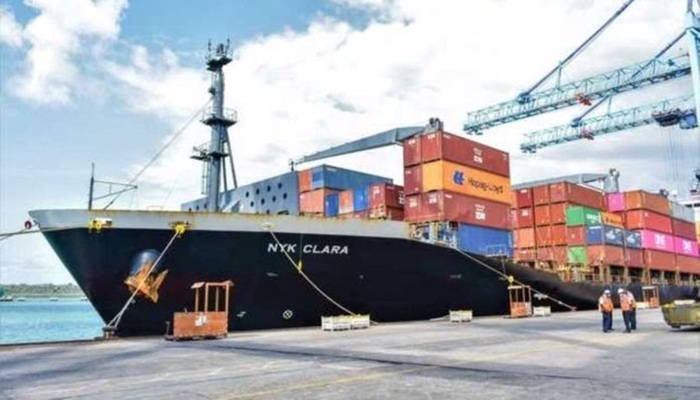
Ghana’s record trade surplus presents an opportunity to strengthen the country’s position in African markets, but businesses still face significant transport, border and regulatory barriers that limit their ability to expand across the continent.
Ghana recorded a merchandise trade surplus of GH¢148.3 billion in 2025, more than three times the GH¢44.7 billion recorded in 2024, according to the Ghana Statistical Service. Exports increased to GH¢401.5 billion, compared with imports of GH¢253.2 billion.
However, gold, cocoa and mineral fuels accounted for nearly 86 per cent of exports, indicating that much of the growth remains driven by commodities rather than a broad expansion of higher-value manufactured goods and services.
The next challenge, therefore, is not simply to increase export volumes but to help Ghanaian companies build sustainable businesses across Africa.
Ghana already has a strong regional market opportunity. The country recorded a GH¢34.7 billion trade surplus with African countries in 2025, exporting more than twice the value it imported from the continent.
Yet high logistics costs and fragmented trade systems continue to undermine this potential. Dangote Group President Aliko Dangote recently highlighted the problem, saying it costs more to ship goods from Lagos to Accra than from Spain to Lagos.
For Ghanaian businesses, such costs can make regional expansion difficult even when their products are competitive. Border delays, documentation requirements, differing standards, transport charges and regulatory inconsistencies can add substantially to the cost of reaching neighbouring markets.
Ghana’s trade policy must therefore move beyond promoting exports to building export-capable companies with regional distribution networks, partnerships, subsidiaries, manufacturing facilities and service operations.
The World Bank has estimated that stronger intra-African trade under the African Continental Free Trade Area (AfCFTA) could almost double Ghana’s trade with regional partners, while increasing the share of African countries in Ghana’s exports by six percentage points. Deeper integration could also support greater domestic value addition, technology transfer and access to larger markets.
Government has a critical role to play by working through ECOWAS and AfCFTA to reduce non-tariff barriers, improve customs procedures, harmonise standards and make regional transport corridors more reliable.
Efficient payment systems are equally important. The Pan-African Payment and Settlement System is designed to facilitate cross-border transactions in African currencies, reducing businesses’ reliance on hard currencies.
Ghana has also introduced initiatives to help local firms access African markets. The National AfCFTA Coordination Office says its Market Expansion Programme has supported more than 2,000 MSMEs through market-readiness training, trade finance and market-access initiatives.
The ultimate goal should be to see more Ghanaian companies establish operations, partnerships and distribution networks across Africa.
Ghana’s growing trade surplus is an opportunity, but it should not encourage complacency. The country must move from earning primarily from what it exports to capturing more value from the products and services its companies create.
That means supporting Ghanaian businesses to transform cocoa, processed foods, pharmaceuticals, textiles, technology and professional services into competitive African and global brands.