Cashew Farmer Demands Pricing Policy, Regulatory Reforms to Protect Producers
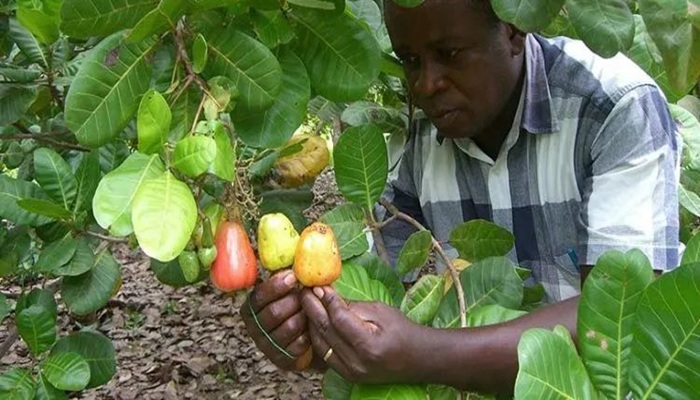
A cashew farmer in Ghana’s Bono Region has called for urgent policy interventions to regulate pricing and strengthen institutional support for producers, warning that the absence of a structured framework continues to expose farmers to exploitation.
Mr. Baah Abdullaih, who was adjudged the 2025 Dormaa Central Municipal Best Farmer, is advocating the introduction of a national pricing policy, a farmer identification system, and the establishment of a dedicated Cashew Board to oversee the sector.
Speaking in an interview at Amasu in the Bono Region, Mr. Abdullaih said the lack of a standardised pricing regime allows buyers to dictate prices, often to the disadvantage of farmers who invest heavily in production.
“It is unfortunate that after all the hard work, buyers can short-change farmers due to the lack of a uniform pricing structure,” he stated.
According to him, the introduction of a clear and enforceable pricing framework would bring transparency to the market, ensure fair returns, and protect producers from arbitrary pricing practices. He noted that adopting a benchmark or guaranteed pricing model—similar to what operates in Ghana’s cocoa sector—would incentivise farmers to scale up production and improve quality.
Mr. Abdullaih further proposed the introduction of a cashew farmer card system to properly register and identify producers. He explained that such a system would enhance traceability, improve data collection, and support better regulation of the value chain.
“Just like cocoa farmers, we also need a cashew farmer card,” he said, stressing that formalising farmer records would strengthen accountability and sector planning.
Central to his appeal is the establishment of a Cashew Board to regulate and promote the industry. He argued that a dedicated governing body would provide a unified platform to address key challenges, including pricing, access to markets, and input supply.
“The Board is needed to represent farmers and address our concerns at the national level,” he added.
Beyond pricing and regulation, Mr. Abdullaih underscored the need for enhanced extension services tailored specifically to the cashew sector. He noted that while cocoa farmers benefit from structured technical support, cashew producers often lack access to extension officers who can provide guidance on modern farming techniques, pest management, and post-harvest handling.
He emphasised that improving technical support would significantly boost yields and help Ghana meet international quality standards, thereby increasing competitiveness in global markets.
Mr. Abdullaih also called for stronger farmer associations to improve collective bargaining power, noting that organised groups are better positioned to negotiate favourable prices and engage policymakers effectively.
Describing cashew as an “economic tree” with immense potential, he said the crop could transform rural livelihoods, particularly in cashew-growing regions such as Bono, Bono East, and parts of the Savannah belt.
He expressed optimism that with the right policy direction, institutional backing, and investment, Ghana’s cashew industry could emerge as a major contributor to export earnings and rural economic development.
Industry observers note that as global demand for cashew continues to rise, Ghana stands to benefit significantly if structural bottlenecks are addressed and value chain efficiency is improved.