Ghana, Burkina Faso Deepen Security Cooperation to Safeguard Trade
By Praisebell Rosemond Larbi
Ghana and Burkina Faso are moving to strengthen bilateral security cooperation following a deadly extremist attack in Titao that claimed the lives of eight Ghanaian traders, in a development that has heightened concerns over cross-border safety and trade continuity within the sub-region.
The incident has exposed the growing vulnerability of traders and transport corridors linking Ghana to the Sahel, particularly routes critical for the movement of agricultural commodities such as tomatoes and other perishable goods. The attack occurred when traders returning from Burkina Faso were ambushed by armed extremists in the northern Burkinabè town of Titao, a key transit point for Ghanaian importers supplying markets in Accra, Tamale and beyond.
Beyond the tragic loss of life, the incident has triggered widespread anxiety among traders, many of whom now face difficult decisions about whether to continue operating along these routes. For small and medium-sized enterprises that depend on cross-border commerce, the risks extend beyond personal safety to include potential loss of goods, increased transport costs and disruptions to supply chains.
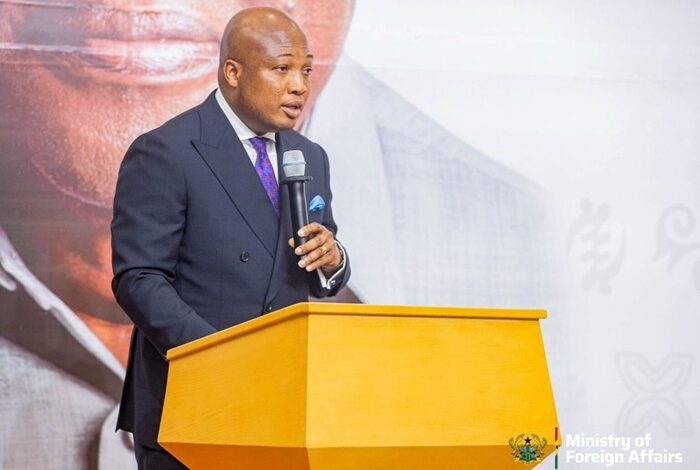
Speaking at a press conference on February 20, Foreign Affairs Minister, Samuel Okudzeto Ablakwa, announced that both countries are working toward a comprehensive security framework to address the emerging threat.
“We have decided to deepen our security cooperation. We are currently negotiating a security framework which will help us to work together and collectively to neutralise these violent extremists,” he stated.
According to the Minister, the proposed framework will focus on enhanced intelligence sharing, coordinated border surveillance, and joint security operations aimed at dismantling extremist networks operating along key trade corridors. He stressed that preventing the spread of terrorism in the sub-region is not only a security priority but also an economic imperative.
The initiative is expected to restore confidence among traders and transport operators by improving safety along high-risk routes. A more secure trading environment could help stabilise supply chains, reduce insurance and logistics costs, and encourage the resumption of normal commercial activities, particularly in northern Ghana where cross-border trade plays a vital economic role.
Mr. Ablakwa also commended the Burkinabè authorities for their swift response to the incident, including the evacuation and airlifting of injured Ghanaian nationals back home, noting that such cooperation reflects a shared commitment to regional solidarity.
The renewed partnership comes at a time when the success of frameworks such as the African Continental Free Trade Area depends not only on tariff reductions but also on the safety and reliability of trade routes. Persistent insecurity in parts of the Sahel has increasingly become a binding constraint on intra-African trade.
By formalising a joint security approach, Ghana and Burkina Faso are signalling a shift toward integrated responses that recognise the link between security and economic resilience. Analysts note that if effectively implemented, the cooperation could serve as a model for other West African nations grappling with similar threats, ensuring that trade, livelihoods and regional stability are protected from the growing risks of violent extremism.