Tunisia Deepens Role in Africa’s Continental Free Trade Area
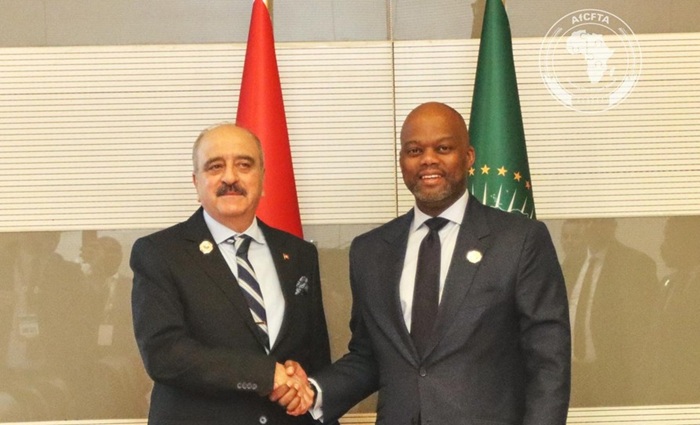
H.E. Wamkele Mene, Secretary-General of the African Continental Free Trade Area (AfCFTA), has emphasized the urgency of advancing Africa’s trade integration during high-level talks with Mohamed Ali Nafti, Tunisia’s Minister of Foreign Affairs.
Speaking on the sidelines of the 39th African Union Summit both leaders reaffirmed their commitment to deepening Tunisia’s participation in the continental free trade area and ensuring its benefits reach women, youth and the private sector.
The bilateral meeting, held alongside the AU’s flagship summit of African heads of state and government, addressed a wide-ranging agenda that included private sector mobilisation, digitalisation of trade processes, and the development of strategic trade corridors. Both leaders stressed the importance of inclusive implementation of the AfCFTA framework.
As a founding signatory of AfCFTA, Tunisia brings considerable assets to the continental integration effort. The discussions highlighted the need to convert Tunisia’s formal participation into active market engagement, with businesses playing a key role in driving trade and investment flows. While governments can create enabling frameworks and reduce barriers, it is private enterprise that ultimately generates the economic activity the agreement seeks to stimulate.
Digitalisation emerged as a transformative tool for trade facilitation. The AfCFTA Protocol on Digital Trade provides a framework for governing electronic commerce, enabling secure data flows, and modernising cross-border trade systems. Tunisia, which has invested heavily in digital infrastructure and boasts a growing technology sector, can benefit from modernised customs procedures, electronic documentation, digital payments, and e-commerce platforms—reducing both the time and cost of cross-border trade.
The Protocol also addresses critical issues such as data governance, cybersecurity, and digital identity, which are essential for building the trust needed for digital commerce to thrive across the continent.
Both leaders committed to ensuring AfCFTA implementation is genuinely inclusive, particularly for women, youth, and small businesses that have often been marginalised in trade liberalisation. The Protocol on Women and Youth in Trade obliges member states to implement targeted policies and programmes to address specific barriers and expand participation.
The collaboration between Secretary-General Mene and Minister Nafti demonstrates that AfCFTA’s success will be measured not only by trade statistics but also by its real impact on ordinary Africans. Women traders, who form the backbone of cross-border commerce, and young entrepreneurs, who represent Africa’s economic future, are expected to gain from these inclusive policies.
The Tunisia-AfCFTA partnership illustrates how continental integration can be both strategic and socially transformative, setting a benchmark for other African nations seeking to deepen economic ties.