

TI Ghana Pushes for Stronger Rules to Govern Foreign Investments
By Praisebell Rosemond Larbi
Transparency International (TI) Ghana has called on the government to establish clear, transparent and enforceable rules to regulate foreign investments, particularly in strategic sectors and critical national infrastructure, warning that weak oversight could undermine national interests.
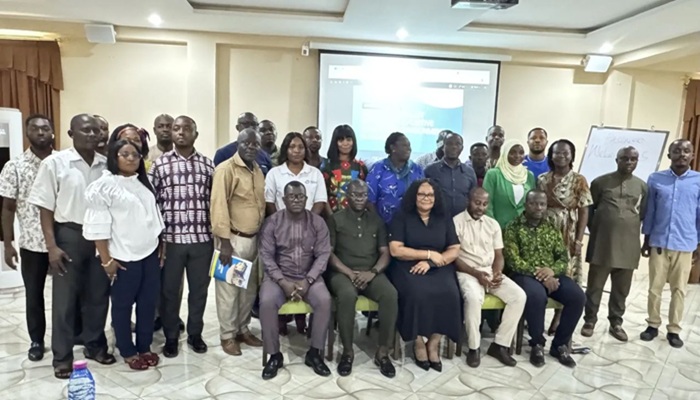
The call was made by Programmes Manager of TI Ghana, Mr. Benedict Doh, during a stakeholder roundtable in Adako-Jachie in the Ashanti Region, where findings from the organisation’s recent research on foreign investment governance were presented.
Mr. Doh stressed that while attracting foreign capital remains important, Ghana must move beyond a narrow focus on inflows to a more balanced framework that safeguards national security, promotes accountability and aligns investments with long-term development priorities.
He said an effective foreign investment regime should include robust screening mechanisms, comprehensive due diligence procedures, mandatory disclosure requirements and, where necessary, national security reviews to ensure investments serve the public interest.
“Foreign investment must not only be about capital attraction; it must be about protecting Ghana’s strategic interests and ensuring that investments contribute meaningfully to sustainable development,” he noted.
Mr. Doh warned that weak institutional capacity continues to undermine effective oversight, explaining that some state agencies responsible for attracting, regulating and monitoring foreign investments lack adequate resources and technical expertise.
“This gap creates vulnerabilities in how investment decisions are taken and monitored,” he said, adding that strengthening institutional capacity is critical to protecting the public interest and preventing regulatory capture.
He further called for the reinforcement of democratic institutions and civil society organisations, arguing that their active involvement would enhance transparency, accountability and public participation in foreign investment decision-making.
Beyond domestic reforms, TI Ghana advocated deeper regional and international cooperation to enable Ghana to adopt global best practices, harmonise investment standards and promote responsible investment behaviour across borders.
Mr. Doh also encouraged the diversification of financing sources, urging policymakers to attract market-oriented capital that is well-governed, transparent and responsive to local development needs.
On the regulatory front, a representative of the Ghana Investment Promotion Centre (GIPC), Mr. Michael Otchere, said safeguards were already in place to protect local businesses. He cited restrictions on foreign participation in retail trading and requirements mandating the employment of Ghanaian workers as part of investment agreements.
Executive Director of TI Ghana, Ms. Mary Awelana Addah, underscored the need for sustained collaboration to address governance challenges within the investment space.
She said improving Ghana’s business climate and strengthening investor confidence would require coordinated action by civil society, policymakers, regulators, the private sector and development partners.
“Building trust in the system is not the responsibility of one institution alone,” she said. “It requires collective effort and shared accountability.”



