Gov’t Orders Independent Audit as Road Fund Debt Hits GH¢8b
By Praisebell Rosemond Larbi
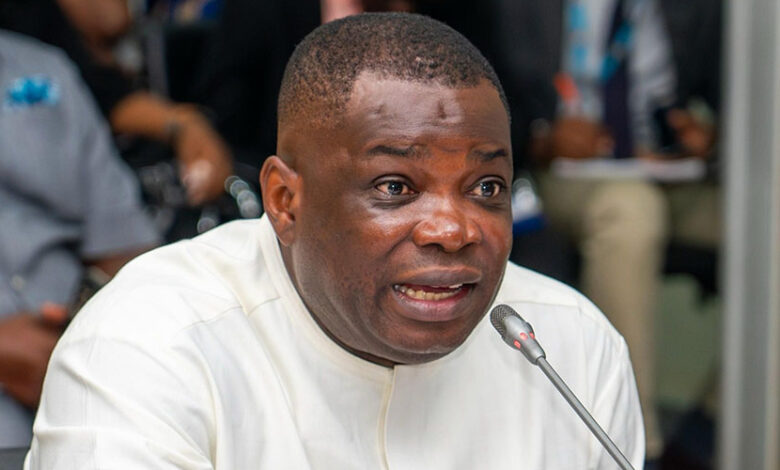
The government has initiated an independent audit into payment certificates submitted by road contractors, as the Road Fund, now operating under a restructured framework faces an overwhelming debt burden exceeding GH¢8 billion. The move, according to Minister for Roads and Highways, Governs Kwame Agbodza, is aimed at restoring credibility, improving accountability, and ensuring Ghana’s road maintenance financing system is no longer crippled by accumulated arrears and structural weaknesses.
Speaking at the inauguration of the governing board of the newly created Road Maintenance Trust Fund, the minister disclosed that the sector’s financial distress has reached a point where the government must verify every outstanding claim before any payment is approved. He explained that although contractors have submitted certificates amounting to more than GH¢8 billion, the anticipated inflows for 2025 stand at only GH¢2.5 billion, far below what is required to settle arrears or sustain maintenance activities nationwide.
“As of this morning, certificates raised to be retired on the back of this fund are in excess of eight billion. The accruals that may be available for 2025 may be just above two-point-five billion or around two billion,” Mr. Agbodza revealed, stressing that the imbalance between obligations and available resources demands a more rigorous approach than in previous years.
He noted that an independent audit team is already verifying all certificates submitted by contractors. The report is expected within days, after which the first batch of validated payments will be released. “An independent audit is currently ongoing to validate the certificates… hopefully this week, the report will be out and the first batch of payments will be made,” he said.
The minister explained that the former structure of the Road Fund allowed contractors who secured court judgments to draw significant amounts from the fund, often draining resources overnight and leaving other contractors and districts without any support. This, he argued, created inequitable access to maintenance financing and deepened the infrastructure deficit across several constituencies.
The restructured Road Maintenance Trust Fund, he said, is designed to prevent such distortions.
“This new framework ensures that every constituency in Ghana will see an amount of money allocated for minimum road maintenance activity. We want to eliminate the disparities of the past where some areas received little or nothing because funds had already been depleted through unbalanced payouts,” Mr. Agbodza emphasized.
He added that the government remains committed to clearing the outstanding debt “in a disciplined and transparent manner,” noting that a more predictable financing mechanism is necessary to avoid future disruptions in the road construction and maintenance industry. “Government is working to make sure that contractors we owe are paid… we hope to retire more of the eight billion when we enter the new year,” he said.
Mr. Agbodza further assured industry stakeholders that the reforms would not only strengthen the fund’s governance but also rebuild trust between contractors and the state. The new board, he said, has a mandate to ensure that funds are directed strictly toward essential maintenance, prioritisation of high-impact roads, and equitable distribution of resources.
With the Road Fund carrying one of the largest arrears in the infrastructure sector, the audit and restructuring are expected to form the basis of a longer-term financial recovery strategy aimed at improving mobility, supporting economic activity, and ensuring Ghana’s road network does not deteriorate further.