

What Businesses Expect and What Gov’t Predicts Ahead of 2026 Budget Statement
As Finance Minister Dr. Cassiel Ato Forson prepares to present Ghana’s 2026 National Budget to Parliament today, the country’s business community and international partners are looking closely for a blueprint that consolidates economic stability while providing tangible relief to households and enterprises still feeling the pinch of inflation, high interest rates, and slow credit growth.
The presentation comes at a delicate moment and happens to be the government’s full budget presentation. Ghana’s economy, while showing signs of recovery, continues to navigate global headwinds marked by weak commodity prices, high borrowing costs, and cautious investor sentiment. Inflation has slowed to single digits and the cedi has stabilised, but businesses say the benefits of this macroeconomic progress are yet to be fully felt at the micro level.
In a statement ahead of the budget presentation, the Ministry of Finance assured that the 2026 fiscal plan would build on recent gains achieved under the International Monetary Fund (IMF) programme while prioritising growth, jobs, and social protection.
Finance Minister Dr. Ato Forson said the new budget seeks to “anchor stability and growth through prudent spending, innovative revenue measures, and enhanced support for productive sectors.” He noted that government would focus on broadening the tax base rather than raising tax rates, ensuring that policy measures stimulate rather than suppress enterprise growth.
According to him, the 2026 budget would also prioritize investments in manufacturing, agriculture, and the digital economy, while ensuring fiscal consolidation remains on track to meet debt sustainability targets. “Our goal is to move from recovery to sustained growth, to make stability meaningful for every Ghanaian,” Dr. Forson stated.
A 2026 Pre-Budget Survey by professional services firm KPMG revealed strong calls from industry players for targeted fiscal relief and improved access to low-cost financing. The survey, conducted in collaboration with the United Nations Development Program (UNDP), gathered perspectives from more than 100 companies across sectors.
KPMG’s findings show that while private-sector confidence in Ghana’s macroeconomic management has improved, firms remain concerned about liquidity constraints, rising operational costs, and limited access to credit. The report found that 85% of respondents cited affordable and long-term finance as their most pressing need, calling for credit-guarantee schemes, concessional loans, and grants to help businesses expand and participate meaningfully in government programs such as the 24-Hour Economy initiative.
KPMG noted that although the government’s recent reforms, including the repeal of the E-levy and revisions to import duties have improved the operating environment, “the gains of macro stability are yet to translate into lower cost of capital and stronger business expansion.”
The firm urged government to consolidate these reforms through policy continuity, tax simplification, improved power reliability, and clearer communication on fiscal priorities.
Development Economist, Dr. Felix Larry Essilfie, speaking on the Business Breakfast on ZED 101.9 FM (BBZ) , also emphasised the need for the 2026 Budget to bridge stability with inclusivity. He cautioned that while Ghana’s fiscal outlook has improved, “there is a risk of complacency if the next budget focuses solely on numbers rather than the lived realities of firms and households.”
According to him, the government must continue strengthening coordination between monetary and fiscal authorities and ensure that fiscal discipline does not stifle productive investment. “Businesses are operating under very high borrowing costs. The priority now is to create space for affordable credit and energy stability while sustaining confidence among investors,” he said.
He also underscored the importance of protecting social spending amid tightening fiscal conditions, adding that “a credible budget is one that combines prudence with compassion, ensuring that growth reaches the real economy.”
IMF and World Bank Commend Progress, Warn Against Fiscal Slippage.
Following Ghana’s 2025 Mid-Year Budget Review, both the IMF and World Bank expressed optimism about Ghana’s stabilisation progress but urged sustained policy consistency.
The IMF praised Ghana for achieving faster-than-expected disinflation, a narrowing fiscal deficit, and stronger foreign-exchange buffers. However, it warned that maintaining fiscal discipline during the 2028 election year will be crucial to consolidating gains under the Fund-supported program. “Avoiding expenditure overruns and adhering to fiscal targets will be essential to prevent renewed macroeconomic pressures,” the IMF noted in its July 2025 assessment.
The World Bank, in its follow-up statement, commended Ghana for progress in debt restructuring and public-finance management but emphasised that structural reforms remain critical. It urged deeper efforts to enhance domestic revenue mobilisation, streamline energy-sector liabilities, and improve transparency in public spending. “Ghana’s turnaround is commendable, but sustained implementation will determine whether this recovery becomes resilient,” the Bank stated.
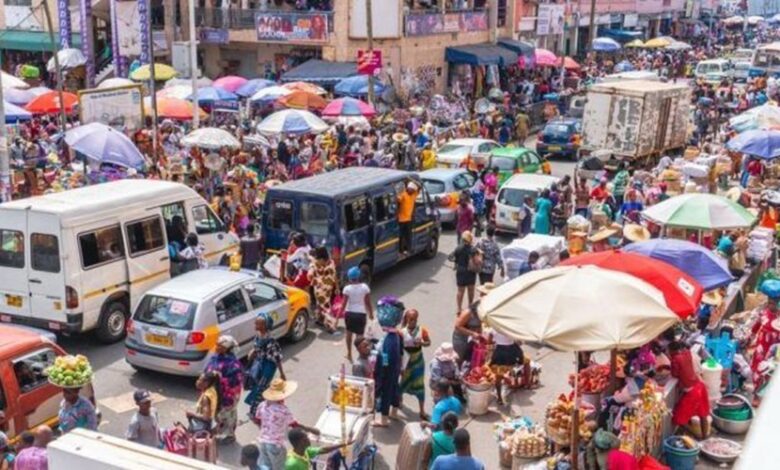
Away from boardrooms and policy tables, many citizens are hoping for a budget that translates stability into tangible relief. Residents of East Legon who spoke to The New Finder called on government to introduce measures that directly address the high cost of living.
“The prices of food, rent, and utilities are unbearable. We need policies that bring prices down and create jobs,” said a shop owner. Others appealed for increased investment in education and agriculture to promote long-term growth.
As government sets out its 2026 fiscal direction, business leaders, economists, and development partners appear aligned on one point, Ghana’s recovery is real but fragile. The coming months will test the government’s ability to maintain discipline while driving inclusive growth.
The budget, analysts say, presents an opportunity to define Ghana’s next phase of economic transformation, one where stability becomes a platform for productivity, innovation, and shared prosperity.
If government gets the balance right, 2026 could mark not just another fiscal year, but a turning point in Ghana’s pursuit of resilient and inclusive growth.



