Ghana’s Economic Recovery Remains Fragile amid Heavy Commodity Dependence — S&P Cautions
Global credit ratings agency S&P Global Ratings has expressed concern over the sustainability of Ghana’s economic recovery, warning that the country’s overreliance on gold and cocoa exports leaves it highly vulnerable to global market shocks and unfavorable weather conditions.
Despite the notable gains achieved in recent months, including declining inflation and a stronger cedi, S&P believes Ghana’s economic rebound remains fragile. In its latest assessment, the agency said the nation’s progress could easily unravel if commodity prices fall or external pressures intensify.
“In our view, notwithstanding stronger recent economic outturns, Ghana’s economy remains exposed to risks from commodity price fluctuations and broader external and weather-related shocks,” S&P noted.
Commodity Dependence a Major Risk
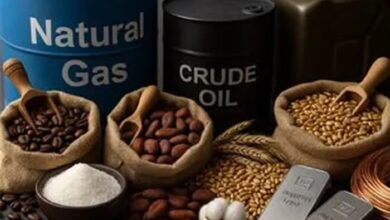
Gold, cocoa, and crude oil jointly account for over 60 per cent of Ghana’s export earnings, underscoring the economy’s deep dependence on commodity exports. While surging gold and cocoa prices have recently provided relief, strengthening the cedi by about 30 per cent against the US dollar and boosting foreign reserves to nearly $11 billion by late 2025, analysts warn that such good fortune is precarious.
S&P emphasized that the same global market dynamics that have brought relief could just as easily trigger renewed instability. When commodity prices fall, Ghana’s fiscal space narrows, the cedi weakens, and inflationary pressures mount, leading to strained public finances.
Vulnerability to Weather and External Shocks
Ghana’s agricultural sector continues to play a critical role in the economy, contributing significantly to GDP. However, S&P observed that the sector’s sensitivity to weather patterns remains a key weakness. Poor rainfall, flooding, or pest infestations could undermine food security, reduce cocoa yields, and drive up prices, threatening the government’s single-digit inflation target.
Additionally, the agency cautioned that global uncertainties, ranging from energy price volatility to geopolitical tensions, could weigh heavily on the country’s trade and fiscal stability.
Fiscal Discipline Faces Election-Year Test
S&P also questioned whether Ghana’s recent fiscal reforms would withstand the political pressures of future election years. The agency acknowledged that the government has implemented new measures to curb overspending, but described these reforms as “nascent” and yet to be tested.
“We also consider that the effectiveness of nascent fiscal reforms is yet to be tested, especially during future election cycles, which in the past have coincided with large increases in public spending in Ghana,” S&P feared.
Historically, election seasons in Ghana have been associated with surges in government expenditure, often leading to budget overruns, higher debt levels, and inflation. A repeat of this pattern, S&P warned, could derail efforts to maintain fiscal stability and achieve a sustainable debt path.
Implications for Ghanaians
The agency’s concerns mirror those of many local and international economists who argue that Ghana’s economic stability remains largely dependent on factors beyond its control.
A decline in gold prices could erode government revenues, reducing funds available for infrastructure, education, and healthcare. Similarly, a poor cocoa harvest would not only slash farmers’ incomes but also threaten rural livelihoods and slow economic growth.
For ordinary Ghanaians, S&P’s caution is a reminder that the current economic calm, marked by a firmer cedi and lower inflation, may be short-lived unless structural weaknesses are addressed.
Experts agree that to secure lasting economic resilience, Ghana must diversify its economy beyond commodities and ensure its fiscal reforms can endure the test of political cycles.