

World Bank flags challenges from Nigeria’s growing youth population
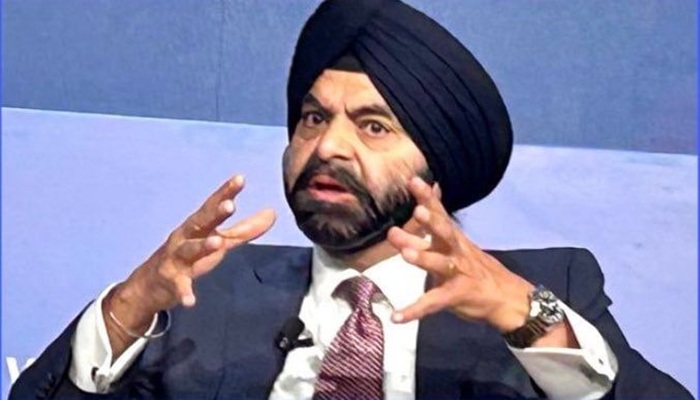
The World Bank President, Ajay Banga, has warned that without deliberate and coordinated global action, the growing population of young people could become a source of instability rather than a catalyst for progress.
He projected that Nigeria’s population may rise by about 130 million by 2050.
Mr Banga made the remarks during the 2025 Annual Meetings of the International Monetary Fund and the World Bank Group, highlighting Africa’s explosive population growth as both an unprecedented opportunity and a looming risk.
He cautioned that failure to create economic opportunities might turn youthful optimism into frustration, fuelling unrest, insecurity, and mass migration.
According to Mr Banga, with the right investments focused on opportunity rather than need, Africa’s young population could become a powerful engine for sustainable growth and innovation.
He described the coming decades as one of the great demographic shifts in human history, noting that by 2050, more than 85 per cent of the world’s population will live in countries currently considered developing.
Over the next 10 to 15 years, approximately 1.2 billion young people will enter the global workforce, competing for only 400 million available jobs, leaving a gap of 800 million unemployed or underemployed youths worldwide.
Mr Abanga noted: “Reconstruction is an essential part of our mandate. A service we stand ready to deliver whenever and wherever it is needed and to the best of our ability. At the same time, as an institution of development, we are equally committed to conflict prevention.
“Alongside rebuilding what has been lost, we must also focus on creating the conditions for opportunity and stability. That is what motivates our actions and decisions today. By 2050, more than 85 per cent of the world’s population will live in countries we call developing today.
“In just the next 10 to 15 years, 1.2 billion young people will enter the workforce, vying for roughly 400 million jobs. That leaves a very large gap. Let me express that urgency another way. Four young people will step into the global workforce every second over the next ten years.”
He added that in the time it takes to deliver these remarks, tens of thousands would cross that threshold, full of ambition and impatient for opportunity.
The World Bank President said the pace of population growth was most staggering in Africa, which will be home to one in four people by 2050.
“Between now and then, estimates suggest that Zambia will add 700,000 people every year. Mozambique’s population will double. Nigeria will swell by about 130 million, firmly establishing itself as one of the most populous nations in the world.
“These young people, with their energy and ideas, will define the next century. With the right investments, focused on opportunity, we can unlock a powerful engine of global growth. Without purposeful effort, their optimism risks turning into despair, fuelling instability, unrest, and mass migration, with implications for every region and every economy,” he stated.
According to the United Nations Population Fund, Nigeria’s current population stands at about 237.5 million, making it the most populous nation in Africa and the sixth largest globally. With the projected surge, Nigeria could surpass many developed nations in population size and youth demographics.
Mr Banga described Africa as the epicentre of this demographic transformation, where birth rates remain high and economic growth has struggled to keep pace. He emphasised that job creation must be at the core of all national and international development strategies.
“This is why jobs must be at the centre of development, economic, or national security strategy,” he stressed.
Mr Banga disclosed that the World Bank Group has expanded its financial capacity by about USD100 billion through new instruments and partnerships.
The multilateral development bank co-financing platform now hosts a pipeline of 175 projects, with 22 already financed, worth about USD23 billion.
The Bank is also working on an IFC2030 strategy aimed at mobilising more private capital to complement public investment, particularly in developing economies like Nigeria.



