

Ghana urged to embrace non-interest finance for sustainable growth
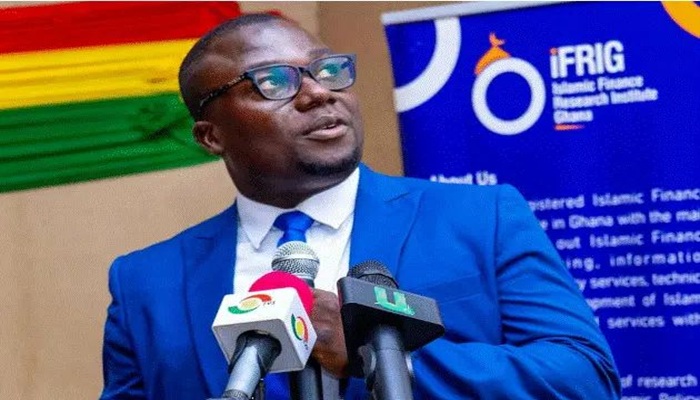
Ghana’s ongoing economic recovery has prompted renewed calls for a bold rethink of the country’s financial strategy, with non-interest or participation-based finance identified as a key pillar for sustainable and inclusive growth.
The Islamic Finance Research Institute Ghana (iFRIG), in its newly released ICD–LSEG Islamic Finance Development Report 2025, has urged the Ministry of Finance to explore non-interest financial instruments such as sukuk, or non-interest bonds, to support Ghana’s development agenda.
The report paints a striking picture of a world rapidly moving towards ethical, asset-backed, and sustainable financial systems.
According to iFRIG, the global Islamic finance industry reached nearly USD5.98 trillion in assets, growing by 21 per cent in 2024 alone. Operating in 140 countries, including 84 non-OIC nations, the sector’s expansion reflects its growing acceptance across both Muslim and non-Muslim markets.
At the current growth rate, the sector is projected to surpass USD9.7 trillion by 2029, with more than 2,250 non-interest financial institutions operating worldwide.
The report argues that this surge demonstrates how non-interest finance has evolved from a niche concept into a mainstream global force, shaping how nations mobilise resources, empower entrepreneurs, and build resilient economies.
Beyond banking, the report notes, Islamic finance encompasses a wide ecosystem including sukuk, Islamic funds, takaful, or non-interest insurance, and other financial entities. Islamic banking accounts for about 72 per cent of total assets, while sukuk, now valued at over USD1 trillion, have become essential tools for funding infrastructure and renewable energy projects.
ESG-linked sukuk reached a record USD61.5 billion in outstanding value, with issuances rising by 14.7 per cent in 2024, underscoring the global shift towards ethical and climate-conscious financing.
The report identifies Malaysia, Saudi Arabia, the United Arab Emirates, Indonesia, and Pakistan as leaders in the field, thanks to clear regulatory frameworks, robust governance, and strong public awareness.
Malaysia remains the global leader in Islamic finance knowledge, while Saudi Arabia leads in financial performance. Malaysia alone accounts for 36 per cent of global sukuk outstanding, illustrating how deliberate policy adoption can make non-interest finance a major driver of national development.
The appeal of non-interest finance lies in its principles of fairness, transparency, and shared responsibility. It discourages speculative and interest-based transactions, promoting instead asset-backed and risk-sharing investments tied to real economic activities. These features have made it attractive to both Muslim and non-Muslim investors seeking ethical and sustainable alternatives.
In the context of Ghana’s improving macroeconomic indicators, including easing inflation, stronger reserves, and renewed growth momentum, experts argue that the country is well positioned to integrate this model into its financial framework.
According to iFRIG, adopting non-interest finance could diversify Ghana’s funding sources, attract ethical capital, empower small and medium enterprises, and advance the nation’s sustainability goals.
“As the Finance Minister prepares to present the national budget to Parliament, it is timely to consider non-interest finance as a new financing model or a strategic addition to Ghana’s funding mix. We urge him to explore sukuk as a viable option to support the government’s Big Push agenda for infrastructure and industrial development,” the report stated.
Several countries, including Nigeria, Togo, Benin, Niger, Germany, China, and Luxembourg, have already adopted sukuk as a sustainable financing tool, channelling proceeds into projects such as roads, schools, hospitals, and renewable energy without adding to interest-bearing debt.
The 2025 ICD–LSEG report highlights that nations integrating sukuk into their financial systems tend to enjoy higher investor confidence, stronger sustainability performance, and more diversified funding bases. Currently, 53 countries operate takaful systems, 50 have sustainability guidelines, and 57 have formal Islamic finance regulations.
Meanwhile, 1,186 educational institutions now offer Islamic finance studies, and 5,291 research papers were produced in 2024 alone, evidence of growing global expertise and innovation.
As the global financial landscape evolves towards ethics and inclusion, iFRIG believes Ghana stands at a pivotal moment.
Integrating non-interest finance, the institute argues, would strengthen the nation’s economic resilience and align Ghana with a worldwide movement promoting fairness, sustainability, and shared prosperity.
The report concludes that by taking deliberate steps to adopt non-interest financial instruments, Ghana can secure a more inclusive and enduring path to economic growth, one that serves both present and future generations.



