Ghana-China Trade Hits $14.1bn
Trade between Ghana and China reached a record US$14.1 billion in 2025, reflecting deepening economic relations between the two countries and reinforcing China’s position as Ghana’s largest trading partner and one of its biggest sources of foreign investment.
The figure represents a 19.3 per cent increase over the previous year, underlining the growing scale of bilateral commerce, investment and industrial cooperation between Accra and Beijing.
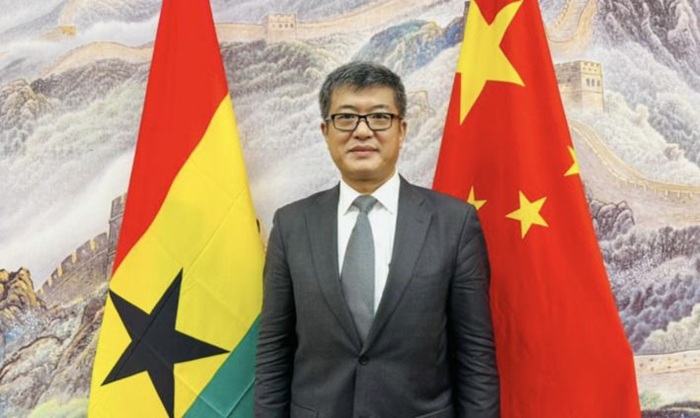
The Chinese Ambassador to Ghana, Cong Song, disclosed this during his first official press briefing in Accra on Monday, where he described relations between the two countries as broad, dynamic and strategically aligned with their respective development agendas.
According to him, both countries are pursuing ambitious economic transformation programmes that create strong opportunities for long-term cooperation.
“China and Ghana share highly compatible development philosophies, and the prospects for cooperation in various fields are broad,” he stated.
Mr Cong explained that while China is implementing its 15th Five-Year Plan focused on high-quality development, technological innovation and industrial modernisation, Ghana is simultaneously pursuing economic recovery and industrial expansion under the government’s “24-Hour Economy” and “Resetting Ghana” agenda.
He noted that the strengthening trade relationship has been supported by increasing Chinese investments across key sectors of Ghana’s economy, including mining, energy, manufacturing, aviation and construction.
According to the ambassador, Chinese-backed enterprises operating in Ghana have become deeply embedded within the country’s industrial and commercial landscape.
“The China-invested mining companies, power plants, oil refineries, airlines, steel companies, ceramic companies and cement factories have deeply rooted themselves in Ghana, creating thousands of jobs and significantly improving the lives of local residents,” he said.
Mr Cong added that China remains ready to deepen investment and industrial cooperation with Ghana through technology transfer, infrastructure support and expanded manufacturing partnerships.
He pointed specifically to opportunities linked to the proposed Volta Economic Corridor project, which government officials say could drive industrialisation, logistics development and export growth across the country.
The ambassador also highlighted China’s new zero-tariff policy for exports from 53 African countries with diplomatic ties to Beijing, including Ghana.
The policy, which took effect on May 1, 2026, removes import duties on Ghanaian exports such as cocoa products, cashew, shea butter, textiles and handicrafts entering the Chinese market.
According to him, the initiative is expected to reduce export costs for Ghanaian businesses, improve competitiveness and stimulate investment into local value-added processing industries.
“For example, Ghanaian cocoa previously had tariffs ranging from eight to 22 per cent, but after the implementation of the zero-tariff treatment, cocoa and other products can now enter China duty-free,” he noted.
Mr Cong said the arrangement could help Ghana diversify exports, create jobs and strengthen opportunities for small and medium-scale enterprises.
Beyond trade and investment, the ambassador stressed the importance of cultural and educational exchanges in strengthening bilateral relations.
He disclosed that more than 10,000 Ghanaian students are currently studying Chinese language and culture, while nearly 600 exchange activities involving youth, media, tourism, arts and governance are expected to take place this year under the 2026 China-Africa Year of People-to-People Exchanges initiative.
Touching on illegal mining, popularly known as galamsey, Mr Cong reiterated China’s support for Ghana’s efforts to tackle the environmental menace.
He stressed that the Chinese government opposes the involvement of Chinese nationals in illegal mining and has consistently urged its citizens abroad to comply with the laws of host countries.
The ambassador further called on the Ghanaian media to continue reporting fairly and comprehensively on Ghana-China cooperation and the role of Chinese businesses operating in the country.
He expressed optimism that the growing partnership between Ghana and China would continue to create opportunities for trade, industrialisation, investment and long-term economic development.