African bonds rally to record highs as investor confidence surges
African sovereign bonds are enjoying a record-breaking year, with the S&P Africa Sovereign Bond Index posting a 20.45 per cent year-to-date return as of 3 October 2025, according to S&P Dow Jones Indices.
This performance outpaces most emerging and developed market peers, signalling renewed investor appetite for African debt amid improving macroeconomic conditions and easing global monetary policies.
Local sovereign bonds, issued in national currencies to fund government spending, have benefited from falling inflation and stable exchange rates.
Rising bond prices and steady coupon payments have delivered high returns, reflecting stronger domestic fundamentals. These gains have influenced the pricing of Africa’s Eurobonds, as investors reassess risk and reduce the yield premiums previously demanded for holding African debt.
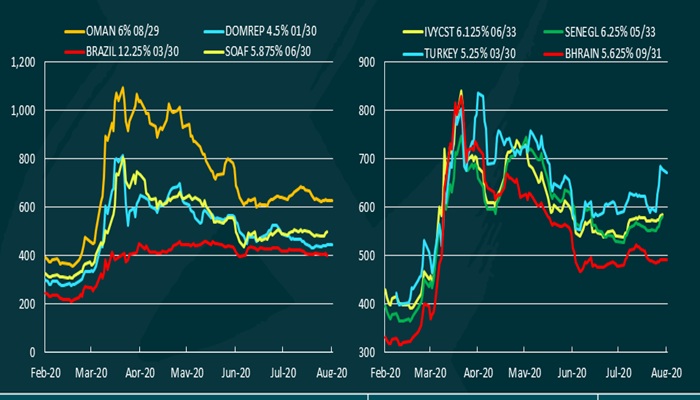
The spread between initial coupon rates and current yields on African Eurobonds has narrowed to pre-pandemic levels.
Bloomberg reports that the Cbonds Africa Sovereign USD T-Spread Index shows an average differential of 388 basis points over US Treasuries in early October, down from around 900 basis points in 2023. This tightening allows African governments to access international markets at lower costs, easing the burden of external debt servicing.
Ghana has emerged as a standout performer, with local sovereign bond returns exceeding 20 percent. Following a successful USD13 billion debt restructuring under the G20 Common Framework earlier this year, investor confidence has surged.
The Ghanaian cedi has appreciated by more than 15 per cent against the US dollar since January, boosting returns for foreign investors.
Zambia has posted similar gains after completing a USD6.3 billion debt restructuring in June. Rising copper prices, averaging close to USD10,000 per tonne, have strengthened government revenues and improved fiscal stability.
In North Africa, Morocco has maintained solid performance, supported by an investment-grade upgrade from S&P Global in March. Local bonds have delivered 15 to 18 percent year-to-date gains, attracting foreign inflows and pushing benchmark yields below 4 per cent.
Côte d’Ivoire and Senegal have also contributed to the region’s rally, each posting returns above 15 per cent. Both countries have benefited from strong export revenues, cocoa for Côte d’Ivoire and phosphates for Senegal, alongside prudent fiscal management that has kept debt-to-GDP ratios below 60 per cent.
South Africa has shown moderate gains of 8 to 10 per cent, reflecting its larger and more mature bond market. Kenya’s higher-yielding instruments have added volatility but helped lift regional averages.
Overall, African sovereign bonds have outperformed the JPMorgan Emerging Markets Bond Index Global Diversified by 4 to 6 percentage points since January.
Macroeconomic Tailwinds
Improved macroeconomic conditions have underpinned this rally. Inflation in major global economies has returned to target ranges of 2 to 3 percent, allowing African central banks to lower interest rates.
In Nigeria, the benchmark rate was cut from 26.25 per cent to 24 percent in September. Several African currencies have strengthened, helping to contain imported inflation and stabilise local bond markets.
Commodity prices have also provided support. Crude oil remains near USD 80 per barrel, industrial metals have gained about 15 per cent year-to-date, and agricultural exports continue to perform well. These trends have improved fiscal balances and bolstered external positions across the continent.
The US Federal Reserve’s easing cycle, with three rate cuts in 2025, has increased investor interest in higher-yielding emerging market assets. African bonds offering returns of 7 to 9 percent have attracted inflows from global funds reallocating capital from developed markets with lower yields.
Credit rating agencies have responded positively. Nigeria received upgrades from Fitch and Moody’s to B minus, citing higher oil revenues and fiscal consolidation. Ghana was removed from selective default status following its restructuring, and South Africa received a positive outlook after forming a Government of National Unity. According to Fitch Ratings, 2025 marks the first year since 2018 in which emerging market upgrades have outnumbered downgrades.
Eurobond Revival and Sukuk Surge
Improved ratings have spurred new Eurobond activity. By early October, 14 sovereign issuances across eight African countries had raised approximately USD15.7 billion, a 25 percent increase compared with the same period in 2024. Sub-Saharan Africa accounted for about three-quarters of this total.
Morocco’s USD3 billion Eurobond issued in the second quarter and Benin’s USD700 million offering were both heavily oversubscribed. Angola returned to the market in July with a USD1.5 billion Eurobond, its first since 2022, priced at a 9.5 per cent yield, the lowest in six years. Nigeria and the Democratic Republic of Congo are preparing new issues aimed at infrastructure financing and economic diversification.
Sukuk, or Islamic bonds, are also gaining traction. Since January, African issuers have increased sukuk issuance by about 35 per cent year-on-year, tapping new pools of Sharia-compliant capital from the Gulf and Asia. Nigeria’s ₦300 billion (USD190 million) domestic sukuk issued in May was oversubscribed sevenfold and will finance road infrastructure. Egypt and Algeria have also issued or announced new sukuks, with Algeria’s planned USD2.3 billion debut expected in November.