World Bank flags growth risks, urges bold reforms for nation’s labour market
By: Solomon Nartey Tetteh
The nation’s economy showed strong resilience in 2024, recording a growth rate of 5.7 percent, followed by a 5.3 percent expansion in the first quarter of 2025, according to the World Bank’s Ninth Economic Update for Ghana, addressing labour market challenges and opportunities in Ghana’s economic landscape.
The report noted progress in debt restructuring, easing inflation and strong reserve accumulation, supported by robust trade performance.
However, fiscal challenges in 2024 undermined earlier stabilisation gains, underscoring the need for renewed structural reforms to reinforce fiscal discipline and macroeconomic stability.
The World Bank projects GDP growth to slow to 3.9 percent in 2025, as fiscal adjustments weigh on domestic demand. Inflation remains above the single-digit target, and interest rates are expected to stay high. Growth is forecast to recover to around 5 percent in the medium term.
The report warned of several risks, including delays in completing debt restructuring, setbacks in fiscal consolidation, global geopolitical tensions and commodity price volatility. Domestically, inflationary pressures, exchange rate instability, losses from state-owned enterprises and reduced agricultural output due to climate shocks pose additional threats. Managing election-related spending will also be critical for fiscal sustainability.
Special emphasis was placed on Ghana’s labour market challenges, with the working-age population set to rise sharply over the next decade. Harnessing this demographic shift will require comprehensive strategies focused on job creation, structural transformation and skills development, particularly for youth transitioning from school to work.
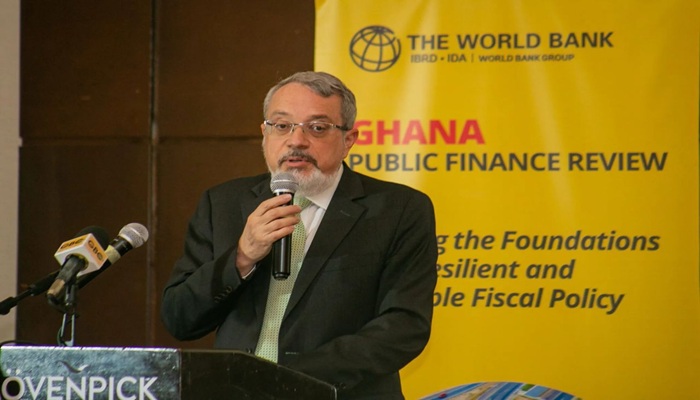
Economist at the World Bank Ghana Country Office, Kwabena Gyan Kwakye, stressed the importance of boosting productivity in agriculture through agro-processing value chains and out-grower schemes.
He also highlighted the need to enable workers to shift into more productive sectors such as manufacturing, textiles, electronics and chemicals.
To drive private-led growth and job creation, the report recommends three key policy priorities.
First, it urges the building of both physical and human capital through strategic investments in infrastructure, irrigation, transportation, energy and education, while also engaging private capital via public-private partnerships.
Second, it calls for improvements in the business environment by addressing insolvency bottlenecks, inefficiencies in the land registry and barriers to accessing finance.
Third, the report advocates for the mobilisation of private capital by expanding financial access, supporting entrepreneurship and managing political and country risks to attract long-term investment.
The report also calls for reforms in the cocoa and energy sectors, climate adaptation measures and investments in digital transformation to strengthen Ghana’s economic stability and competitiveness.