Reform success key to Ghana’s economic future
By Praisebell Rosemond Larbi
The World Bank says Ghana’s macroeconomic outlook for 2025 and beyond will hinge on the successful execution of the government’s stabilisation and recovery reforms.
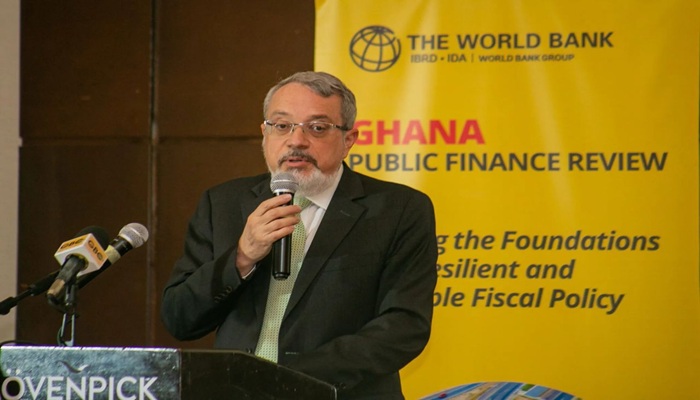
According to Robert Taliercio, the Bank’s Country Director for Ghana, Sierra Leone and Liberia, sustained economic stability depends on the country’s ability to manage key risks while maintaining momentum in its reform agenda.
Speaking at the launch of the Ninth Ghana Economic Update in Accra, Mr Taliercio outlined priority areas for Ghana’s economic recovery.
These include completing external debt restructuring, entrenching fiscal discipline, reducing fiscal liabilities from state-owned enterprises, particularly those in the energy and cocoa sectors, containing inflation, stabilising the exchange rate, and navigating external shocks such as commodity price fluctuations.
This year’s Economic Update focuses on Ghana’s labour market, which the report notes faces significant challenges despite periods of strong GDP growth.
“Despite strong economic growth, job creation has not kept pace with the rapidly growing workforce,” Mr Taliercio remarked.
The report identifies five major challenges. Chief among them is insufficient job creation for a growing working-age population. Between 2012 and 2023, Ghana’s working-age population grew by 2.7 million, but net employment rose by only 250,000.
Other issues include weak labour demand in productive sectors, limited growth in high-productivity industries such as manufacturing and modern services, movement of workers into low-productivity activities and a persistent mismatch between education and job opportunities.
Average earnings, the report states, have also declined as better-educated workers face limited access to quality employment. Mr Taliercio announced that the World Bank Group is adopting a coordinated, institution-wide strategy to address the jobs challenge, making employment creation a core priority.
This approach, championed by World Bank President Ajay Banga, recognises job generation as central to the Bank’s development mission.
“The Development Committee’s Spring Meetings paper further affirms that jobs are at the forefront of the WBG agenda,” Mr Taliercio said, adding that the Economic Update will feed into the forthcoming Country Growth and Jobs Report for Ghana. This report will call for an integrated national strategy that prioritises job creation, economic transformation and skills development.
He stressed the importance of establishing the basic preconditions for sustainable job creation by investing in human and physical capital. This includes improving nutrition, healthcare and education to build a skilled and healthy workforce, as well as developing infrastructure in water, transportation and energy to support business growth and market access.
In conclusion, the World Bank urged Ghanaian authorities to maintain fiscal discipline, accelerate structural reforms and implement targeted labour market interventions to ensure that economic growth translates into more jobs, higher living standards and a more inclusive economy.