Former Minister calls for stronger anti-corruption framework worldwide
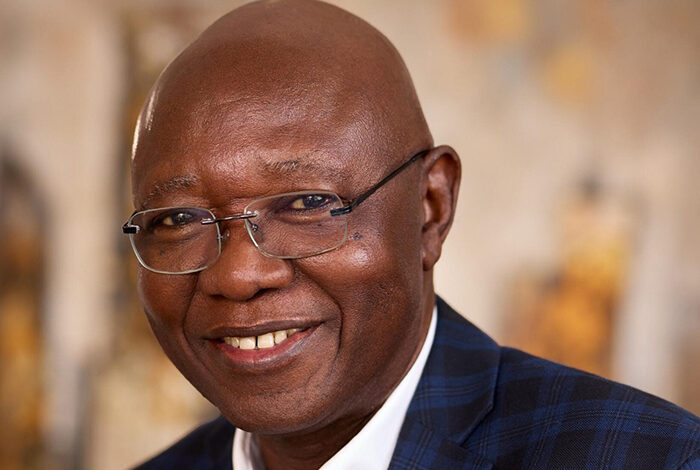
A former Minister of State and Governance Policy Analyst Dr. Akwasi Opong-Fosu has called for a coordinated global anti-corruption framework built on ethical leadership, citizen empowerment, and institutional reform.
Delivering the keynote address at a virtual Anti-Corruption Roundtable Forum co-hosted by the Africa Global Chamber of Commerce and the University of South Carolina’s Sonoco International Business Department, Dr. Opong-Fosu described corruption as “a deliberate assault on human dignity and national development.”
“Corruption is a direct attack on human dignity. It robs nations of opportunity, weakens institutions, and undermines public trust,” he asserted.
Speaking on the theme ‘Towards a New Anti-Corruption Agenda: Lessons from Diverse Stakeholders in Africa and the West,’ the former minister cited alarming statistics, stating that corruption drains over USD2.6 trillion from the global economy every year, more than 5 percent of global GDP.
He noted that developing countries lose USD1.26 trillion annually, with Africa accounting for USD10 billion, funds that could revolutionize health, education, and employment systems on the continent.
Dr. Opong-Fosu referenced high-profile global scandals like Malaysia’s 1MDB, the Panama and Pandora Papers, and allegations involving former French President Nicolas Sarkozy and U.S. Senator Bob Menendez, emphasizing that corruption is a global pandemic, not an African anomaly.
“While African leaders are rightfully held to account, those who receive and protect illicit wealth often go untouched. This double standard must end,” he declared.
Locally, he cited research by Prof. Isaac Boadi of the University of Professional Studies, revealing that Ghana loses over GHS9 billion annually to corruption, tax evasion, and smuggling, six times the cost of the Free SHS program.
A central theme of his address was the need to dismantle illicit financial flows (IFFs), which he said drain USD50 to USD60 billion from Africa each year, often aided by Western financial institutions.
To fight this systemic challenge, Dr. Opong-Fosu proposed a nine-point anti-corruption framework which includes reinforcing institutional autonomy, promoting ethical leadership through asset declarations and lifestyle audits, leveraging technology such as AI and blockchain, enhancing global cooperation, and empowering citizens, the media, and whistleblowers.
He urged a transformation in political leadership and governance culture: “Corruption is not destiny. It is a decision, repeated, tolerated, and reinforced. But integrity is also a decision, principled, courageous, and consistent.”
The roundtable attracted stakeholders across academia, policy, business, and civil society from both Africa and the West, all united in exploring actionable strategies to combat corruption at all levels.