Global trade at risk amid Trump’s tariffs on key economies
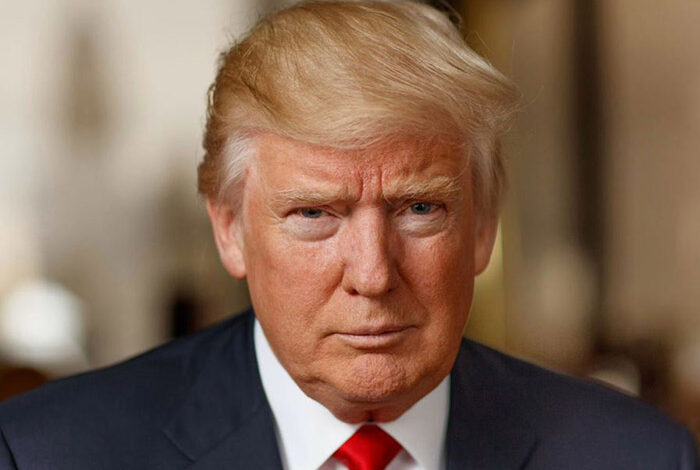
In the wake of a renewed US trade offensive, Japan and South Korea are scrambling to negotiate relief from steep tariffs that President Donald Trump plans to enforce beginning August 1, 2025.
The 25 percent import levy targeting goods from key Asian allies has reignited global trade tensions and left economies around the world bracing for ripple effects.
The White House’s announcement on Monday introduced a sweeping tariff regime affecting 14 nations, ranging from 25 percent for Japan and South Korea to as high as 40 percent for countries like Laos and Myanmar.
The administration’s move has raised alarms among policymakers and business leaders, with many expressing fears of economic slowdown, inflation, and heightened geopolitical strain.
Japan’s top trade negotiator, Ryosei Akazawa, confirmed efforts to seek concessions from the US, particularly for the country’s influential automobile industry. In a 40 minute phone conversation with US Commerce Secretary Howard Lutnick, both parties agreed to continue negotiations during the three week window before the tariffs take effect.
However, Akazawa emphasized that Japan will not compromise its domestic agriculture sector to secure an early trade agreement.
South Korea also confirmed it would engage Washington in accelerated trade talks in the coming weeks, with the goal of reaching a “mutually beneficial result.” Officials in Seoul are particularly concerned about the potential economic damage to key exports such as electronics and vehicles.
While Trump labeled the August 1 deadline as “firm,” he added, “not 100 percent firm,” suggesting that negotiations could influence final decisions.
The European Union, the largest bilateral trading partner of the US is also in last minute talks to avoid retaliatory duties. EU sources indicate the bloc may offer limited concessions on exports such as aircraft parts, medical equipment, and spirits.
Still, German Finance Minister Lars Klingbeil issued a stark warning: “If we don’t reach a fair trade deal with the US, the EU is ready to take countermeasures.”
So far, only the United Kingdom and Vietnam have finalized bilateral deals with Washington.
Global stock markets responded cautiously, with mild gains recorded despite the uncertainty. The Japanese yen, however, slipped on news of the impending tariffs. Economists warn that extended trade battles could lead to stagflation, particularly in the US, where consumers may face higher prices.
“The ongoing threat of higher tariffs intensifies stagflationary risks in the US and puts pressure on Europe to stimulate domestic demand,” said David Kohl, Chief Economist at Swiss bank Julius Baer.
The United States’ new tariff policy stretches well beyond Asia. Tunisia, Malaysia, and Kazakhstan face 25 percent tariffs, while South Africa and Bosnia are set at 30 percent. Indonesia is pegged at 32 percent, Serbia and Bangladesh at 35 percent, and Cambodia and Thailand at 36 percent.
Laos and Myanmar face the heaviest blow with 40 percent tariffs.
In Cambodia, where the garment and footwear sector is critical to the economy, officials welcomed a reduction in tariffs from 49 percent to 36 percent, calling it a “step in the right direction.” Still, industry leaders are lobbying for further cuts to sustain export performance.
Bangladesh, whose ready made garment industry employs over four million people and accounts for 80 percent of the country’s export earnings, expressed deep concern.
“This is absolutely shocking news for us. We were really hoping the tariffs would be somewhere between 10 percent and 20 percent. This will hurt our industry badly,” said Mahmud Hasan Khan, President of the Bangladesh Garment Manufacturers and Exporters Association. Meanwhile, a separate trade framework between Washington and Beijing, reached in June, remains fragile. Observers are watching closely ahead of an August 12 deadline. Any breakdown in the US China talks could further destabilize global trade markets.