

NATO commits to 5% defense spending by 2035
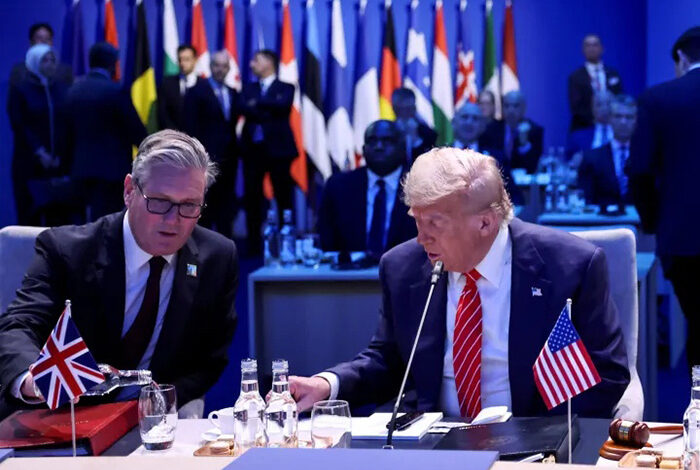
NATO has agreed to a sweeping increase in defense spending, committing to invest up to 5 percent of GDP by 2035, a move widely seen as a response to long-standing pressure from U.S. President Donald Trump.
The agreement was formalized in a summit communiqué issued Wednesday at The Hague, with NATO leaders describing the decision as a “quantum leap” in collective defense.
The new commitment includes 3.5 percent for core defense and an additional 1.5 percent for broader security-related spending, such as infrastructure, cybersecurity, and emergency preparedness.
A review point is set for 2029, just after the next U.S. presidential election, to assess progress and the evolving threat landscape, particularly from Russia.
President Trump, who has frequently criticized NATO members for under-spending, hailed the decision as a personal victory.
“They said, ‘You did it, sir. You did it.’ Well, I don’t know if I did it, but I think I did,” Trump said during the summit.
U.K. Prime Minister Keir Starmer added momentum by pledging that the United Kingdom will reach 4.1 percent in defense and security spending by 2027, in what many see as a gesture of alignment with Washington.
Despite the show of unity, several NATO members expressed difficulty with the new target. Spain, Belgium, and Slovakia raised concerns about the feasibility of the 5 percent threshold.
Spanish Prime Minister Pedro Sánchez rejected the target, stating that Spain will stick to the previous 2 percent commitment, which was set after Russia’s 2022 invasion of Ukraine.
“Spain can carry out NATO’s defense plans at 2 percent of GDP,” Sánchez said, defending the balance between national defense and public welfare.
Spain spent just 1.24 percent of GDP on defense in 2024, the lowest among NATO members. Trump responded sharply, threatening economic retaliation if Spain refused to meet the new benchmark.
“We’re negotiating a trade deal with Spain — they’ll end up paying double,” Trump warned.
In response, Spanish Economy Minister Carlos Cuerpo reminded the U.S. that trade negotiations fall under the European Commission’s purview, adding that “Europe has tools to defend itself if no deal is reached.”
Belgium called the timeline “unrealistic,” while Slovakia maintained it would make independent decisions on national defense allocations.
With the U.S. military stretched across multiple global engagements — including Ukraine, the Middle East, and now rising tensions with Iran — the burden is increasingly shifting toward European NATO members.
Norwegian Prime Minister Jonas Gahr Støre acknowledged the historic nature of the agreement:
“We struggled for years just to get past 2 percent. Now we’re talking about 3.5 percent — necessary to build the capabilities we need.”



