

Ghana gets share of EU’s €10m refugee aid package
By Praisebell Rosemond Larbi
As conflict and insecurity continue to escalate across the Central Sahel, the European Union (EU) has announced a €10 million funding package to support displaced persons and host communities in four West African coastal nations: Ghana, Benin, Côte d’Ivoire, and Togo.
The funding was unveiled in commemoration of World Refugee Day and forms part of a broader regional initiative known as Project Unite. The program aims to build the resilience of forcibly displaced populations and their host communities through sustainable, inclusive support over a two-year period.
The initiative will be jointly implemented by four key UN agencies, the International Organization for Migration (IOM), the UN Refugee Agency (UNHCR), the UN Children’s Fund (UNICEF), and the World Food Programme (WFP) — in collaboration with national and local governments.
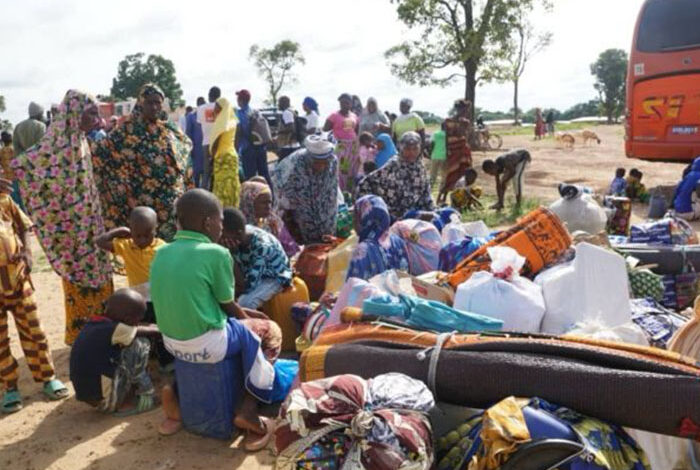
Since the first wave of displaced persons arrived in Côte d’Ivoire from the Central Sahel in April 2021, the region has seen a steady increase in refugee numbers. Currently, Ghana and its neighbors host an estimated 160,000 refugees and asylum seekers, most of whom are fleeing violence and instability in Burkina Faso.
In addition to cross-border displacement, internal displacements are growing in northern Togo and Benin, placing increasing strain on already fragile social services and local economies.
The EU’s intervention is guided by the Gulf of Guinea Joint Response Plan, which seeks to ensure equitable access to essential services, income opportunities, and humanitarian assistance for both refugees and host populations.
IOM will work to enhance local food systems by supporting smallholder farmers and livestock cooperatives. It will also bolster data collection to better understand population movements and community needs.
UNHCR will focus on increasing access to health, education, and livelihoods. The agency will also promote the construction of safe and climate-resilient housing, along with expanding access to electricity and clean cooking solutions for vulnerable households.
UNICEF will lead interventions in child protection, gender-based violence prevention, inclusive education, and water and sanitation. The agency also aims to foster social cohesion by strengthening community-based services.
WFP will spearhead initiatives in climate-resilient agriculture, asset creation, and livelihood support. Its programming includes school feeding, women’s empowerment, cash transfers, and nutrition-sensitive interventions, backed by real-time food security monitoring.
EU Ambassador to Côte d’Ivoire, Francesca Di Mauro, reaffirmed the EU’s enduring commitment to West Africa:
“Our support aims not only to address urgent humanitarian needs but also to build long-term resilience for both displaced populations and host communities. Through Project Unite, we reaffirm our commitment to regional stability, protection of human rights, and inclusive development in West Africa.”
Olivier Beer, UNHCR’s Multi-Country Representative, also praised the EU’s continued engagement: “As the influx of displaced persons continues, we commend the EU’s support for these essential protection activities. Registering asylum seekers and refugees, collecting socio-economic data for inclusive development, and increasing the resilience of host and refugee communities are fundamental to ensuring both protection and stability.”



