

MTN Ghana pledges Net-Zero by 2040, enhances ESG practices
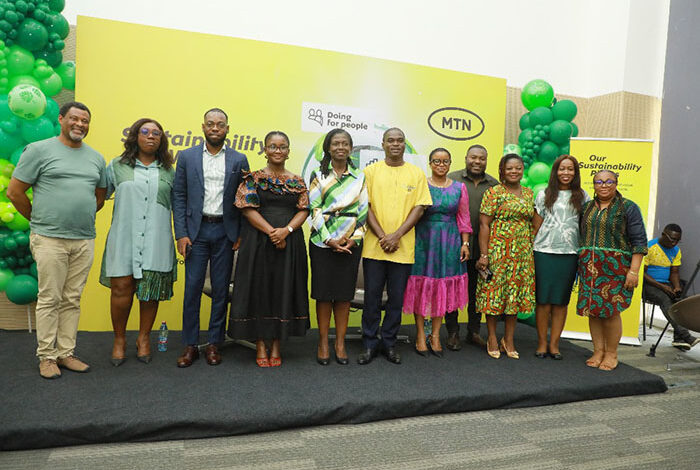
Story: Zeenatu ABUBAKAR, Accra
MTN Ghana has held its Bright Conversation – Sustainability Week with a focus on environmental, social, and governance (ESG) practices and its commitment to creating positive change.
A weeklong initiative under the theme “Sustainability: Our Collective Responsibility.”
Chief Corporate Services and Sustainability Officer of MTN Ghana Adwoa Afriyie Wiafe highlighted the integral role of ESG in MTN’s business strategy.
“Our strategy places ESG at the heart of everything we do because we believe in shared value—benefiting our stakeholders, the environment, and economic development,” she stated.
She added that throughout the week, MTN Ghana organized discussions and panels, bringing together employees and stakeholders to explore how ESG principles can drive both environmental responsibility and social impact.
On environmental initiatives, MTN has taken substantial steps towards carbon footprint reduction by transitioning data centers to solar energy and enhancing energy efficiency within its facilities.
Adwoa Afriyie Wiafe said that their ambition is to achieve net-zero by 2040, and that MTN goal is shaping investments in sustainable energy sources.
She mentioned that in the social sphere, MTN is supporting local communities through healthcare, education, and economic empowerment initiatives.
This includes financial aid for youth- and women-led businesses and training programs focused on building digital skills for the future.
“Yesterday in Koforidua, we provided financial support to SMEs owned by young people, women, and people with disabilities,” she stressed.
She indicated that With Sustainability Week, MTN Ghana is positioning itself as a leader in responsible business, setting a standard that highlights the shift from mere compliance to proactive opportunity in embedding ESG values into business.
During a panel discussion, Deputy Director and Advisor of the SDGs Advisory Unit at the Office of the President, Dr. Felix Addo-Yobo, shared insights on the journey of businesses embracing Environmental, Social, and Governance (ESG) standards, noting the critical role of data and genuine integration.
He explained that businesses often move through stages in their approach to ESG, from non-compliance, to compliance under regulatory pressure, to eventually making ESG an intrinsic part of their operations.
Businesses that genuinely integrate ESG, he suggested, are less likely to fall into greenwashing and more capable of reporting authentic impacts due to their commitment and resource allocation.
Addo-Yobo indicated the need for companies to look inward and address governance issues, including equitable pay, flexible work arrangements, and overall staff welfare.
He noted that when these elements are in place, businesses become more productive and establish stronger reputations with both stakeholders and the wider public.
For him, sustainable business practices ultimately yield a positive cycle: happier employees contribute to company success, which in turn benefits shareholders and communities.
Manager of Governance, Risk, and Compliance at KPMG, Bernard Owusu Ansah, noting the importance of setting clear ESG ambitions and integrating them into corporate strategies.
He stated that companies need leadership commitment to foster a culture of sustainability, citing MTN as an example.
While a telecommunications company may not seem directly connected to climate impacts, there are emissions associated with data centers that need addressing.
In addressing the risk of greenwashing, Bernard Owusu Ansah outlined various forms it can take, from blatant misrepresentation to quiet omissions.
He advocated for robust internal education to prevent employees from unintentionally spreading misleading information.
He also recommended that companies view ESG through a lens of transformation and strategic opportunity, rather than as a compliance requirement, to ensure genuine, measurable impact.
The Participant Engagement and Outreach Manager at UN Global Compact Ghana, Mina Pokuaa Agyemang, touched on the operational aspects of ESG integration, particularly in relation to how businesses contribute to Sustainable Development Goals (SDGs).
According to her, companies should assess the sustainability of employment they provide, moving beyond just job creation to ensure fair wages and enabling work environments.
She indicated the UN Global Compact’s four pillars—human rights, labor rights, environmental sustainability, and anti-corruption—as guiding principles for responsible business practices.
She also stressed the value of accessible resources, pointing out tools such as the SDG Manager, which assists companies in identifying relevant SDGs and integrating sustainability into their models. She encouraged companies to explore platforms that offer free training on sustainable practices, which are essential for understanding and implementing ESG strategies.



