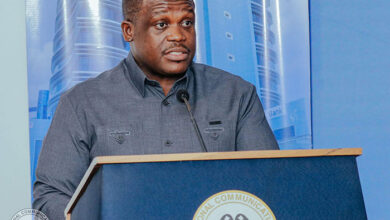
Blending Visions: How Mahama’s promises compare, differ, and complement existing policies to shape Ghana’s future

By Prof. Samuel Lartey
Introduction
As Ghana prepares for the 2024 general elections, the political landscape is charged with contrasting visions for the future of the nation. John Dramani Mahama, the Flag Bearer of the National Democratic Congress (NDC), has presented a comprehensive set of policies under the #BuildingGhanaTour, aimed at addressing the economic, social, and infrastructural challenges facing the country. However, these policies must be viewed in the context of existing government initiatives and policies, particularly those implemented by the current administration. This feature article explores how Mahama’s promises to compare and differ from the current government’s strategies, and how a strategic blend of these policies could significantly impact the lives of Ghanaians and the broader sociopolitical system.
Comparing Mahama’s Promises with Existing Policies
1. Economic Policies: Stability vs. Transformation
The current administration under President Nana Akufo-Addo has focused on stabilizing the economy through initiatives such as the *Ghana Beyond Aid* agenda, which aims to reduce the country’s dependency on foreign aid by promoting self-reliance and economic diversification. Key policies have included the implementation of the e-levy, which aims to increase domestic revenue generation, and the Free Senior High School (SHS) policy, which is intended to improve access to education as a long-term strategy for economic development.
In contrast, Mahama’s economic promises, particularly the implementation of a 24-hour economy and the abolition of the e-levy, represent a more transformative approach. While the current government’s focus has been on stabilizing the economy, Mahama’s agenda seeks to drive economic growth by increasing productivity and creating jobs through continuous economic activity. His emphasis on import substitution and export-led growth, along with the abolition of burdensome taxes, aims to relieve the tax burden on citizens and stimulate economic activity.
While both administrations prioritize economic growth, the methods differ. The current government emphasizes stabilization and revenue generation through taxation, whereas Mahama focuses on enhancing productivity and reducing taxes to spur growth.
2. Social Policies: Inclusivity vs. Efficiency
Social policies under the current government have largely focused on broad-based initiatives such as the Free SHS policy and the Planting for Food and Jobs program, which aim to improve access to education and boost agricultural productivity, respectively. These policies have been widely praised for their inclusivity, providing opportunities for a larger segment of the population.
Mahama’s social policies, while also inclusive, place a stronger emphasis on efficiency and targeting. For instance, his proposal to decentralize the school feeding program and strengthen Parent-Teacher Associations (PTAs) reflects a desire to improve the effectiveness of social programs by involving local communities in their management. Additionally, his promise to scrap the quota system for admissions into nursing and teacher training colleges is aimed at expanding opportunities for students while ensuring that the system is not overwhelmed.
The current government’s approach is characterized by large-scale, inclusive programs, while Mahama’s policies focus on improving the efficiency and targeting of social services to ensure that they reach the most vulnerable populations effectively.
3. Governance: Lean Government vs. Anti-Corruption Focus
President Akufo-Addo’s administration has made governance reforms a key part of its agenda, with a focus on reducing government expenditure and improving efficiency. This is evident in initiatives such as the reduction in the number of ministers and the consolidation of certain ministries. Additionally, the government has taken steps to strengthen institutions such as the Office of the Special Prosecutor to combat corruption.
Mahama’s governance promises also emphasize efficiency, but with a stronger focus on anti-corruption measures. His proposal to set up an Independent Value for Money office to scrutinize all government procurements above a certain threshold is a clear indication of his commitment to tackling corruption. Moreover, Mahama’s plan to abolish ex-gratia payments and cut out waste and ostentation in government demonstrates his intent to reduce unnecessary government spending.
Both leaders aim to improve governance efficiency, but Mahama places a heavier emphasis on anti-corruption measures, reflecting his belief that rooting out corruption is key to ensuring good governance.
4. Infrastructure Development: Continuity vs. Innovation
The current government’s infrastructure policies have focused on continuity, with efforts to complete existing projects and improve basic infrastructure such as roads, schools, and hospitals. The One District, One Factory (1D1F) initiative is a flagship program aimed at promoting industrialization across the country.
Mahama, while also committed to completing abandoned projects, proposes more innovative approaches to infrastructure development. His promise to implement a $10 billion, 5-year infrastructure investment plan focuses on critical sectors and includes the construction of new processing facilities for key agricultural products. Additionally, Mahama’s vision for a 24-hour economy necessitates infrastructure upgrades, such as improved transportation networks and energy systems, to support continuous economic activity.
The current administration focuses on the continuity and completion of existing projects, while Mahama’s plan introduces more innovative infrastructure projects aimed at supporting his broader economic transformation agenda.
Blending the Policies for Maximum Impact
The potential for a rich and right blend of the policies proposed by Mahama with those of the current administration lies in combining the strengths of both approaches. Such a blend could address the immediate needs of Ghanaians while laying the foundation for long-term growth and development.
1. Economic Synergy: Stabilization with Transformation
A blend of economic policies could involve maintaining the current administration’s focus on economic stabilization while incorporating Mahama’s transformative ideas such as the 24-hour economy and tax relief measures. This would allow for a stable macroeconomic environment while driving growth through increased productivity and job creation. The abolition of the e-levy could be balanced by improved revenue collection from a more dynamic and productive economy.
2. Social Integration: Inclusivity with Efficiency
In the social sector, combining the inclusivity of the current government’s programs with the efficiency and targeting proposed by Mahama could result in social services that are both widely accessible and effectively managed. For instance, the Free SHS policy could be enhanced by Mahama’s proposed decentralization and involvement of local communities, ensuring that the program is sustainable and meets the needs of all students.
3. Governance Optimization: Lean Government with Anti-Corruption Measures
A governance blend could involve the current administration’s efforts to streamline government operations, complemented by Mahama’s robust anti-corruption measures. This would create a lean, efficient government that not only reduces wasteful spending but also actively combats corruption, ensuring that public resources are used effectively.
4. Infrastructure Evolution: Completion with Innovation
In infrastructure development, the completion of existing projects should be prioritized, as emphasized by the current government, while also integrating Mahama’s innovative infrastructure plans. This approach would ensure that Ghana’s infrastructure supports both current needs and future growth, particularly in key sectors such as agriculture and manufacturing.
Conclusion
The political promises and policies presented by John Dramani Mahama under the #BuildingGhanaTour offer a bold and transformative vision for Ghana’s future. When compared to the existing policies of the current administration, there are both significant differences and potential complementarities. By strategically blending the strengths of both approaches’ stabilization with transformation, inclusivity with efficiency, lean governance with anti-corruption, and infrastructure completion with innovation Ghana can craft a holistic development agenda that meets the immediate needs of its citizens while paving the way for long-term prosperity. The challenge lies in the political will and capacity to integrate these policies effectively. However, if achieved, this blend could lead to an improved quality of life for Ghanaians, a more resilient economy, and a stronger, more inclusive sociopolitical system. As Ghana moves towards the 2024 elections, the decision on which path to follow will be crucial in determining the nation’s future trajectory.