

ILO report: Youth employment improves, but challenges persist
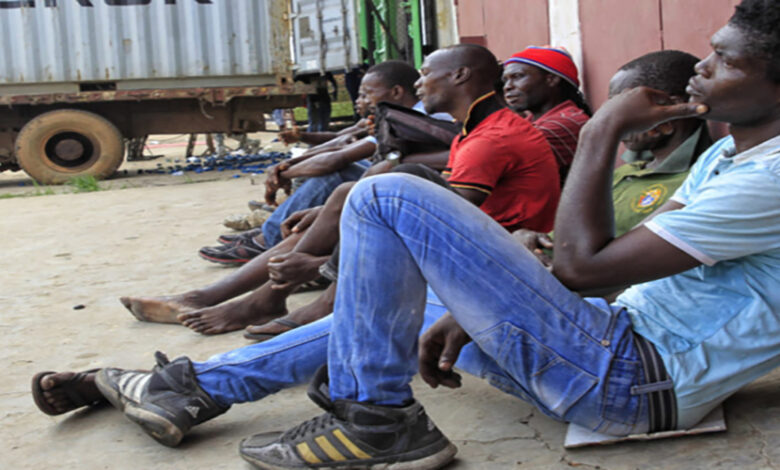
The global labour market outlook for young people has improved significantly over the last four years, with the trend expected to continue upward over the next two years. This positive development is detailed in the International Labour Organization’s (ILO) newly released report, “Global Employment Trends for Youth 2024.” The report underscores the progress made but also highlights persistent challenges, particularly for young women and youths in certain regions.
The report reveals that the global youth unemployment rate, which stood at 13% in 2023, has reached a 15-year low, representing 64.9 million people. This figure is a decline from the pre-pandemic rate of 13.8% in 2019, with the rate expected to drop further to 12.8% in the coming years. However, the picture varies significantly across regions, with youth unemployment rates in the Arab States, East Asia, South-East Asia, and the Pacific increasing in 2023 compared to pre-pandemic levels.
Despite these gains, the report raises concerns about the number of 15 to 24-year-olds who are not in Employment, Education, or Training (NEET). In 2023, one in five young people—equivalent to 20.4%—fell into this category, with females accounting for two-thirds of this demographic. The report notes that the post-COVID-19 employment recovery has not been universal, with many young people, especially young women in specific regions, not benefiting from the economic rebound.
The report also highlights the persistent issue of informal employment among young workers. More than half of young workers globally are engaged in informal employment, with only those in high and upper-middle-income economies securing regular, stable jobs. In low-income countries, three out of four young workers are limited to self-employment or temporary paid jobs, reflecting a significant challenge in the quest for decent work.
The ILO report cautions that the high NEET rates and slow growth in decent job opportunities are causing anxiety among the youth, who are also the most educated cohort in history. It also notes that young men have benefited more from the labor market recovery than young women. In 2023, the youth unemployment rates for young women and young men were nearly equal at 12.9% and 13%, respectively. However, the global youth NEET rate for young women was double that of young men, at 28.1% compared to 13.1%.
The report emphasizes the need for building a foundation of decent work to alleviate young people’s concerns about their future in the labor market. It calls for increased and more effective investment in job creation, with a particular focus on opportunities for young women. Strengthening institutions that support young people in their transition to the labor market, particularly those in the NEET category, is also highlighted as a priority.
Additionally, the report advocates for the integration of youth employment with social protection and the reduction of global inequality through enhanced international cooperation, public-private partnerships, and development financing.
ILO Director-General Gilbert F. Houngbo commented on the findings, stating, “None of us can look forward to a stable future when millions of young people around the world do not have decent work and, as a result, are feeling insecure and unable to build a better life for themselves and their families.” He emphasized that peaceful societies are built on stability, inclusion, and social justice, with decent jobs for the youth at the center of all three.
Houngbo further noted, “The report reminds us that opportunities for young people are highly unequal, with many young women, young people with limited financial means, or those from minority backgrounds still struggling. Without equal access to education and decent jobs, millions of young people are missing out on their chances for a better future.” The ILO’s findings serve as a call to action for policymakers, institutions, and international organizations to address the challenges faced by young people in the labor market, ensuring that the progress made in recent years is sustained and expanded to benefit all youths, regardless of their gender or geographical location.



