2,240 machines to fix roads
-It will create 10,000 jobs –President
By Daniel NONOR, Accra
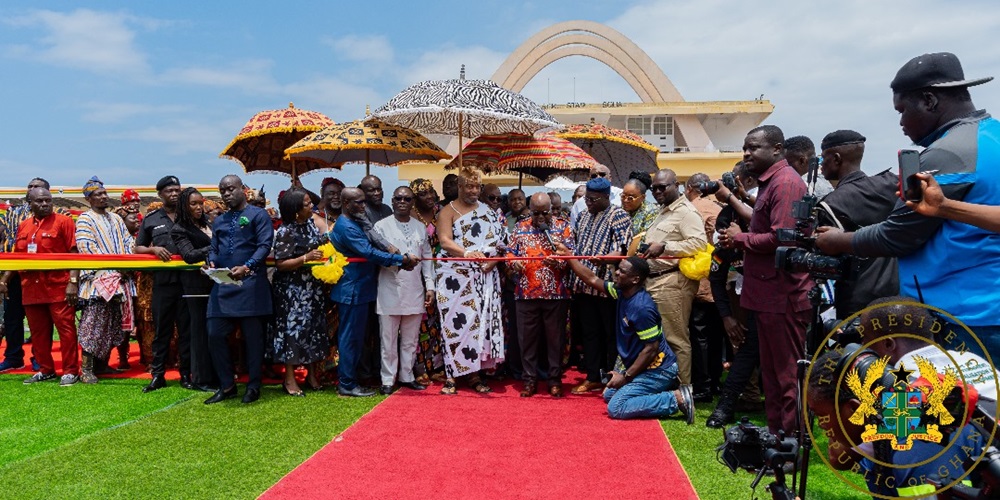
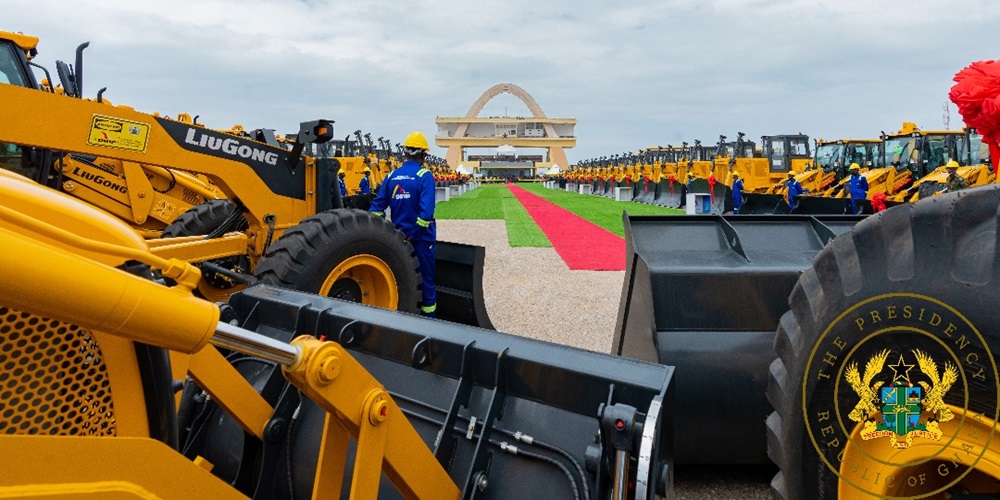
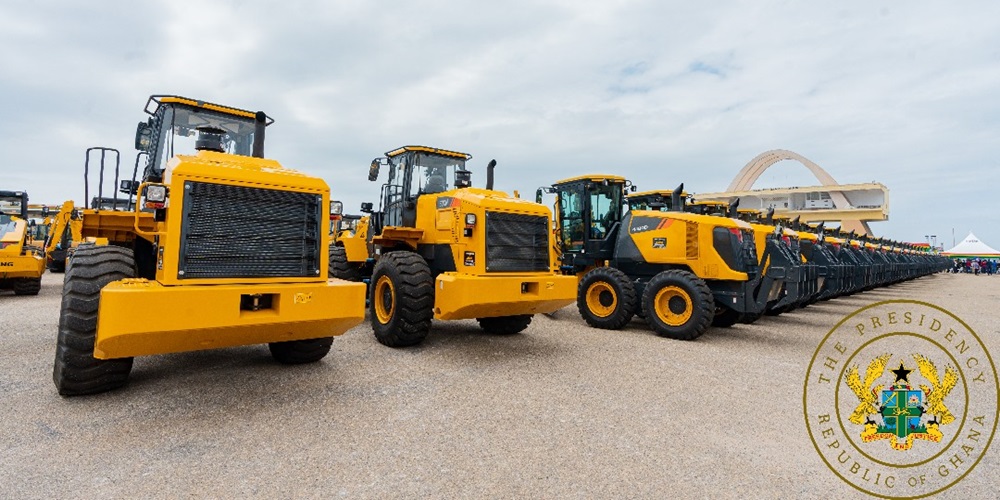
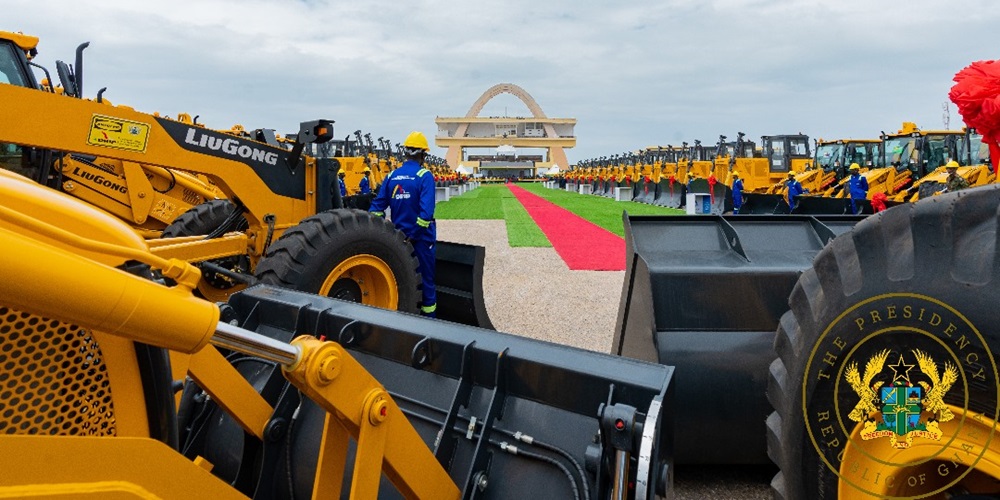
A total of 2,240 fleet of equipment has been commissioned under the District Road Improvement Programme (DRIP) in a major move to enhance the country’s road networks and facilitate ongoing efforts to decentralize development and improve the quality of life of the citizenry.
The fleet includes motor graders, backhoes, rollers, wheel loaders, bulldozers, tipper trucks, concrete mixers, water tankers, and low beds.
The DRIP project is purposed to empower Metropolitan, Municipal, and District Assemblies (MMDAs) with the necessary resources and equipment to rehabilitate and maintain roads within their jurisdictions.
10,000 jobs
The project has the potential of creating some 10,000 jobs for mechanics, engineers, and artisans.
President Nana Addo Dankwa Akufo-Addo who commissioned the fleet in Accra yesterday, emphasised the critical role of road infrastructure in economic growth and social development. He however acknowledged that despite significant progress in recent years, many district roads remain in poor condition, hindering economic activities and development.
“Roads connect communities, facilitate trade, enable access to education and healthcare, and ultimately improve the quality of life for the citizenry,” he stated.
4 member committee
Outlining modalities for the utilisation of the equipment, The President explained that a four-member committee at each MMDA will oversee the implementation of the programme, ensuring high standards of quality and accountability.
The committees will include technical officers from the Ministry of Local Government, Decentralisation and Rural Development, and the Ministry of Roads and Highways, along with a representative from the 48 Engineer Regiment of the Ghana Armed Forces.
The Metropolitan, Municipal, and District Chief Executives (MMDCEs) will chair these committees.
He described the nation’s road network as the “circulatory system of our economy,” crucial for commerce, education, and healthcare.
12,830 kilometers of roads completed since 2017
Recounting past achievements, the President noted that from 2017 to December 2023, his administration completed 12,830 kilometers of roads and added six interchanges, a significant increase compared to the 4,636 kilometers and five interchanges completed during the Mills/Mahama era from 2009 to 2016.
He continued that current projects include ten new interchanges, with five expected to be completed by the end of the year and five more by 2025.
President Akufo-Addo called for a collaborative approach to the success of the DRIP and urged MMDCEs to adhere to the operational manual issued by supervising ministries and stakeholders, ensuring proper use and maintenance of the equipment.
He also called on the Ministry of Local Government, Decentralisation and Rural Development to establish monitoring and evaluation mechanisms to track progress and ensure accountability.
The President reiterated the government’s commitment to improving road networks across Ghana.
“Together, we can build a Ghana where every citizen has the opportunity to thrive, where our communities are connected, and where our nation can continue to grow and prosper,” he noted.
Joseph Siaw Agyepong, the founder and Executive Chairman of the Jospong Group of Companies in his address said the project has already seen the employment of about 2,000 personnel for the Assembly of the equipment with the assistance of the Ghana Armed Forces’ 48th Engineer Regiment.
“The opportunities created through this program are vast, benefiting around 5,000 individuals including drivers, operators, mechanics, welders, sprayers, janitors, and many others.
“This initiative will not only support the economic growth of our country but also empower Ghanaians with valuable skills and stable employment,” he stated.
Mr Agyepong emphasized the project’s commitment to local content, with the majority of the equipment being assembled in Ghana.
This approach he said, aligns with the broader vision of fostering home-grown solutions to national challenges.
“As a testament to our commitment to local content, a large majority of this equipment purchase was assembled here in Ghana,” he said.
Furthermore, Jospong Group is set to sign a Memorandum of Understanding (MOU) with technical universities across Ghana, in collaboration with partners from Legon and the Lanzhou University in China.
This collaboration aims to train Ghanaian students in mechanical, electrical, and auto engineering disciplines, offering skill training, exchange programs, internships, and employment opportunities.
24-hour after-sales service
Additionally, to ensure the longevity and efficiency of the equipment, 32 mobile service vans equipped with all necessary tools will provide 24-hour after-sales service across various districts.
Real-time monitoring
Additionally, the equipment will feature tracking and telemarketing devices for real-time monitoring, ensuring effective usage and maintenance.
Call center
Mr Agyepong also mentioned the establishment of a state-of-the-art 24-hour call center to assist equipment operators facing issues, guaranteeing support across all 261 districts.
Sanitation parks in all 16 regions
He recalled the 2020 initiative to construct sanitation parks in all 16 regions for handling liquid, solid, and medical waste.
“Since 2020, 11 of these facilities have been fully commissioned, and by the end of September, all 38 plants will be completed,” he said.
He expressed gratitude to President Akufo-Addo for his unwavering support and faith in Ghanaian businesses.
Minister of Local Government, Decentralisation and Rural Development, Mr Martin Adjei-Mensah Korsah, said the number of road construction equipment handed over to the MMDAs was unprecedented in the country’s history.
“This is the biggest effort ever in the nation’s history in empowering the MMDAs to carry out timely and efficient maintenance of roads within their jurisdictions,” he said.
He expressed the belief that the equipment and other ancillary tools would improve the conditions of road networks in rural and urban areas to ensure mobility of goods and services.
Mr Korsah noted that good road networks and their linkage to socio-economic activities would deepen trade and accessibility to basic services.
He said the Government had set up stringent monitoring and compliance mechanisms to ensure proper use of the equipment to avert their misuse.
The minister underscored the need for cooperation among the implementing partner institutions to ensure proper utilisation and management of the equipment.
GH₵10bn invested in roads since January 2024
Minister of Finance, Dr Mohammed Amin Adam, said the Government had invested over GH₵10 billion in road infrastructure development since January this year.
He said the DRIP initiative represented a significant milestone in the ongoing efforts to enhance road infrastructure development in Ghana.
“The road network is the backbone of our economy, connecting communities, facilitating trade, and ensuring that essential services reach every corner of our country,” he stated.
Dr Adam said the DRIP-2024 initiative was a testament of the Government’s commitment to creating a more connected and prosperous future for all citizens.
The programme, he said, would not only improve the quality and safety of the country’s roads but would also create numerous jobs opportunities, stimulate local economies and contribute to the overall development of the local assemblies.
Mr Francis Asenso-Boakye, Minister of Roads and Highways, said the ministry and its affiliate agencies were committed to providing the necessary technical assistance at both the national, regional and district levels to ensure the effective execution of the initiative.
The minister hinted that the machinery and equipment provided for the DRIP were assembled locally under the supervision of the 48th Engineering Regiment of the Ghana Armed Forces.
Madam Irene Naa Torshie Addo-Lartey, Administrator of the District Assemblies Common Fund (DACF), said the delivery of the equipment was part of the government’s strategic objective to structurally enhance the ability of the MMDAs to attain district-level economic independence.
She was optimistic that the DRIP initiative would help local businesses, enhance accessibility, and stimulate regional economic growth, among other things.