Embrace cylinder recirculation module
-NPA boss appeals to LPG marketing companies
Elvis DARKO , Accra
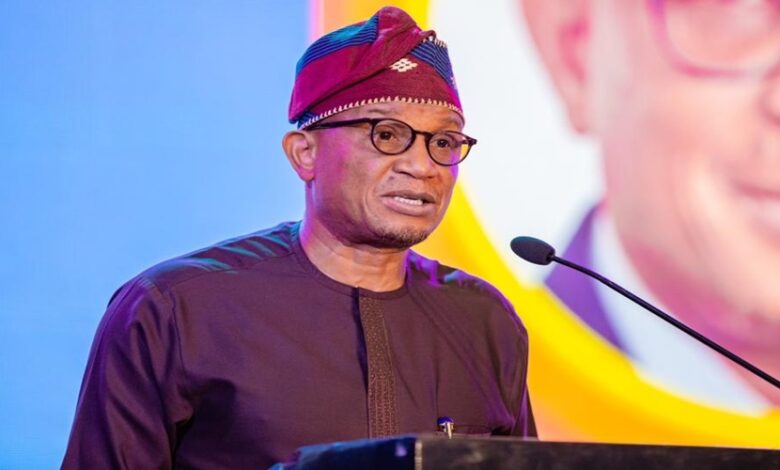
The Chief Executive of the National Petroleum Authority (NPA), Dr. Mustapha Abdul-Hamid has urged LPG marketing companies to reasses their opposition to the cylinder recirculation model (CRM) and embrace the policy.
He said CRM was being implemented in all the countries in the West African sub region, including Cote d’Ivoire, Togo, Burkina Faso and Senegal, and indicated that Ghana could not afford to continue to lag behind.
Speaking at the opening of the 2024 Ghana International Petroleum Conference (GhIPCon) in Accra on Wednesday, the NPA Boss said he had noticed the aggressive advertisements run by LPG marketing companies (LPGMCs) promoting the current LPG filling station concept.
He acknowledged that it may be within the rights of the LPGMCs to run the advertisements but urged the companies to adjust and accept the change since it would ensure safety and convenience in the distribution and use of LPG in the country.
“I urge you to reassess your opposition to the CRM policy because all across the world, very few countries still adopt the filling station concept as far as LPG distribution is concerned. All across the West African sub region Cote d”Ivoire, Burkina Faso, Senegal, Togo, everywhere else people are running the CRM model.
” I don’t think Ghana can afford to continue to lag behind. I think that it is important that we catch up with the modern trends and to adopt to the flow”, he stressed.
Dr. Abddul-Hamid said CRM had the potential to create more jobs along the value change.
He mentioned the operations of LPG bottling plants, depots, exchange points, and transportation of filled cylinders as some of the job opportunities in the CRM value chain.
The two-day conference organized by the NPA in collaboration with the Chamber of Bulk Oil Distributors (CBOD), the Association of Oil Marketing Companies (AOMC)and the Ministry of Energy was held on the theme: “‘The Petroleum Downstream: Building a Future for Growth, Efficiency, and Sustainability’.
This year’s GHIPCON, the sixth in the series, has the overall objective of addressing critical issues and exploring opportunities within the petroleum downstream sector.
Dr. Abdul-Hamid said that over the years, the petroleum downstream industry had evolved into a vibrant and dynamic industry with increased private sector participation.
“It has become a key contributor to the growth and development of the economy, we estimate that the sector had a monetary value of over GHS71 billion, representing about 8.4% of the country’s 2023 GDP.
“Over the past seven years, the industry returned an average annual value of over GHS35 billion,” he said.
The NPA Boss said as a result of improvements in the performance of the economy driven by deliberate government policy initiatives aimed at expanding the productive sectors of the economy, Ghana”s neighbouring countries such as Mali, Niger, Cote D’Ivoire, Togo and Burkina Faso had been importing petroleum products from the country”s petroleum downstream industry.
He said the volumes of petroleum products re-exported and transited to the neighbouring countries totalled 385,154,100 litres in 2023.
Dr. Abdul-Hamid said the increase in volumes of the exports was a testament of significant successes in the NPA’s efforts towards curbing illicit fuel activities in the country.
He indicated that the Authority has intensified its collaboration with the navy, marine police and immigration to continue to arrest people engaged in illicit activities.
He announced that Senegal and Gambia had also begun the importation of petroleum products from Ghana.
The Vice President, Dr. Mahamudu Bawumia, in a speech read on his behalf by the Minister of State at the Ministry of Energy, Mr. Herbert Krapa noted that since the last GhIPCon in 2022, Ghana has made significant progress towards an efficient and sustainable energy industry.
He said the government had introduced and implemented the Gold for Oil Programme, which had reduced the demand on forex reserves required for the importation of petroleum products, increased local product supply volumes, and reduced premiums from significantly, resulting in a relative reduction in the prices of petroleum products.
Besides, the Vice President said the Board of the Petroleum Hub Development Corporation had been sworn in, and a $12 billion Agreement with TCP-UIC Consortium had been signed for the development of the first phase of the Petroleum Hub project at Jomoro, in the Western Region.
He said the country had also seen the nation’s accessibility to LPG increase from 25% in 2020 to 40% at the end of 2023, and through this period, government launched the National LPG Promotion Programme with LPG cookstoves and related accessories being distributed to first-time users.
In their remarks, the CEO of the Chamber of Bulk Oil Distributors, Dr. Patrick Ofori, and the CEO of the Association of Oil Marketing Companies, Dr. Riverson Oppong affirmed their commitment to collaborate with the NPA to promote the growth and sustainability of the petroleum downstream industry.
GHANA’S DEMOCRACY SCORES HIGH IN NEW AFROBAROMETER REPORT
Ghana’s democracy scored high in a recent Afrobarometer report despite a decline in belief in democracy across Africa. The African Insights 2024 report, released by Afrobarometer, measured Africans’ perspectives on democracy.
The survey, conducted across 30 countries, found that support for democracy has consistently declined in Africa over the past decade, while opposition to military rule has weakened by 11 points across these countries. The report found that more than half of Africans (53% across 39 countries) are willing to accept a military takeover if elected leaders “abuse power for their own ends.”
Despite this gloomy picture across Africa, the survey found strong support for democracy among Ghanaians, suggesting an appreciable trust in Ghana’s democratic institutions. It found that an overwhelming 86% of Ghanaians believe they vote freely without pressure during elections, with a whopping 55% of Ghanaians rejecting any calls for military intervention in Ghana’s governance.
This is in spite of the survey finding that fewer than half (45%) of Africans think their countries are mostly or completely democratic, and only 37% say they are satisfied with the way democracy works in their countries. Across the 30 countries surveyed, both indicators show declines of 8 and 11 percentage points, respectively, over the past decade, with satisfaction with democracy dropping precipitously in some of Africa’s most high-profile democracies, including Botswana (-40 points), Mauritius (-40 points), and South Africa (-35 points).
The survey also found that an overwhelming 96% of Ghanaians believe they are free to choose whom to vote for, with a whopping 95% saying they are free to join any political organization, while 84% say they are free to express their thoughts without fear of intimidation.
However, the survey found a worrying trend of loss of faith in elected leaders, particularly members of parliament. A meagre 14% of the population believe their MPs often or always listen to them, while 35% say their local government councillors listen to their concerns.
The strong performance of Ghana, despite a gloomy picture across the continent, reflects measures implemented by the New Patriotic Party Government to protect Ghana’s democracy, making the country an oasis of peace in a turbulent region. Since 2020, Ghana has conducted three successful and incident-free by-elections as well as successful voter registration and transfer exercises.
President Nana Addo Dankwa Akufo-Addo recently underscored his government’s unwavering support for a free and independent press in the country, emphasizing that independent media is essential for holding governments accountable and ensuring transparency. Delivering the keynote address at the 3rd African Media Convention, he highlighted the crucial role that a free press plays in the democratic process, assuring his government’s dedication to creating an enabling environment for journalists to work effectively and without fear.
Ghana was also recently ranked as the best-governed nation in West Africa by the prestigious World Economics Governance Index 2024, a United Kingdom (UK) based research organization.