

Leaders convene to address continent’s learning crisis
By Daniel NONOR, Accra
Nine out of ten children in Sub-Saharan Africa cannot read, write, or perform basic mathematics by the age of ten, according to Human Capital Africa, an education advocacy group.
This alarming statistic highlights a learning crisis that deprives millions of children of their potential in civic, professional, and social life, necessitating immediate and decisive action.
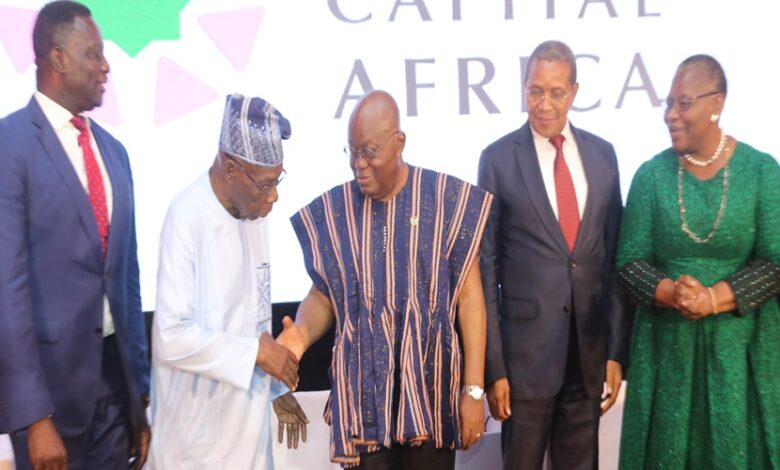
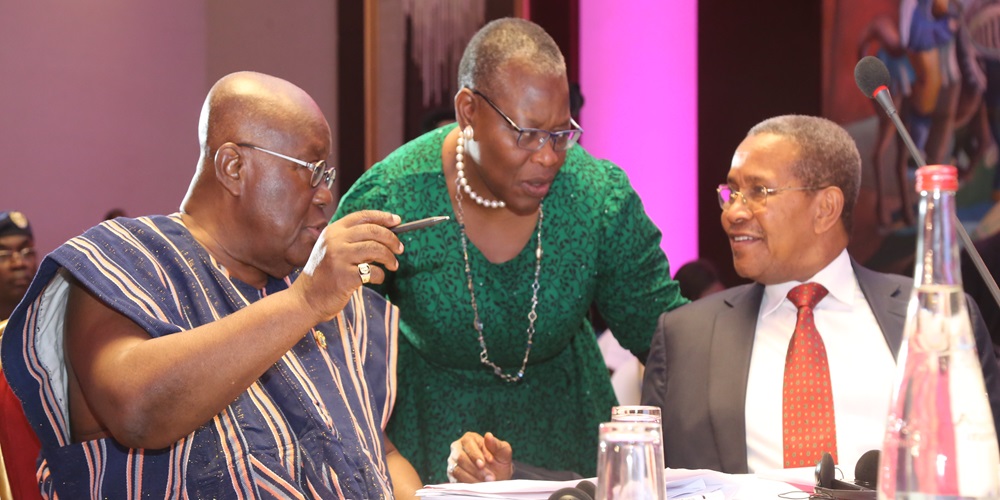
To help address foundational learning and its outcomes across the continent, a Presidential briefing dialogue was held in Accra yesterday, bringing together prominent leaders, including President Nana Addo Dankwa Akufo-Addo, former Nigerian President Olusegun Obasanjo, former Tanzanian President Jakaya Mrisho Kikwete, and Liberia’s former President Ellen Johnson Sirleaf, who joined virtually.
President Nana Addo Dankwa Akufo-Addo, in his remarks at the event, emphasized the urgent need to tackle the educational crisis plaguing Africa. Highlighting Ghana’s strides in educational reforms, he underscored the critical importance of foundational learning as a cornerstone for sustainable development. The President stressed the necessity for leaders to recognize the magnitude of the educational challenges.
“We are not going to be able to overcome the challenges to development unless we get foundational learning right,” he said.
President Nana Addo detailed several initiatives by his administration, including curriculum reforms, infrastructure expansion, and teacher motivation, as part of Ghana’s efforts to improve foundational education. Despite these efforts, he acknowledged that significant work remains.
He outlined a comprehensive approach to addressing the educational crisis at a continental level. Leaders must first recognize the depth of the educational challenges.
Effective interventions should be defined, practical and impactful solutions implemented, and accountability mechanisms established to create peer-reviewed systems to monitor and evaluate progress.
The President also highlighted the need for personal commitment and advocacy from leaders.
Drawing a comparison between Ghana and South Korea, President Akufo-Addo highlighted the critical role of human capital development in South Korea’s rapid advancement.
He lamented the lack of similar commitment from some Ghanaian political leaders and stressed the necessity of prioritizing educational investment despite limited resources.
“Education represents the biggest segment of our national budget and has been so since I came to office seven and a half years ago,” he stated. “We need to recognize that investment in the development of our human capital is the surest way of reaping the dividends of substantial and significant progress.”
President Akufo-Addo expressed optimism that the dialogue would galvanize broader action across Africa, advocating for a “decade of education” rather than a mere year of focus.
Former Nigerian President Olusegun Obasanjo underscored the crucial role of education in national development.
He described education as a matter of life and death, essential for developing one’s innate abilities. Obasanjo emphasized that education is a lifelong process, “from the cradle to the grave,” and should be treated as a core issue, not a secondary concern.
“I am particularly delighted that you said that when the time comes, we will hear your voice on education,” Obasanjo stated, addressing the significance of continued advocacy for education.
He stressed the need to handle education with the utmost seriousness, aligning it with other critical issues like food and nutrition security. Obasanjo further stressed that achieving development goals hinges on prioritizing and effectively managing education.
Dr. Obiageli Ezekwesili, CEO and Founder of Human Capital Africa, highlighted the dialogue as an opportunity to reflect on progress and chart a decisive course for the future of education on the continent.
She underscored the stark reality that Africa is in the grip of a learning crisis demanding immediate and sustained attention.
“Our continent is in the grip of a learning crisis that demands our immediate and sustained attention,” she stated. Emphasizing the urgency, she called on policymakers to reignite the African Union’s commitment to education.
“We have a choice here to let the AU Year of Education pass us by or to leverage it to catapult our children’s foundational learning to the top of the continental agenda.”
Dr. Ezekwesili expressed hope that the discussions would elevate foundational learning to a top priority for the continent.



