

Inclusion of migrant informal waste workers in urban development discussed
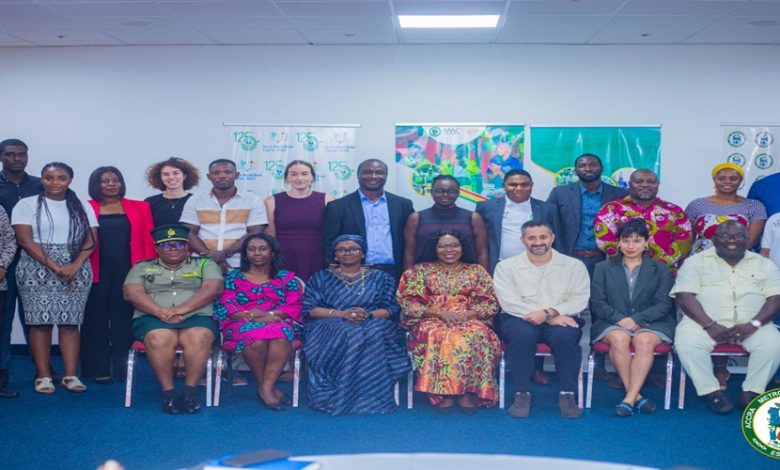
A significant step towards fostering the inclusion of migrant informal waste workers in sustainable urban development was marked by a high-level dialogue organized by the Accra Metropolitan Assembly (AMA) in collaboration with the Mayors Migration Council.
The event brought together a diverse group of participants, including policymakers, city officials, and stakeholders, to address the challenges faced by informal waste workers, with a special emphasis on migrants in this sector.
Health and financial well-being emerged as key concerns in urban areas, prompting a focused discussion on policies and practices aimed at ensuring the inclusivity of this vital workforce.
Chief Executive Officer of the AMA Elizabeth Kwatsoe Sackey, acknowledged the unsung heroes in the city’s waste management chain—the migrant informal waste workers.
Despite their pivotal role in recycling and diverting waste from landfills, these workers face low-income, sub-standard working conditions, and limited access to essential services.
She emphasized the importance of social justice and human rights principles in promoting the inclusiveness of migrant informal waste workers.
She stated that enhancing their productivity and income could not only reduce the burden on social welfare programs but also contribute to building a more robust and self-sustaining community.
Expressing optimism, Sackey hoped that the dialogue would lead to the development of a tangible policy document or action plan for the inclusiveness of migrant informal waste workers.
The goal of the Accra Metropolitan Assembly is to formulate policies that acknowledge the contributions of these workers and address the unique challenges they face.
Samer Saliba, Director of City Practice of the Mayors Migration Council, commended Accra for implementing the Inclusive Climate Action program, viewing migrants as an opportunity rather than a burden.
He praised the AMA’s CLEAN Project, describing it as a unique and ambitious initiative that combines inclusive economic opportunities, sustainable waste management, consideration of women and children’s needs, and engagement with the national government.
Saliba urged other organizations to support the AMA in recognizing migrants and refugees in Accra as Ghanaian residents with equal access to housing, employment, and critical services.
He invited international actors to join the Mayors Migration Council in investing in and supporting local leadership in Accra.
Fatao Dialo Ndiaye, Chief of Mission International Organization for Migration (IOM), emphasized that when migrants feel included in social processes, they are empowered to contribute to the city’s development.
The IOM committed to strengthening the capacity of cities, starting with Accra, to manage human mobility in the context of climate change, supporting the integration of these dimensions into local policies and strategies.
Representatives from the Ghana Immigration Service (GIS), the University of Ghana, People’s Dialogue, and the French Business Development Agency, among others, also participated in the dialogue, highlighting the collaborative effort and multi-stakeholder engagement necessary for meaningful change in urban development.



