Tax reform proposals need careful consideration – Prof Quartey
Story: Isaac AIDOO, Accra
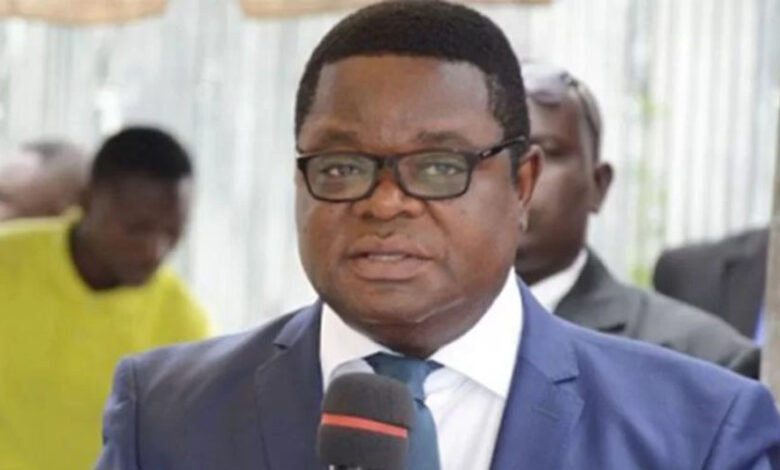
THE Director of the Institute of Statistical, Social and Economic Research (ISSER), Professor Peter Quartey, has emphasized the importance of a balanced approach to tax reform, particularly regarding the potential removal of certain levies like the electronic levy (E-Levy) and COVID-19 levy.
Speaking at a recent economic forum, Prof. Quartey highlighted the fiscal risks associated with eliminating these taxes without proper alternatives, particularly given Ghana’s IMF program commitments.
Prof. Quartey acknowledged that the E-Levy and COVID-19 levy alone are projected to raise GH₵2.1 billion and GH₵3.172 billion, respectively, under the current budget.
“If we are to scrap the E-Levy and COVID-19 levy, we may need to think carefully about the implications and where we will source replacement funds,” he cautioned, underscoring that such a decision could lead to revenue shortfalls with potentially negative impacts on the IMF program.
On the issue of betting taxes, however, Prof. Quartey argued strongly against any proposals to eliminate them. “People are making money from betting—why shouldn’t we tax them? Taxation is also a tool to correct behavior,” he said, comparing betting taxes to those on tobacco and alcohol, which are intended to discourage certain activities.
He questioned whether it was appropriate to foster a culture that encourages young people to pursue betting as a full-time occupation. “Why do we tax tobacco and alcohol highly? Because we want to correct certain behaviors and habits. So why shouldn’t we tax betting?”
In his address, Prof. Quartey also pointed out that while there may be debate around how much betting should be taxed, the principle remains that all forms of income, including winnings from betting, should be subject to taxation.
Looking forward, Prof. Quartey expressed optimism about Ghana’s economic growth prospects in 2024, citing improvements in inflation, interest rates, and currency stability.
However, he urged fiscal prudence in the months leading up to the general elections. “Hopefully, we will not run excessive budget deficits, so that we won’t be facing high interest rates, deficits, and inflation come January.” Prof. Quartey warned that the true state of Ghana’s economy would be revealed in 2025, following the election cycle. He urged leaders to avoid the financial missteps of the past, as failure to do so could mean facing serious economic challenges in the years to come. “If we don’t learn from our past mistakes, we need to brace ourselves for turbulence and difficult times in 2025,” he concluded.