$360M IMF 3RD tranche booked
-Board approval and disbursement expected in June
By Elvis DARKO, Accra
Ghana is set to receive another $360 million from the International Monetary Fund (IMF) as the third tranche of disbursement under the bailout programme.
It is expected that when the IMF Board meets in June this year, it will approve Ghana’s $360m third tranche.
This comes following a conclusion of meetings held between Ghanaian Authorities and the IMF staff team between April 2 and April 12, 2024, in Accra on the country’s Extended Credit Facility (ECF) arrangement.
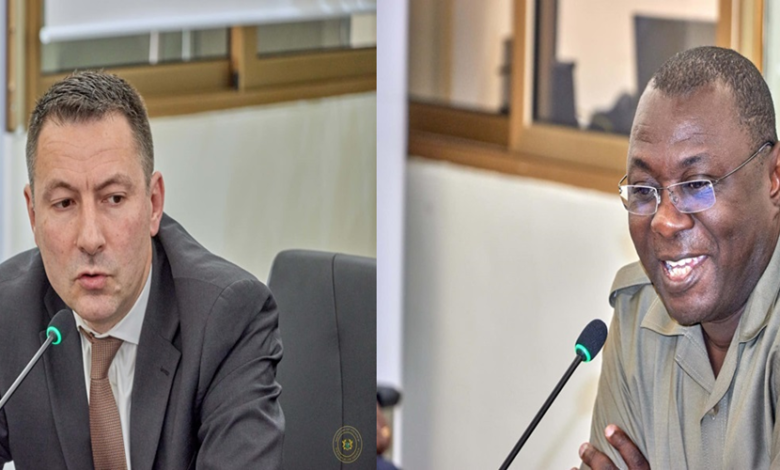
IMF staff held meetings with Finance Minister, Dr. Mohammed Amin Adam, Bank of Ghana Governor, Dr. Ernest Addison, and their teams, representatives from various government agencies, and other stakeholders.
After the meetings, the IMF staff team reached a staff-level agreement on the second review of Ghana’s loan-support program, paving the way for the Executive Board to consider and approve about $360 million.
When the $360m third tranche is disbursed, it will bring the total IMF financial support disbursed under the ECF arrangement since May 2023 to about $1.560 billion.
Already, the country had received the sum of $1.2 billion from the first two tranches since the implementation of the $3bn- three-year IMF loan-support programme.
At the end of the mission, Mr. Stéphane Roudet, IMF Mission Chief for Ghana, in a statement said: “Upon completion of the Executive Board review, Ghana would have access to SDR 269.1 million (about $360 million).”
“This staff-level agreement is subject to IMF Management approval and Executive Board consideration once the necessary financing assurances have been received,” Mr. Roudet said in the statement.
However, the Mission Chief noted that given Ghana’s strong progress under the IMF-supported programme, the next key step for the country is to reach an agreement with its official bilateral creditors.
“We look forward to the authorities’ continued efforts to reach an agreement with all creditors in line with programme parameters,” he said.
On Ghana’s performance under the IMF-supported programme, the Mission Chief stated that most quantitative targets had been met, with good progress made on the key structural reform milestones.
“The authorities’ policies and reforms to restore macroeconomic stability and debt sustainability while laying the foundations for stronger and more inclusive growth are already generating positive results,” he stated.
Providing some figures to that effect, he stated that the fiscal primary balance on a commitment basis improved by over four percentage points of Gross Domestic Product (GDP) in 2023.
Mr. Roudet also indicated that the country was on track to achieving a fiscal primary surplus of 0.5% of GDP in 2024.
“Spending has remained within budget limits, while the authorities have significantly expanded social protection programmes to help mitigate the impact of the crisis on the most vulnerable,” he stated.
“Ghana has met its non-oil revenue mobilization target, while making progress in implementing ambitious structural fiscal reforms to bolster domestic revenues, strengthen public financial and debt management, and enhance transparency,” he noted.
Mr. Roudet also stated that Ghana’s external sector has improved significantly, with international reserve accumulation ahead of programme objectives, financial stability has been preserved, with banks posting solid profits in 2023.
GH₵1.8bn revenue gap
On his part, Finance Minister, Dr. Mohammed Amin Adam, expressed concern about a GH₵1.8 billion revenue gap resulting from the suspension of the 15% Value Added Tax (VAT) on electricity consumption and the GH₵100 annual levy on owners of petrol and diesel vehicles.
He stated that the government would take rigorous measures to collect revenue from those who have not been paying appropriate taxes and those who have been evading taxes in the country.
Dr. Adam emphasized the urgent need to increase revenue in line with the implementation of the $3 billion loan-support program.
However, he also highlighted the government’s careful consideration not to overburden Ghanaian taxpayers.
As such, the government is committed to ensuring the effective implementation of revenue generation mechanisms announced in both the 2023 and 2024 budgets, which have previously lacked effective implementation.
The Finance Minister also mentioned that the government is pursuing reforms within the tax administration to ensure proper assessments and prompt payment of taxes to the state in the most convenient and efficient manner possible.
He stressed that while aggressive revenue mobilization is essential, there would also be a focus on expenditure rationalization.
Dr. Adam acknowledged the challenges faced by Ghanaians, both individuals and businesses, due to the implementation of reforms under the ongoing IMF loan-support programme.
While commending Ghanaians for their sacrifices since the programme’s inception in May 2023, he encouraged the public to remain patient and resilient in the face of these challenges.
Speaking at the press conference, Governor of the Bank of Ghana (BoG), Dr. Ernest Addison, expressed confidence about Ghana’s foreign currency reserves becoming stronger with the disbursement of a third tranche of $360 million.
According to him, it would help to further boost the country’s foreign reserve, which stood at $6.2bn as of April 5, 2024, and support the attainment of the objectives of the programme.
He stated that the two-weeks of engagement between Ghanaian Authorities and the IMF Staff Mission “has not been in vain,” as it culminated in reaching a staff level agreement.
Dr. Addison said the government iss hopeful that the feat chalked would, “translate into a Management and Executive Board approval with the release of another tranche of IMF’s support.”
He indicated that despite delays in the disbursement of some donor support, the country’s foreign exchange reserves had remained steady at $6.2bn as of April 5, 2024.
“We will continue to implement the policies that have helped sustain that progress, including the innovative Gold for reserves programme, which has acted as a game changer in our foreign exchange management strategies,” he said.
On the progress made since the implementation of the loan-support program, Dr. Addison indicated that there had been some substantial macroeconomic dividends.
That, he said included a decline in inflation from the 54% at the end of 2022 to 23% in 2023, saying, “during the first quarter of this year [2024], this progress has continued although we’ve witnessed some slowdown in the pace of disinflation.”
Dr. Addison stated that since the implementation of the loan-support programme, Ghana had shown steadfast commitment to a set of policies, and even under difficult circumstances, had reached a stage of progress.
The three-year ECF arrangement is backed by the country’s Post-COVID-19 Programme for Economic Growth (PC-PEG).
It is aimed at restoring macroeconomic stability and debt sustainability, building resilience, and laying the foundation for stronger and more inclusive growth.