

Media sensitised on National Green Jobs Strategy
By Christabel Oboshie ANNAN & Zeenatu ABUBAKAR, Accra
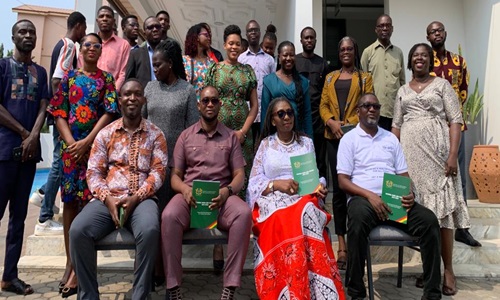
The Ministry of Employment and Labour Relations (MELR) has sensitised selected media personnel in Accra on its National Green Jobs Strategy (NGJS) 2021-2025.
The National Green Jobs Strategy is a comprehensive plan to secure the future of work in Ghana to ensure a just transition from a brown economy to a green one.
The sensitization workshop aimed at creating awareness and forging partnership with the media to ensure a just transition towards a sustainable and green economy.
The Director, Policy Planning, Monitoring and Evaluation of the Ministry of Employment and Labour Relations, Gloria Bortele Noi, emphasized that the role of the media is crucial in promoting environmental sustainability and supporting a just transition.
She encouraged the media to intensify education on climate change and use investigative journalism to influence decision-making in the country.
She stated that the media’s platforms are powerful tools that can be used to showcase successful green initiatives, foster dialogue, and engage experts, policymakers, and the public in meaningful conversations.
She said that even though there are potential challenges in transitioning from a brown economy to a green one, there’s the need to collaborate to mitigate job losses.
As a result of that, she indicated that the Ministry’s National Green Jobs Strategy will help in ensuring a just transition.
Mrs. Noi noted that the strategy identifies five major emerging sectors for enterprise development and job creation in the country.
The sectors included Renewable Energy, Agriculture, waste management and recycling, Construction and Ecotourism and Nature based tourism.
The Deputy Director of Policy, Planning, Monitoring, and Evaluation at MELR, Ernest Berko, underscored the importance of ensuring that individuals acquire the requisite skills to reap the benefits of the green economy.
He emphasized the need to prevent job losses and empower individuals to capitalize on opportunities within this sector.
Ernest Berko pointed out that it’s not solely about acquiring these skills but also providing support for individuals to engage in various industrial activities.
The deputy director stated that this approach ensures individuals have the necessary tools to thrive in the green economic sector and safeguards them from job losses.
According to Ernest Berko, their analysis indicates that the technical and vocational education and training (TVET) space holds the potential to generate more jobs.
Senior Skills Development Advice, SNV, Amindu Musa, added that tackling climate change and environmental degradation is a way of leveraging technology to transform traditional economy for expanded national output and productivity.
He said that transitioning Ghana’s economy development requires bankable business cases which clearly demonstrates the benefits of the economy.
The programme is being supported by the European Union, SNV Ghana and the International Labour Organisation.



