Demolition Exercise Displaces Traders at American House
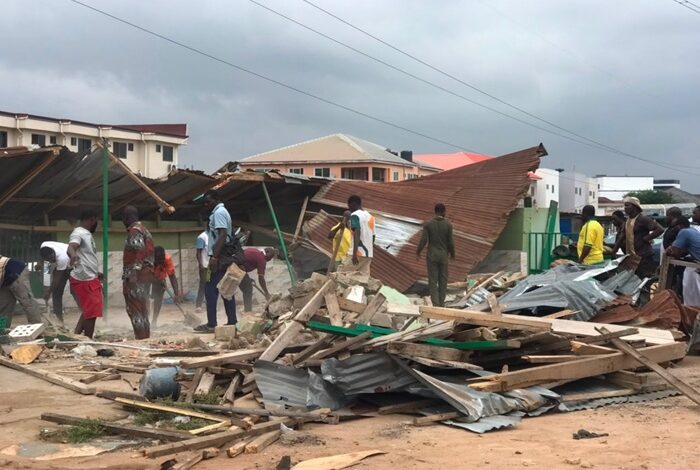
Several traders and residents operating and living along the American House intersection in East Legon have been displaced following the demolition of structures situated within the Ghana Grid Company’s (GRIDCo) high-tension transmission corridor.
The exercise was undertaken to remove kiosks, container shops and informal residential structures that had been erected within GRIDCo’s designated safety buffer zone beneath high-voltage power lines.
The operation forms part of efforts to enforce safety regulations and prevent the risks associated with human activities under electricity transmission lines, where unauthorized structures pose significant danger to occupants and can interfere with power infrastructure.
The demolition has left many traders without places to conduct their businesses, while several families have also lost their temporary homes. Personal belongings, building materials and merchandise were seen scattered across the area as affected persons attempted to salvage what they could from the demolished structures.
Many of the displaced residents expressed frustration and uncertainty about their future, saying the exercise has deprived them of both shelter and their means of livelihood.
Although some traders and residents acknowledged receiving prior notices to vacate the area, many said they did not expect the demolition to be carried out because previous warnings had not been enforced.
They explained that over the years, similar notices were issued without any follow-up action, leading many occupants to believe they could continue operating from the location.
The affected persons said the sudden enforcement has left them stranded, with no immediate alternatives for accommodation or business operations.
Some traders noted that they depend entirely on their daily sales to support their families and are now uncertain about how they will earn a living following the demolition.
Others appealed to government and local authorities to provide alternative trading spaces or temporary support to help them rebuild their livelihoods.
The demolition has also renewed concerns about the increasing number of structures that continue to spring up within utility corridors despite repeated warnings from authorities.
Officials have consistently cautioned that occupation of high-tension zones poses serious safety risks, including electrocution and other hazards, particularly during adverse weather conditions.
Speaking to THE NEW FINDER, one of the affected traders, Amos, said although residents had received notices to leave the area, many remained because similar directives in the past were never enforced.
He said the demolition has now left him without a place to conduct his business and appealed to authorities to consider the welfare of those affected by providing alternative locations where they can continue their economic activities.
Despite the hardship caused by the exercise, authorities maintain that protecting lives and safeguarding critical national power infrastructure remain essential, adding that the enforcement is intended to prevent future disasters and ensure strict compliance with safety regulations.