China Court Sentences Ex Official to Death for Massive Bribery
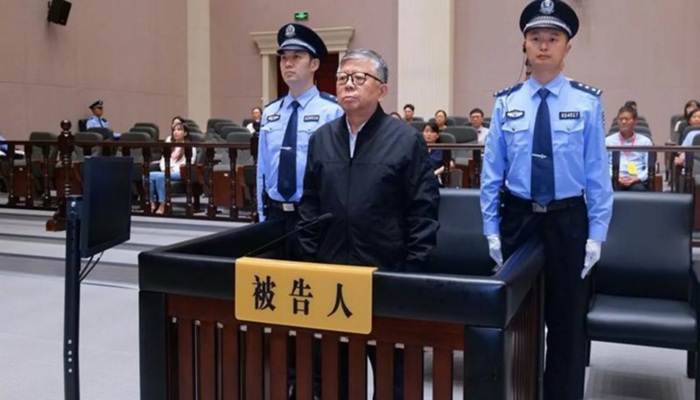
A court in eastern China has sentenced a former city official to death for taking more than 2.2 billion yuan (about $325 million) in bribes over three decades.
The official, Yang Youlin, 69, worked in different positions in Nanjing between 1993 and 2023. He was found guilty of bribery, embezzlement, abuse of power, and money laundering. State media said his crimes are among the largest corruption cases in recent years.
Yang used his influence to help companies and individuals win engineering contracts, land transfers, and financing. In return, he received money and valuables. The court in Changzhou city said his crimes were “extremely serious” and caused “heavy losses to the interests of the state and the people.”
Yang was investigated as part of President Xi Jinping’s anti corruption campaign. Since taking office, Xi has launched several waves of crackdowns that have targeted officials in the military, banking, and government. Critics say the campaign has also been used to remove political rivals.
Death sentences for corruption are rare in China but are sometimes given in cases involving very large sums. Courts usually hand down long prison terms or suspended death sentences, which are later reduced to life imprisonment.
Yang’s case stood out because of the huge amount of money involved. Although he cooperated with investigators and gave information about other offenders, the court said his crimes were too serious to allow a lighter punishment. He pleaded guilty and expressed remorse in his final statement.
China has executed other senior officials for corruption in recent years. In 2021, Lai Xiaomin, a former finance chief, was executed for taking 1.8 billion yuan in bribes over ten years. In 2024, Li Jianping, a former official in Inner Mongolia, was executed for embezzling and accepting bribes worth more than 3 billion yuan.
Yang spent much of his career working on economic and technological development projects in Nanjing. Investigators said he abused his positions to enrich himself and his associates. His case highlights the scale of corruption that China’s leadership has been trying to tackle.
The court noted that while Yang had helped authorities by reporting on other offenders, his cooperation was not enough to reduce his sentence. His crimes were described as “grave” and damaging to public trust.
Yang’s sentencing adds to the list of high profile corruption cases in China. While executions remain rare, they are used to demonstrate the government’s resolve in fighting graft. The case is expected to spark debate about whether the death penalty is an effective tool against corruption or whether long prison terms would be more appropriate.