Govt Targets Battery Production as Ghana Moves to Process Lithium Locally
Government has announced plans to ensure that Ghana’s lithium resources are processed locally rather than exported in raw form, as part of efforts to deepen value addition and accelerate industrialisation.
The move forms part of a broader national strategy to maximise returns from the country’s mineral wealth by shifting from a purely extractive model to one that prioritises refining, processing and manufacturing.
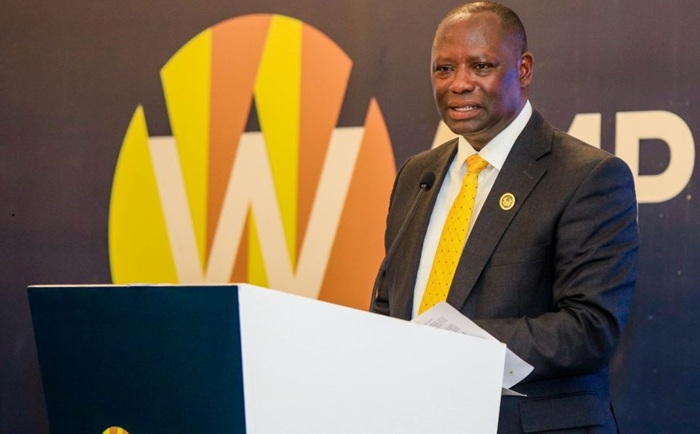
Speaking at the opening of the 19th West African Mining and Power Expo (WAMPEX), Lands and Natural Resources Minister Emmanuel Armah-Kofi Buah said government is taking deliberate steps to retain more value within the local economy.
He explained that Ghana is focusing on developing downstream industries linked to its natural resources in order to boost industrial growth and job creation.
According to him, the country’s mining sector strategy is anchored on moving up the value chain from extraction to refining and industrial use, rather than exporting raw materials.
The Minister cited ongoing initiatives in the aluminium and iron and steel sectors, including the work of the Ghana Integrated Aluminium Development Corporation (GIADEC) in collaboration with VALCO to build an integrated aluminium industry covering bauxite mining, alumina refining and aluminium smelting.
He also referenced the Ghana Integrated Iron and Steel Development Corporation (GIISDEC), which is leading efforts to establish a domestic iron and steel industry based on the country’s iron ore deposits.
On lithium, Mr. Buah stressed that government is determined to ensure the emerging critical mineral contributes directly to industrial development and employment creation in Ghana.
He noted that as global demand for lithium continues to rise, Ghana will not limit itself to extraction and export, but will ensure value addition is carried out locally.
He further emphasised that government’s long-term vision includes the development of a battery manufacturing ecosystem, pointing out that lithium’s most important end-use is in battery production for electric mobility and modern technologies.
Mr. Buah added that any investor engagement in lithium must also address plans for local battery production as part of Ghana’s industrialisation agenda.