Regular Property Checks to Curb Fraud in Real Estate Sector – BoG
The Bank of Ghana (BoG) has called on real estate brokers, investors and property buyers to strengthen due diligence and prioritise transparency in property transactions as part of efforts to reduce fraud and improve confidence in Ghana’s real estate sector.
The central bank says conducting proper checks on landed property and other assets before transactions is becoming increasingly critical as cases of disputed ownership, fraudulent sales and collateral-related conflicts continue to affect the industry.
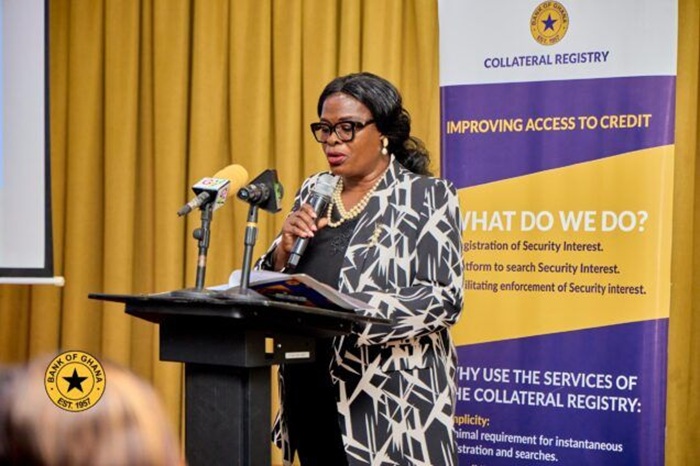
Speaking during an engagement with members of the Ghana Association of Real Estate Brokers (GAREB), Deputy Head of the Collateral Registry Department at the Bank of Ghana, Mrs. Rosemary Akabutu, stressed that thorough asset searches and verification processes are essential for protecting investments and minimising financial losses.
Mrs. Akabutu, who spoke on behalf of the Head and Registrar of the Collateral Registry Department, Mr. Fred Issiyama Kurantin, explained that the Borrowers and Lenders Act, 2020 (Act 1052), together with the establishment of the Collateral Registry, was introduced to strengthen Ghana’s credit environment and reduce lending risks within the financial system.
According to her, the reforms became necessary due to long-standing challenges including weak enforcement systems, limited access to credit, and inadequate information sharing within the financial and property sectors.
“The importance of conducting searches and understanding any existing encumbrances on assets cannot be overemphasized. These are vital steps in minimizing risk, preventing fraud, and safeguarding investments,” she stated.
She further noted that transparency remains central to building trust and confidence within both the financial and real estate sectors.
The engagement also highlighted growing concerns over fraudulent land transactions and the activities of unlicensed operators within Ghana’s property market.
Representatives of GAREB indicated that many individuals continue to lose substantial sums of money after purchasing lands already used as collateral for loans or involved in ownership disputes because they failed to conduct proper background checks before making payments.
“For a very long time, real estate brokerage in Ghana operated largely through trust, word of mouth, personal relationships and experience,” the Association said.
“People lost money. Some bought land that had already been used as collateral for loans without knowing. Others got caught in disputes they never expected,” it added.
The Association stressed that professionalism in the real estate sector must go beyond simply connecting buyers and sellers.
“It is about responsibility. It is about protecting clients from avoidable problems. It is about understanding the systems connected to the properties we market,” GAREB noted.
The Association also advised the public to transact business only with licensed real estate professionals in order to improve accountability and reduce fraudulent activities within the sector.
“The public should be encouraged to ask for licences before engaging any agent or broker. People should know that they can verify practitioners through the Real Estate Agency Council and through recognised professional bodies like GAREB,” it said.
GAREB further disclosed that enforcement actions against illegal operators in the sector would soon be intensified.
According to the Association, the Real Estate Agency Council is expected to strengthen inspections and monitoring activities across the industry.
“In the coming days, the Council will intensify its monitoring and enforcement activities. There will be inspections of offices and operations, and individuals or firms found operating without licences will be dealt with according to the law,” the Association warned.
The engagement formed part of ongoing efforts to educate real estate brokers and stakeholders on the key provisions of Act 1052, the operations of the Collateral Registry, and procedures for registering and searching security interests.
Industry players believe stronger enforcement, improved public awareness and greater use of the Collateral Registry could significantly reduce property fraud while improving investor confidence in Ghana’s growing real estate market.