Businesses Urged to Capitalise on Falling Borrowing Costs
By: Solomon Nartey Tetteh
Financial Analyst, John Kyei has urged businesses to move quickly and take advantage of falling borrowing costs, describing the current moment as one of the best opportunities in recent years to expand and invest.
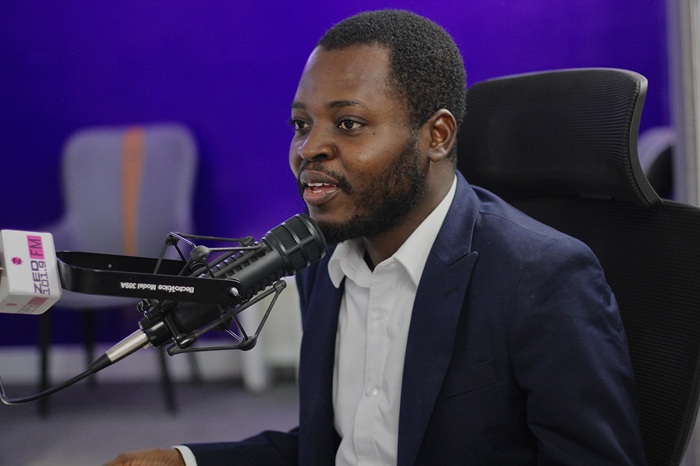
Speaking on Business Breakfast on ZED 101.9FM, Mr. Kyei said the easing cost of financing has created a rare opening for both businesses and individuals to secure long term funding at favourable rates.
“I think for every business, this is the best time to expand and increase investment,” he said.
He pointed to a noticeable drop in lending rates across the banking sector, noting that institutions such as Zenith Bank have adjusted their rates downward, making credit more accessible.
According to him, interest rates may be nearing their lowest point, warning that any further decline is unlikely in Ghana’s current economic environment.
“There is a level interest rates get to that it becomes difficult for them to come down further. The next direction is likely to be upward,” he explained.
Mr. Kyei stressed that with inflation unlikely to fall significantly below current levels, businesses that delay borrowing risk facing higher financing costs in the near future.
Financial Analyst, however, called for urgent and decisive policy action to protect recent economic gains, warning that rising pressures could easily reverse progress if not carefully managed.
Mr. Kyei said signs of strain are already visible across key economic indicators, even as inflation trends continue to show improvement.
He noted that both consumer and producer price indices have been trending downward into single digit territory, describing it as a positive but fragile achievement that must be protected.
According to him, the challenge now is not just achieving stability but sustaining it in the face of emerging pressures.
“Pressures are building and it is already being felt. Even from signals coming from the central bank, there is uncertainty about the next direction of interest rates,” he said.
Mr. Kyei observed that policymakers have pursued a disinflation path with the intention of bringing rates down further, but warned that the current gains could easily be disrupted if corrective measures are not taken swiftly.
He urged authorities to adopt a more proactive stance in stabilising key drivers of inflation, stressing that short term sacrifices may be necessary to preserve long term stability.
“They should be willing to sacrifice something now to keep the economy stable,” he stated.
Using fuel pricing as an example, he suggested that temporary support measures, including targeted foreign exchange allocation to fuel importers and Bulk Distribution Companies, could help ease pressure on prices.
“If the issue is fuel, then you may need to provide dollars to BDCs at a lower rate as a short term measure,” he explained.
Mr. Kyei argued that such interventions should be viewed as temporary, given expectations that global and domestic pressures will ease over time.
He expressed optimism that current geopolitical and economic disruptions are not permanent, and therefore policy responses should be designed with a short term horizon in mind.
“The belief is that what is happening now will not last forever,” he said.
However, he cautioned that this optimism must be backed by vigilance, warning that if pressures persist longer than expected, current policy measures could become difficult to sustain.
“If it continues, then some of these policies will not be sustainable,” he warned.
He urged government authorities to remain alert and responsive, emphasizing that any factor capable of reversing recent economic gains must be addressed quickly and decisively.
“For now, we must be active in stabilising anything that threatens the progress we have made,” he said.