

UN resolution declares transatlantic slavery a crime against humanity
By Nii Trebi Hammond
The United Nations General Assembly has declared the transatlantic slave trade a crime against humanity.
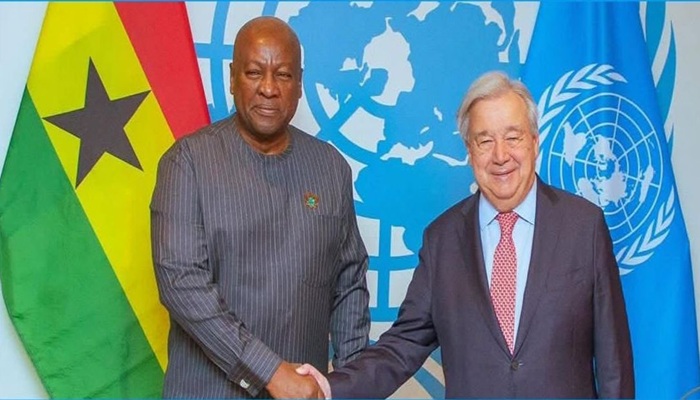
The resolution, championed by President John Dramani Mahama in his capacity as the African Union (AU) Champion for Reparations and Advancing Justice, recognises the transatlantic slave trade as one of the gravest atrocities in human history and urges the international community to confront its lasting consequences.
Results from the vote showed 123 countries in favour, with a small number voting against and several abstaining, reflecting both strong global support and lingering divisions, particularly on the issue of reparatory justice.
The General Assembly resolution calls on member states to promote education, remembrance and acknowledgment of the historical injustices associated with slavery and colonialism. It also encourages dialogue on reparations and measures to address inequalities that continue to affect people of African descent worldwide.
Analysts say the development is significant not only for its symbolic value but also for its potential to influence future international policy discussions. Although General Assembly resolutions are not legally binding, they often shape global norms and diplomatic engagement.
“This is a moral victory, adding that it strengthens the case for structured conversations around reparations and accountability,” one international relations analyst noted.
Ghana has, in recent years, taken a leading role in advancing the global reparations agenda. Through initiatives such as the “Year of Return” and “Beyond the Return,” the country has sought to reconnect the African diaspora with the continent while promoting dialogue on healing and restitution.
The renewed push comes amid increasing advocacy from African and Caribbean nations for former colonial powers to acknowledge and address the enduring legacy of slavery, including its economic and social impacts.
However, not all countries are aligned on the issue. Some states have historically resisted calls for reparations, arguing for forward-looking development approaches rather than compensation for historical injustices.
Despite these divisions, observers say the overwhelming support for the resolution signals a growing international willingness to confront the past and engage in meaningful dialogue about justice.
For many advocates, the vote represents a step forward in a long-standing struggle, not just for recognition, but also for tangible action to address centuries of inequality rooted in the transatlantic slave trade.



