

Tema Wrecked Aircraft had no Black Box
The Aircraft Accident Investigation Bureau (AAIB) has confirmed that the light aircraft, which crashed in Tema on Monday, March 16, 2026, was not equipped with a flight data recorder, commonly known as a black box.
Despite the absence of the device, the Bureau says it has gathered sufficient evidence to support ongoing investigations into the fatal incident.
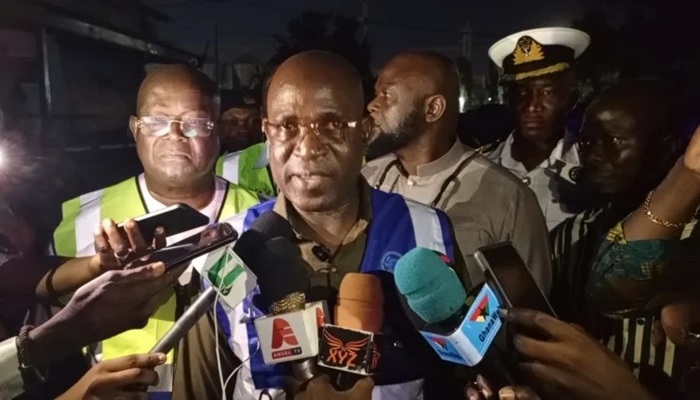
The Commissioner of the AAIB, Mr John M. K. Wumborti, who led a team of investigators to the crash site on Tuesday, March 17, 2026, said full-scale investigations had officially commenced following the retrieval of the wreckage.
The aircraft crashed at the TMA Daycare Centre at Community One, Site 17, claiming two lives after going down within the school’s premises.
Speaking to journalists, Mr Wumborti explained that investigators returned to the scene in the morning to collect debris critical to the probe.
“This morning, we came back to collect the wreckage, which we have done successfully. The Ghana Air Force supported us with a truck to convey the debris, which will be used for further analysis,” he stated.
He added that the investigation team had also obtained accounts from eyewitnesses to aid the probe.
“We have conducted interviews with all available witnesses and taken their accounts. These, together with the physical evidence collected, will form part of the investigation,” he said.
Mr Wumborti commended the swift response and coordination among various security agencies, including the military, police, fire service and the National Disaster Management Organisation (NADMO).
“The response time was excellent. We are very pleased with the level of collaboration among all the security services. This is how we move Ghana forward,” he noted.
On the identities of the deceased, Mr Wumborti said the Bureau would follow established protocols before making any official disclosures.
“We have clear procedures for handling such matters. At the appropriate time, we will inform the public about the victims and their families,” he assured.
In the world of aviation, the black box remains one of the most vital tools for uncovering the causes of aircraft accidents. These crash-survivable devices have played a key role in deciphering complex incidents and enhancing flight safety worldwide.
Officially known as Flight Data Recorders and Cockpit Voice Recorders, these devices are designed to withstand extreme conditions, from high-impact crashes to intense fires.
Black boxes are typically bright orange or red, making them easier to locate in the wreckage. Installed in the tail section of aircraft, they record critical flight parameters and cockpit sounds, providing investigators with invaluable information.
In recent years, advancements in technology have led to the development of combined units that store both flight data and cockpit audio in a single device. Some newer systems even feature real-time data transmission, allowing authorities to monitor flights remotely and respond swiftly in emergencies.
Despite their robustness, black boxes are not invincible. Severe crashes or underwater recoveries can pose challenges, but ongoing innovations aim to make these devices even more resilient.
As aviation continues to evolve, the black box remains a cornerstone of flight safety, helping to save lives through thorough investigation and continuous improvement.
For now, pilots, airlines, and investigators all rely on these silent witnesses to keep air travel safe and secure.



