

Mojtaba Khamenei Named Iran’s New Supreme Leader
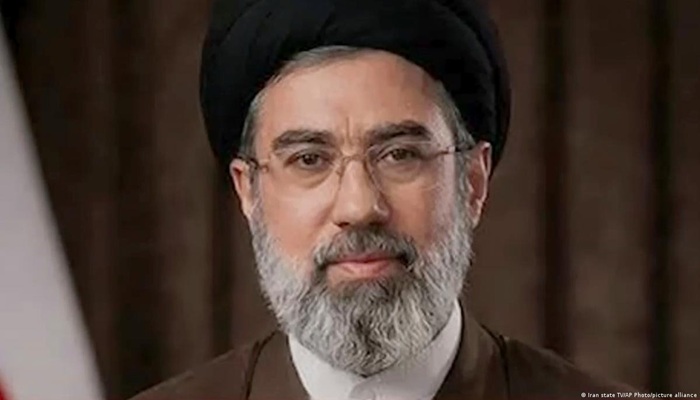
Iran has appointed Mojtaba Khamenei, son of the late Ayatollah Ali Khamenei, as its new supreme leader. The 56 year old succeeds his father, who was killed during US Israeli air strikes on Tehran on February 28.
Mojtaba Khamenei becomes the Islamic Republic’s third supreme leader. Though he held no official post during his father’s rule, he was widely believed to have played a behind the scenes role in shaping decisions at the highest levels of power. His appointment is seen as a continuation of his father’s hardline leadership style.
The Assembly of Experts, Iran’s top clerical body, announced the decision shortly after midnight on Monday. Within hours, Mojtaba received endorsements from President Masoud Pezeshkian, the armed forces, the judiciary, and the powerful Islamic Revolutionary Guard Corps (IRGC), which pledged allegiance to him.
Born on September 8, 1969, in the holy city of Mashhad, Mojtaba is the only one of Ali Khamenei’s six children to hold a public position. His close ties to conservative factions and the IRGC have long fueled speculation about his influence. For years, diplomats and ordinary Iranians debated the extent of his power, given his discreet presence at official ceremonies and in the media.
His appointment marks a rare hereditary transition in Iran’s leadership. The Islamic revolution of 1979 ended the monarchy of the shah, and Ali Khamenei himself had rejected hereditary succession on principle in 2024. Yet the clerical council opted to hand power to his son, a move that underscores continuity rather than change.
Ayatollah Ali Khamenei, who led Iran for more than three decades, was 86 when he died in the first wave of strikes that triggered the current war in the Middle East. His death left a vacuum at the top of Iran’s political and religious hierarchy.
Mojtaba’s rise comes at a time of intense regional conflict. Iran has been engaged in retaliatory strikes across the Middle East following attacks by the US and Israel. His leadership is expected to maintain Iran’s confrontational stance while reinforcing ties with conservative institutions at home.
Observers say Mojtaba’s appointment signals stability for Iran’s ruling elite, but also raises questions about the future of political freedoms and reform. His discreet style and reputation for working behind the scenes suggest he will continue to rely heavily on the IRGC and clerical establishment to consolidate power.
For many Iranians, the new supreme leader represents both continuity and uncertainty, continuity of his father’s hardline policies, and uncertainty about how Iran will navigate the escalating regional war.



