

Ghana to Declare First Marine Protected Area to Safeguard Fisheries and Livelihoods
By Maame Efua Kwaduah
Ghana is set to declare its first-ever Marine Protected Area (MPA) under the “Save Our Sea” campaign, in a step to revive dwindling fish stocks and secure the future of coastal livelihoods.
The move forms part of the global “30 by 30” target under the Kunming-Montreal Global Biodiversity Framework, which requires countries to protect 30 percent of their ecosystems by the year 2030.
Speaking at a capacity-building workshop for journalists in Kumasi, Acting Deputy Executive Director of the Fisheries Commission, Prof. Berchie Asiedu, said the designated zone would function as a breeding and nursery habitat for marine species.
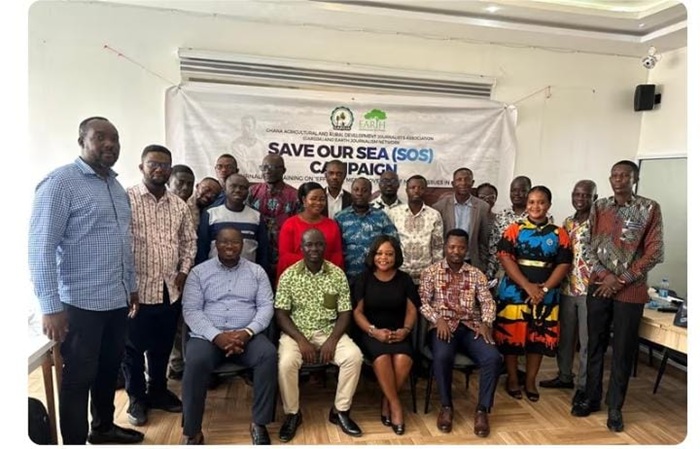
The training programme organised by the Ghana Agricultural and Rural Development Journalists Association (GARDJA) with support from the Earth Journalism Network, under the Save Our Sea Campaign, is aimed at strengthening media coverage of marine and fisheries issues.
According to him, fish will spawn and grow within the protected waters before migrating to adjoining areas where fishing is allowed, thereby increasing stock levels and improving catch rates for fishermen.
Prof. Asiedu emphasised that Marine Protected Areas differ from the annual closed fishing season.
He explained that while the closed season is temporary and implemented for a specific period each year, an MPA is permanent and confined to a defined geographical space.
Ghana currently imports more than half of the fish it consumes, at a cost running into hundreds of millions of dollars annually.
Authorities insist that safeguarding marine ecosystems alongside promoting aquaculture development remains central to reducing reliance on imports.
He stressed that once the declaration is formalised, fishing activities within the specified zone will be banned permanently.
President of GARDJA, Richmond Frimpong, said the initiative aims to equip journalists with deeper knowledge to produce accurate and impactful stories on marine resource governance.
He urged participants to undertake in-depth reporting on overfishing, illegal fishing activities, and the 30 by 30 agenda to influence policy direction.
Ghana Country Coordinator for the Earth Journalism Network, Charles Smith, noted that Ghana is part of a broader international partnership involving Mexico and the Philippines focused on enhancing reportage on marine protection.
He pointed out that over three million Ghanaians depend on fisheries for their livelihoods, making the protection of ocean resources vital for food security and economic resilience.
Stakeholders maintain that informed journalism will be instrumental in shaping public understanding and mobilising community support as Ghana works toward conserving 30 percent of its marine resources by 2030.



