Finance Minister Urges Private Sector to Lower Prices Amid Economic Gains
By Maame Efua Kwaduah
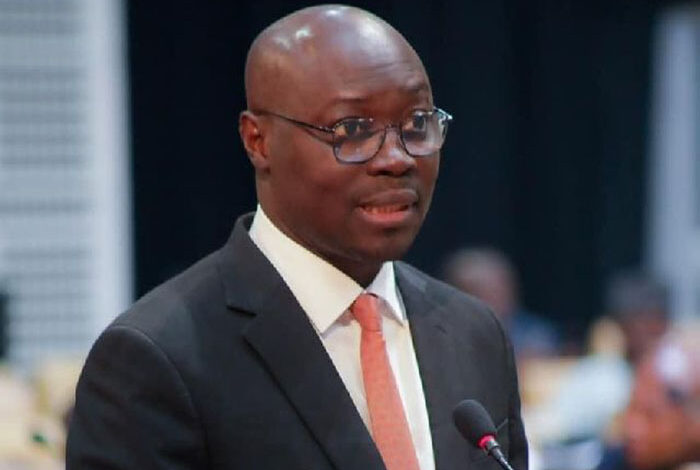
Finance Minister Dr. Cassiel Ato Forson has called on the private sector to lower prices to reflect the country’s recent macroeconomic gains, emphasizing that businesses have a role in translating economic stability into tangible relief for households.
Speaking at the Presidential Dialogue with the Private Sector held at Kempinski Hotel Gold Coast City under the auspices of President John Dramani Mahama, Dr. Forson noted that the private sector has been among the primary beneficiaries of the administration’s economic reset and must now “give back” to Ghanaian citizens.
“Your Excellency, the private sector is the biggest beneficiary of the economic resets under your administration. It is time to give something back to the Ghanaian citizen. Please reduce your prices to reflect the reality here, and let us together make our country great and strong,” Dr. Forson urged.
The Finance Minister outlined the government’s fiscal and macroeconomic objectives, noting that the economic reset was guided by clear benchmarks. The administration targeted overall GDP growth of 4.8%, non-oil GDP growth of 5%, and inflation at 8% ± 2%. He also highlighted a primary balance target of 1.5% of GDP and an overall deficit of 2.7%, while gross international reserves were set to cover at least three months of imports.
Dr. Forson noted that the visible results across the economy demonstrate disciplined policy execution. “The macroeconomic turnaround is broad-based and comprehensive,” he said, adding that stability has created opportunities for lower prices and stronger consumer demand.
According to the Minister, oil GDP grew 6.1% year-on-year in the first three quarters of 2025, driven mainly by services and agriculture, while non-oil GDP expanded 7.5% over the same period, compared to 5.8% in 2024. He highlighted that credit to the private sector increased by GHS17.1 billion in 2025, reflecting renewed confidence among banks and borrowers.
Inflation has fallen for thirteen consecutive months, dropping from 23.8% in December 2024 to 3.8% by January 2026, while interest rates on 91-day Treasury bills fell from 27.7% to 6.4%. Average commercial bank lending rates declined from 30.25% in 2024 to 20.45% in 2025, with further reductions expected.
Dr. Forson also noted significant currency appreciation, with the Ghana cedi gaining 40.7% against the US dollar and 30.9% against the British pound by the end of 2025. The current account recorded a surplus of US$9.1 billion, and gross international reserves rose to US$13.8 billion, covering 5.7 months of imports.
Fiscal indicators also improved, with the primary balance achieving a surplus of 2.6% of GDP and public debt declining from GHS726.7 billion (61.8% of GDP) to GHS641 billion (45.3% of GDP) by December 2025. Dr. Forson added that Ghana’s economy has surpassed the US$100 billion mark and is projected to reach US$114 billion, positioning the country as the seventh-largest economy in Africa.
“With stability, access to cheaper credit, and economic scale improving, the private sector is well-positioned to support national transformation while easing the cost of living,” Dr. Forson noted.