

Ghana Falling Behind in Capital Market Development, Calls for Bold Reforms – World Bank
By: Solomon Nartey Tetteh
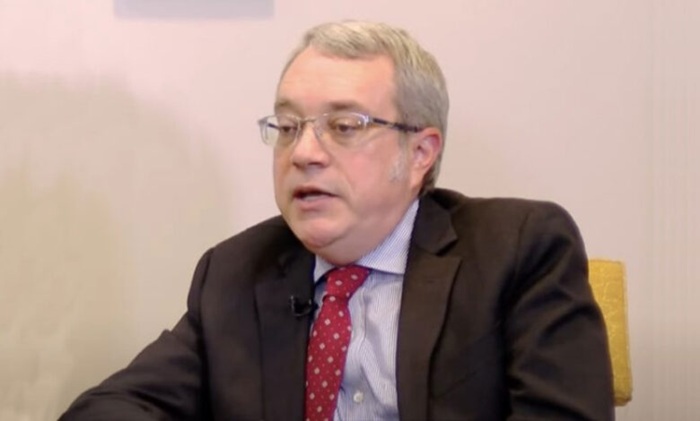
The Division Director for Ghana, Liberia and Sierra Leone at the World Bank, Mr. Robert Taliercio, has warned that Ghana is falling significantly behind its peers in developing the robust capital markets needed to finance private-sector growth and job creation.
Speaking at a World Bank seminar on Financing Firm Growth and the Role of Capital Markets, Mr. Taliercio noted that while global capital markets have expanded rapidly over the past two decades, Ghana has not kept pace.
He revealed that cumulative net issuance in middle-income countries has quadrupled since 2000, while low-income countries have recorded an eightfold rise. This growth, he said, has been driven by the entry of younger, smaller, and more productive firms with higher marginal returns to capital.
“These are enormous sums we’re talking about. Thousands of younger and more productive issuers are generating more output and more jobs per dollar invested. We want to see how we can make this happen in Ghana as well,” he said.
Mr. Taliercio stressed that Ghana trails far behind countries such as China, India and Vietnam, nations that shared the same low-income status as Ghana in the 1990s but have since accelerated their economic and financial sector growth.
Across multiple economic indicators, he said, Ghana has shown a pattern of “up and down” performance while its peers have achieved sustained progress.
Mr. Taliercio pointed to the limited depth of Ghana’s capital markets as a major bottleneck.
Currently, the Ghana Stock Exchange has only 36 listed companies, while just seven firms have outstanding corporate bonds. He added that the bond market is overwhelmingly dominated by government securities, leaving little room for private issuers.
“Market access remains narrow. We’d love to brainstorm how we can unlock this,” he noted.
Ghana’s large financing needs make the issue even more pressing. The financing gap for micro, small and medium-sized enterprises (MSMEs) is estimated at about US$11 billion, equivalent to roughly 18 percent of GDP. Meanwhile, private sector credit remains extremely low at just 9 percent of GDP far below regional peers such as Senegal (30 percent) and Côte d’Ivoire (23 percent).
“There is no reason Ghana couldn’t match Senegal or even exceed Côte d’Ivoire,” Mr. Taliercio said.
He emphasised that strengthening capital markets and expanding access to long-term financing will be critical for Ghana to unlock private investment, boost productivity, and achieve sustained economic growth.



