Financial Expert Urges Stronger Push for Value-Added Exports

By: Solomon Nartey Tetteh
Financial analyst Nelson Cudjoe Kuagbezi has called for a stronger and more sustained national commitment to value-added exports, stressing that Ghana’s continued reliance on raw material exports is limiting the country’s economic growth.
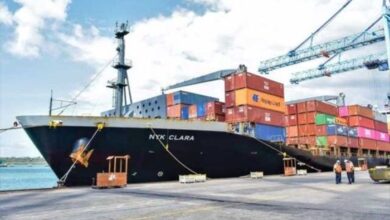
Speaking on the Business Breakfast on Zed 101.9FM, Mr. Kuagbezi drew comparisons with advanced economies such as those in Europe, America, and Asia, where development has been anchored on the export of finished goods rather than raw materials.
According to him, Ghana’s domestic market clearly reflects this imbalance.
“When you walk into any supermarket in town, how many Ghanaian products do you see on the shelves. Most of the goods are from Europe, America or Asia, especially China. Their approach is export-led development. They export everything, even human capital,” he said.
Mr. Kuagbezi noted that shifting to value-added exports remains Ghana’s best pathway to sustainable growth, but emphasized that local products must be competitive on the global market.
“When your products go out there, they should be able to compete with equally good products from other countries,” he said.
He attributed Ghana’s slow progress in industrialisation partly to inconsistent government policies. He cited the One District, One Factory (1D1F) initiative as an example of an export-focused programme that has struggled due to poor management and policy discontinuity.
He lauded the government’s decision to merge industry with agribusiness under one ministry and the introduction of an Export Accelerated Development Programme aimed at injecting financial support into the private sector.
Mr. Kuagbezi also urged government to rein in excessive borrowing and ensure that loans contracted are channelled into productive, revenue-generating projects to reduce pressure on the economy.
He Kuagbezi noted that borrowing is a universal practice for both individuals and nations, but stressed that the impact depends on how the funds are used.
“Every country borrows. Even at the micro level, individuals borrow. But when you borrow, you must use the money for projects that can generate positive returns. You don’t borrow for consumption,” he said.
According to him, investments that produce tangible economic gains “pay back the loans themselves,” easing the burden on national finances.
He explained that Ghana must focus on raising more domestic revenue and cutting down on unnecessary expenditure if the current revenue inflows remain inadequate. However, he acknowledged that austerity comes with trade-offs.
“If we think the revenue is not coming, we cut down on expenditure. That means stifled growth, but sometimes you need to strike a balance between maintaining price stability and supporting growth,” he added.
Mr. Kuagbezi emphasised the need for the Bank of Ghana (BoG) to maintain a firm stance on monetary and regulatory decisions, especially within the financial sector.