Stronger cedi reverses cocoa price parity
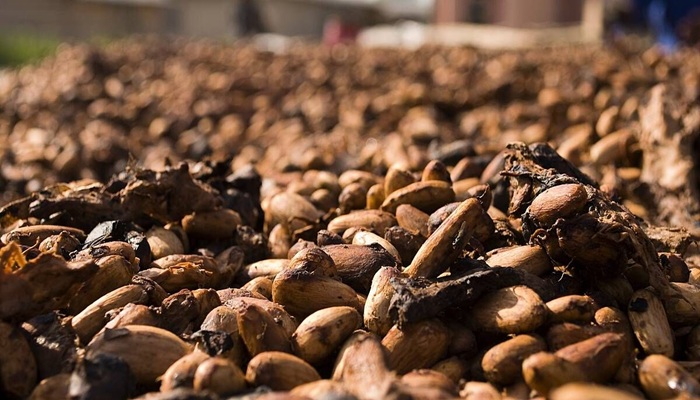
The recent cedi appreciation has unexpectedly reshaped the cocoa trade dynamics between the world’s two leading producers, Ghana and Ivory Coast, by erasing the price gap that long fuelled bean smuggling across their shared border.
The development follows a double boost for Ghanaian cocoa farmers: a new upward adjustment in producer prices and a strengthening of the local currency.
Together, they have shifted market parity in Ghana’s favour, reducing incentives for smuggling but deepening the economic rivalry with Ivory Coast.
Minister of Finance, Dr Cassiel Ato Forson, recently announced an increase in the farmgate price to GHS3,625 (USD338.32) per 64-kilogramme bag, up from GHS3,228.75.
The hike marks the second price adjustment this season and came barely 24 hours after Ivory Coast raised its own state-set producer price by 27 per cent to 2,800 CFA francs (USD5) per kilogramme, the highest in the country’s history.
At the time of Ghana’s announcement, the cedi traded around GHS10.70 to the US dollar, giving Ghana’s price an equivalent of USD5.29 per kilogramme, or roughly 3,247 CFA francs, slightly above the Ivorian benchmark.
This represents a dramatic turnaround from earlier in the season, when a weaker cedi at GHS12.54 to the dollar made Ghana’s cocoa worth just USD4.52 or 2,545 CFA francs per kilogramme, making Ivorian beans nearly 20 per cent more profitable.
The currency rebound has effectively reversed that advantage, sharply curbing the appeal of cross-border smuggling that has long diverted tens of thousands of tonnes of Ghanaian cocoa into Ivorian markets.
Ivorian regulators estimate that between 100,000 and 150,000 tonnes were smuggled out of Ghana last season alone.