BoG pushes sustainable banking in extractive sector
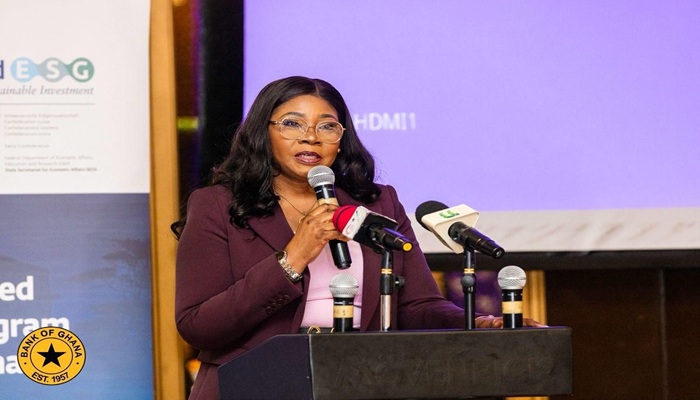
The Bank of Ghana (BoG) is intensifying efforts to promote sustainable banking practices within Ghana’s extractive sector as part of broader measures to align financial intermediation with responsible lending and measurable sustainability impact.
Speaking at a deep-dive session with industry stakeholders in Accra, the Second Deputy Governor of the Bank of Ghana, Matilda Asante-Asiedu, said the Central Bank is moving beyond policy formulation to fostering continuous dialogue on the social and environmental implications of corporate lending.
“As a central bank, this is something we took notice of in 2015 and have since issued several guidelines and policies. But the reason we are going the extra mile with these deep-dive sessions is to go beyond the paperwork and have real conversations, because when you give out credit, there are social implications beyond what you see. Corporates are now being judged beyond the bottom line. People look at the impact of your investment,” she explained.
Mrs Asante-Asiedu said the BoG’s engagement with banks and extractive industry players forms part of its commitment to ensuring that economic growth goes hand in hand with sustainability, particularly in sectors with significant environmental footprints such as mining, oil and gas.
She emphasised that sustainability principles are no longer optional but essential to the long-term stability of the financial system.
“We cannot have a resilient financial system if lending decisions ignore environmental and social risks. The time has come for sustainability-linked lending to move from a compliance box-ticking exercise to a mindset change across institutions,” she added.
On the part of commercial banks, the Chief Executive Officer (CEO) of the Ghana Association of Banks (GAB), John Awuah, reaffirmed the sector’s commitment to embedding sustainability standards within their credit portfolios.
“Many extractive firms, especially those in the small and medium category, are still not ESG compliant and therefore cannot access sustainability-linked financing. Going forward, the Association will work closely with the regulator to strengthen ESG competencies within banks and improve compliance readiness across the extractive sector to promote inclusive sustainability,” Mr Awuah stated.