Access Bank, DHL partner to empower 50,000 Ghanaian SMEs
By: Rebecca Okine
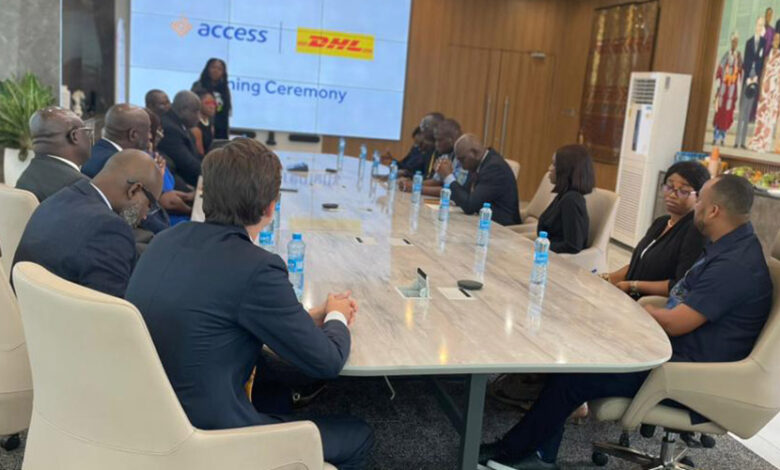
Access Bank and DHL have signed a Memorandum of Understanding (MoU) to provide a major boost to Small and Medium-Sized Enterprises (SMEs) in Ghana. The agreement, signed on May 27, 2025, in Accra, is expected to benefit at least 50,000 SMEs across the country within the next year.
The partnership aims to combine Access Bank’s strength in trade finance and SME development with DHL’s global expertise in logistics and international trade.
Speaking to the media after the official signing, Kafui Bimpe, Head of SME Africa at Access Bank, highlighted the strategic importance of the partnership. He noted that while DHL brings global expertise in logistics and trade, Access Bank has a strong foundation in SME support and trade finance across the continent. According to him, the collaboration is designed to deliver meaningful support to small businesses across Africa. “We believe our combined expertise will deliver real value to SMEs across the continent,” Mr. Bimpe said.
He highlighted that intra-African trade presents enormous potential. “In 2023 alone, intra-African trade reached a value of about $192 billion. SMEs are preparing to tap into these opportunities, and this partnership couldn’t have come at a better time,” he added.
The initiative is not limited to financial services. As part of the agreement, Access Bank and DHL will provide training and capacity-building programs for entrepreneurs. These are aimed at enhancing business skills, supporting export readiness, and offering practical guidance on navigating cross-border trade.
“There are a lot of export-ready SMEs who simply don’t know how to begin,” Mr. Bimpe said. “This partnership will bridge that gap—everything from registration to locating buyers and understanding international processes.”
The support will also include trade finance options at competitive rates, recognizing the challenges SMEs face in accessing affordable financing. “We know cost is a barrier. So, we are offering highly competitive rates to support their growth,” Bimpe emphasized.
He further explained that supporting SMEs is critical for national development. “When SMEs grow, they create jobs, reduce poverty, and contribute significantly to GDP,” Mr. Bimpe explained.