

Gh₵8.2bn SMEs fund unveiled
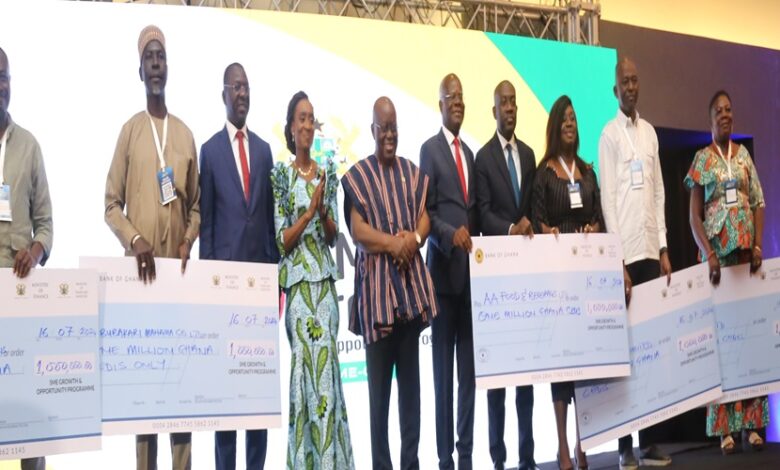
– The largest investment in the sector in recent years
By Daniel NONOR, Accra
The government of Ghana and its partners have earmarked GH₵8.2 billion to fund the development of Small and Medium Enterprises (SMEs) in the country, marking the largest investment in the sector in recent years.

Of the stated amount, the government of Ghana is providing GH₵700 million, while the International Finance Corporation (IFC) and the African Development Bank Group are providing funding of $400 million and $45 million, respectively.
The programme will be coordinated by the Ministry of Finance and the Ministry of Trade and Industry, with the Ghana Enterprises Agency (GEA), Ghana EXIM Bank, and the Development Bank Ghana (DBG) as the principal implementing agencies.
These agencies will ensure the targeted delivery of financial and technical support across the whole spectrum of SMEs, from early-stage innovative micro-enterprises to well-established Small and Medium-sized companies oriented towards export.
GH₵700m to go through Ghana EXIM Bank
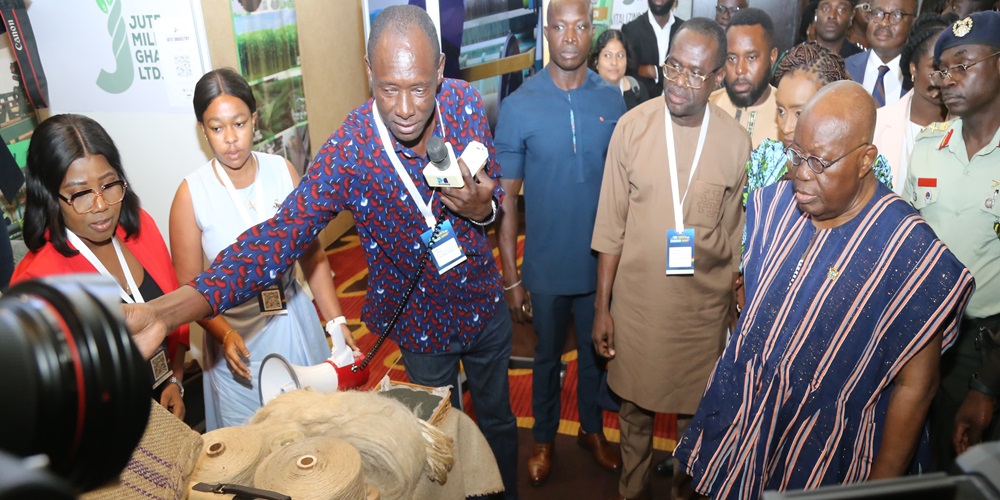
President Nana Addo Dankwa Akufo-Addo, who launched the program in Accra on Tuesday, explained that the Ghana EXIM Bank will be supported with GH₵700 million to offer SMEs highly subsidized financial support for both capital and operating expenditures, as well as capacity building for program beneficiaries.
Additionally, a dedicated window for the 1D1F initiative will be set up to ensure optimal synergies within the structural project.
GEA to disburse GH₵230m
GEA will be supported with GH₵230 million and will target high-growth SMEs employing 100 persons or more with small-scale grants and loans of up to two years at highly subsidized rates.
DBG to offer loans worth GH₵1.4bn
Furthermore, DBG will contribute through its newly created MSME Innovate and Grow Fund, providing loans of up to five years with tailored repayment conditions to support businesses.
The loan amounts will be decided on a case-by-case basis, drawing from an envelope of GH₵1.4 billion.
DBG will also provide targeted training in financial management, regulatory compliance, digitalization, business plan development, and other areas to programme beneficiaries.
As part of the program, Ghana EXIM Bank will establish a novel food innovation hub within the next three months.
This facility, located at the University of Ghana campus, will support Micro, Small, and Medium Scale Enterprises (MSMEs) in the food industry with testing and scaling up production.
It will include processing equipment, warehousing space, a testing lab, and a suite for SMEs to interact with regulatory authorities.
“I believe that with this programme, we can lay the foundations for a stronger economy underpinned by strong Ghanaian enterprises, creating jobs and delivering opportunities for our people,” President Akufo-Addo noted.
He emphasized the critical role SMEs play in the nation’s economy, stressing their contributions to job creation, innovation, and economic diversification.
“SMEs are the backbone of Ghana’s economy, contributing significantly to job creation, innovation, and economic diversification,” President Akufo-Addo stated.
“Today’s summit, under the theme ‘Breaking Barriers to SME Growth,’ encapsulates our mission to empower SMEs to thrive and drive our nation’s economic prosperity.”
Digital platform connecting smallholder farmers
President Akufo-Addo praised the resilience and growth of SMEs across various sectors, citing success stories such as Kasapreko Company Limited, a homegrown beverage company that has grown from a small domestic producer to an international brand, and AgroCenta, a digital platform connecting smallholder farmers to larger markets.
However, the President acknowledged the challenges that SMEs face, including limited access to finance, inadequate infrastructure, regulatory hurdles, and limited market access. “These are challenges that must be overcome if we are to unlock the full potential of our SMEs,” he emphasized.
Minister for Finance, Dr. Mohammed Amin Adam, underscored the pivotal role of SMEs in Ghana’s economic transformation agenda and the government’s commitment to creating an enabling environment for SMEs, which he described as the “lifeblood of our economy.”
“Even in the last year of his term, President Akufo-Addo continues to hold the mandate of the Ghanaian people very seriously, working hard in creating jobs, supporting businesses, and leading our economic recovery efforts,” Dr. Adam stated. The Finance Minister emphasized the significance of supporting SMEs to achieve Ghana’s growth and development ambitions.
“The data is clear, ladies and gentlemen, supporting SMEs is crucial to achieving our growth and development ambitions. We must be intentional about providing access to financial resources, expertise, and capacity-building programs that empower them to drive innovation, create jobs, and stimulate economic growth.”
Dr. Adam advocated for a shift in Ghana’s growth model, which has traditionally relied on foreign direct investment and raw material exports.
“Ghana’s growth model must evolve beyond relying heavily on foreign direct investment and raw material exports, which can be very volatile and could expose us to external shocks. Instead, we must harness the potential of our own homegrown SMEs to build a prosperous, dynamic, and competitive economy.”
He noted further that “Our vision, ladies and gentlemen, is to create a platform for SMEs and raise SME champions to generate impacts that resonate through our communities, leaving a legacy of empowerment, innovation, and prosperity for generations to come.”
Trade and Industry Minister K.T Hammond reiterated the critical role of SMEs in the economic and industrial transformation of the country, noting that, “On my assumption of office as your Minister of Trade and Industry, it became apparent to me that our economic and industrial transformation agenda would need a renewed focus on the SME sector.”
The Trade Minister noted that SMEs represent approximately 81% of the country’s enterprises, with significant contributions from the informal sector.
1.7 million SMEs
“The SME sector in the country has about 1.7 million enterprises, representing approximately 81% classified as micro-enterprises, another 15% as small enterprises, and about 4% as medium enterprises.
“A notable portion of these enterprises operate within the informal sector, contributing significantly to employment and income generation.
“This sector is also crucial for women, the youth, and persons who are physically challenged, providing them with essential opportunities and sustaining their livelihoods.”
He stressed the importance of strategic initiatives and programs to enhance the performance of the SME sector.
“The franchise aims to ensure that the economy and the country become the fastest-growing and most attractive hub for large corporations as well as SMEs.
“Through strategic initiatives and programs, Ghana aims to enhance their contribution and the performance of the SME sector while forging a path for a future defined by innovation, growth, and opportunity.”
Solomon Quaynor, Vice-President for Private Sector, Infrastructure & Industrialization at the African Development Bank, emphasized the critical role of small and medium enterprises (SMEs) in Ghana and Africa, noting that they constitute about 90% of all businesses on the continent and provide over 50% of employment.
He noted that despite their significance, SMEs face substantial challenges, particularly in financing.
$331bn financing gap for MSMEs across Africa
He emphasized an estimated $331 billion financing gap for MSMEs across Africa and reiterated the African Development Bank’s commitment to addressing these challenges through a mix of financial and non-financial support to enhance SME capacity and sustainability.
Mr. Quaynor also stressed the importance of supporting youth, particularly in tech-enabled sectors, viewing them as an “investable asset class” rather than recipients of mere financial handouts.
He noted that youth involvement in technology is driving significant innovation within the SME space and emphasized the need for effective technical assistance, advisory services, and financing availability to support this entrepreneurial spirit.



