Bawumia proposes tax amnesty for businesses
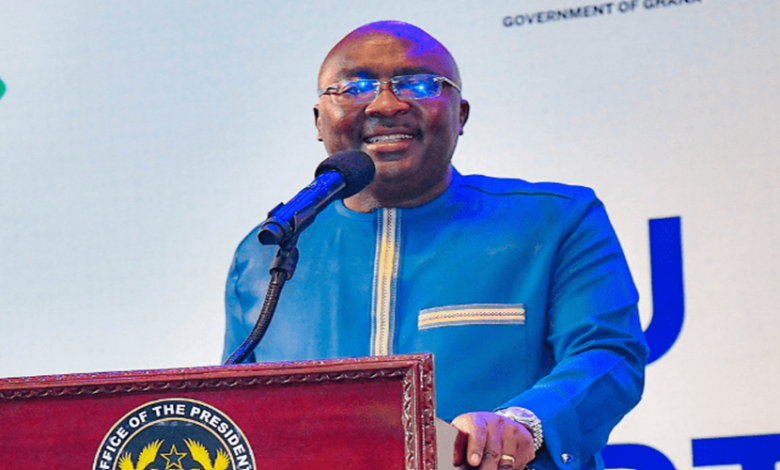
Vice President Bawumia has espoused his vision to institute a comprehensive tax amnesty to revitalize the nation’s economy if elected as president in the upcoming general elections..
Speaking via video link from Canada, at the 8th Ghana CEO’s Summit in Accra, Dr. Bawumia emphasized the importance of the proposed tax amnesty in encouraging voluntary tax compliance and enhancing government revenue streams.
He proposed a new tax system, modeled on Estonia’s flat tax system, to simplify and make it transparent. Additionally, he suggested introducing a tax amnesty to wipe out past obligations and start afresh, as well as aligning the import duty regime with competitors to prevent smuggling and ensure predictability for businesses.
Dr. Bawumia highlighted the potential benefits of a tax amnesty program, noting that it could bring a substantial number of informal sector operators into the formal economy, boosting revenue and fostering a culture of compliance. He also pointed out the successful implementation of tax amnesty programs in various countries, leading to increased tax revenues and greater economic stability.
Furthermore, the Vice President addressed the critical role of digitalization in tax administration and mentioned ongoing initiatives aimed at modernizing Ghana’s tax system. He specifically highlighted the successful deployment of the Ghana Card, which is facilitating more efficient tax collection and reducing opportunities for tax evasion. Dr. Bawumia emphasized the importance of leveraging technology to enhance transparency and accountability in tax administration.
The Vice President noted further tat a key feature of his government’s expenditure rationalization agenda when elected into power as president would be to actively involve the private sector to take up the burden of financing key development projects.
“If you look at our whole tax revenue from import duty the whole of import duty is 15 billion Ghana Cedis so if you’re able to rationalize or reduce government expenditure and replace it with private sector expenditure you create a lot of fiscal space and that is where I’m headed”
He explained that the government often runs into budget deficits mainly because it shoulders all the financing responsibility of major projects which could otherwise be left to the private sector to handle”.
“My view is that the government tries to do too much. You want to buy vehicles, you want to accumulate all the money and go and buy vehicles for schools and all of that. You want to build roads and it is the government doing it
Dr Bawumia said his vision is to significantly reduce government expenditure to the barest minimum in the first four years of his government through leveraging on the private sector.
“My view is that let us bring down government expenditure to between 3 to 5 percent of GDP in the next four years, reduce government expenditure, and replace it by private expenditure.”
The 8th CEO’s Summit brought together top executives, government officials, and experts to discuss strategies for sustainable economic development under the theme: “Reigniting Business and Economic Growth: Charting a Path Forward; Transforming State-owned Enterprises through Economic Diversification and Al Transformation, Fostering a High-Level Public-Private Sector Dialogue.”